
A cat refusing food for one meal may seem like a minor problem. Sometimes it is.
Perhaps you changed the food, moved the bowl, had visitors in the house, or your cat simply disliked what was served.
But loss of appetite in cats deserves more attention than many owners realize.
Cats often hide illness, and eating less can be one of the earliest visible signs that something is wrong. Appetite loss may result from dental pain, nausea, gastrointestinal disease, kidney disease, pancreatitis, infection, stress, medication, or many other problems. Cornell describes anorexia as a broad clinical sign associated with numerous feline diseases rather than a disease by itself.
There is another reason not to ignore it: cats that consume too little food for an extended period can develop serious secondary complications, including hepatic lipidosis, or fatty liver disease. Overweight cats are particularly at risk.
Quick answer: If your cat completely stops eating, do not simply wait several days to see what happens. Cornell notes that sustained appetite loss can seriously affect an adult cat in as little as about 24 hours. Seek veterinary advice sooner if the cat is a kitten, diabetic, overweight, repeatedly vomiting, weak, dehydrated, having trouble breathing, or otherwise appears ill.
What Does It Mean When a Cat Stops Eating?
Veterinarians often use the term anorexia to describe a decrease or complete loss of appetite.
This is different from the human eating disorder of the same name.
VCA distinguishes between two useful situations.
In true anorexia, the cat does not feel like eating.
In pseudo-anorexia, the cat may actually be hungry but has difficulty eating because something makes chewing, swallowing, picking up food, or reaching the bowl painful or difficult.
That distinction can provide an important clue.
A cat that walks away without interest may feel nauseated or ill.
A cat that eagerly approaches its food, tries to eat, then drops kibble or pulls away may have dental or mouth pain.
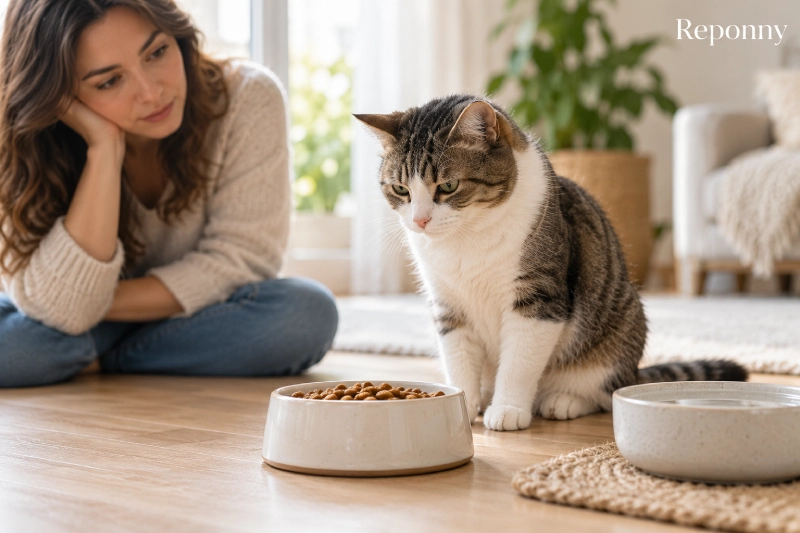
How Long Can a Cat Go Without Eating?
This is not a situation where you should deliberately test the limit.
Cornell reports that sustained appetite loss can have a serious impact on a mature cat’s health after as little as 24 hours. For very young kittens, the danger can develop even faster.
VCA urgent-care guidance is even more cautious and recommends veterinary evaluation when a pet has gone more than about 12 hours without eating, particularly when additional risk factors are present.
The practical lesson is simple:
A cat refusing all food for roughly a day deserves prompt veterinary attention rather than another day or two of waiting.
If your cat still eats but consumes much less than normal, that also matters. Partial food refusal over several days can still result in inadequate calorie intake and may be the first sign of disease.
Why Not Eating Can Be Dangerous for Cats
When a cat consumes too few calories, the body begins mobilizing stored fat for energy.
Cats—especially overweight cats—can move large amounts of fat toward the liver. In feline hepatic lipidosis, fat accumulates within liver cells faster than the liver can adequately process it.
Merck describes feline hepatic lipidosis as a potentially lethal liver disorder frequently triggered by anorexia or food deprivation.
Cornell also reports that hepatic lipidosis is commonly preceded by a period of severe appetite loss and occurs more frequently in overweight cats, although cats of many ages and body conditions can be affected.
This creates a dangerous cycle:
illness → reduced appetite → inadequate calories → liver complications → even greater illness and appetite loss.
That is why “my cat will eat when it gets hungry enough” is not a safe strategy.
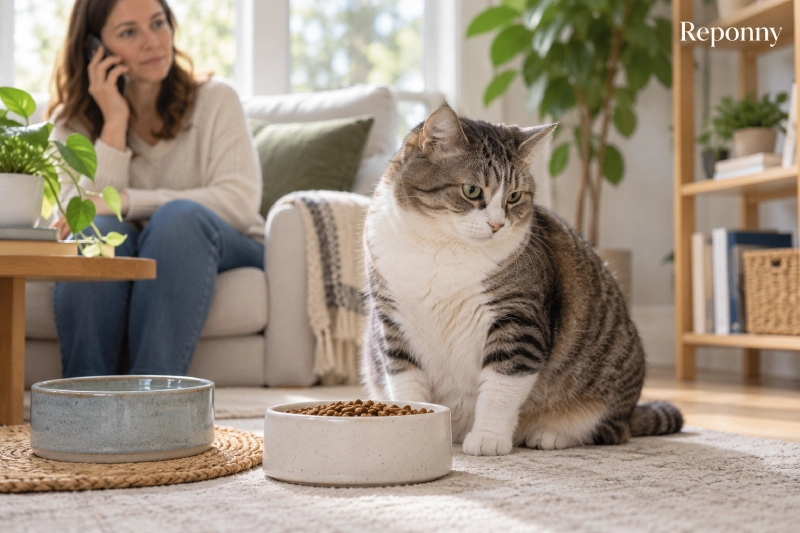
1. Dental and Mouth Pain
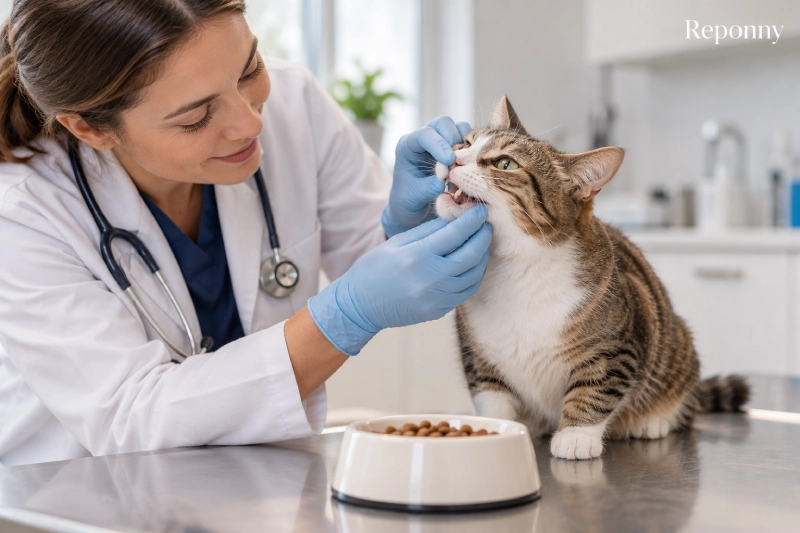
Dental disease is one of the most important causes of difficulty eating in cats.
Cornell reports that feline dental disease is common, particularly in adult cats, and can cause significant pain. Gingivitis, periodontitis, tooth resorption, fractured teeth, and severe oral inflammation can all interfere with eating.
The pattern can be revealing.
A cat with mouth pain may appear hungry. It may walk toward the bowl, smell the food, and even attempt to eat.
Then it may suddenly pull away.
Some cats begin preferring soft food, drop kibble from the mouth, chew on only one side, drool, develop bad breath, or stop eating hard food. Cornell specifically identifies these behaviors as possible signs of painful dental disease.
This is a classic example of pseudo-anorexia: the appetite may still exist, but eating hurts.
Changing to wet food may make eating temporarily easier, but it does not treat an infected or painful tooth.
2. Nausea and Gastrointestinal Problems
A nauseated cat does not always vomit.
Sometimes the first noticeable sign is simply refusing food.
VCA identifies nausea, gastrointestinal obstruction, stomach or intestinal disease, ulcers, and other digestive disorders among possible causes of appetite loss.
Merck notes that gastrointestinal disorders in cats can produce combinations of:
vomiting, diarrhea, constipation, loss of appetite, abdominal pain, bloating, dehydration, and changes in stool.
A cat may become interested in food, sniff it, and then turn away because the smell or act of eating makes the nausea worse.
Repeatedly changing brands may therefore fail to solve the problem.
The cat may not be “picky.”
It may feel sick.

3. Kidney Disease
Kidney disease is another potential cause of reduced appetite, particularly in older cats.
As kidney function declines, cats can develop changes in hydration, metabolism, and gastrointestinal comfort that interfere with normal eating.
Cornell lists kidney disease among the many illnesses associated with feline anorexia.
Appetite loss associated with kidney disease may occur alongside other changes such as increased thirst, increased urination, weight loss, vomiting, lethargy, or poor coat condition.
These signs are not specific enough to diagnose kidney disease at home.
Blood tests, urinalysis, blood-pressure measurements, and sometimes additional testing may be needed to understand what is happening.
4. Pancreatitis and Other Painful Conditions
Pain can suppress appetite even when the painful area has nothing to do with the mouth.
VCA lists painful conditions among possible causes of anorexia and also notes that pancreatic disease can cause pain, nausea, vomiting, and reduced appetite.
Cats with pancreatitis can be particularly difficult for owners to recognize because their signs may be subtle.
Instead of dramatic crying or obvious abdominal pain, a cat may simply become quieter, hide more often, stop eating normally, or appear unusually tired.
Arthritis and other painful conditions can indirectly affect feeding too.
For example, an older cat may still want food but avoid walking downstairs or jumping onto a counter to reach its bowl.
Appetite is not just about hunger. The entire experience of reaching and eating the meal must be comfortable.
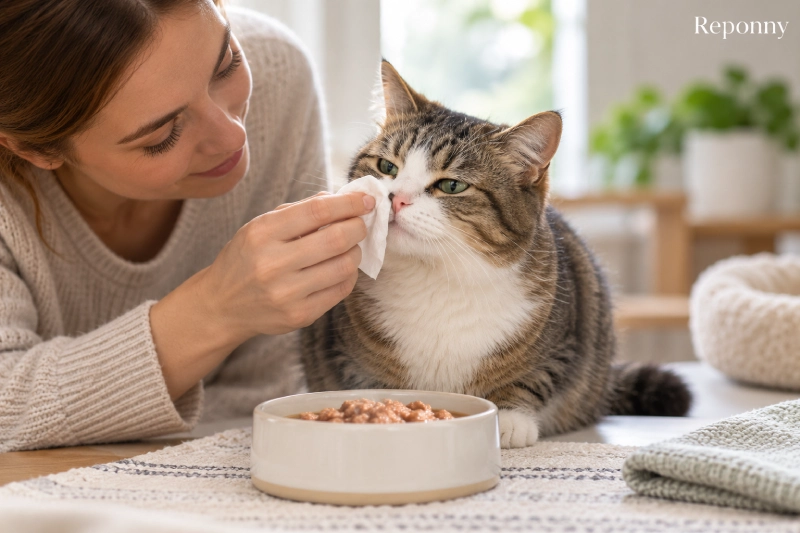
5. Respiratory Infection and Loss of Smell
Cats rely heavily on smell when deciding whether food is appealing.
An upper respiratory infection can cause nasal congestion, which reduces the ability to smell food. Cornell notes that respiratory infections may cause lethargy and anorexia and that blocked nasal passages can interfere with the food odors that normally stimulate appetite.
Some infections can also cause painful ulcers inside the mouth, making eating uncomfortable.
A cat with an upper respiratory infection may have nasal or eye discharge, sneezing, coughing, lethargy, or other signs in addition to appetite loss. Difficulty breathing requires prompt veterinary attention.
Slightly warming wet food can sometimes make its smell more noticeable, but a sick cat still needs appropriate veterinary care when intake becomes inadequate.
6. Stress and Environmental Changes
Not every loss of appetite starts with physical disease.
Cats are highly sensitive to changes in their environment.
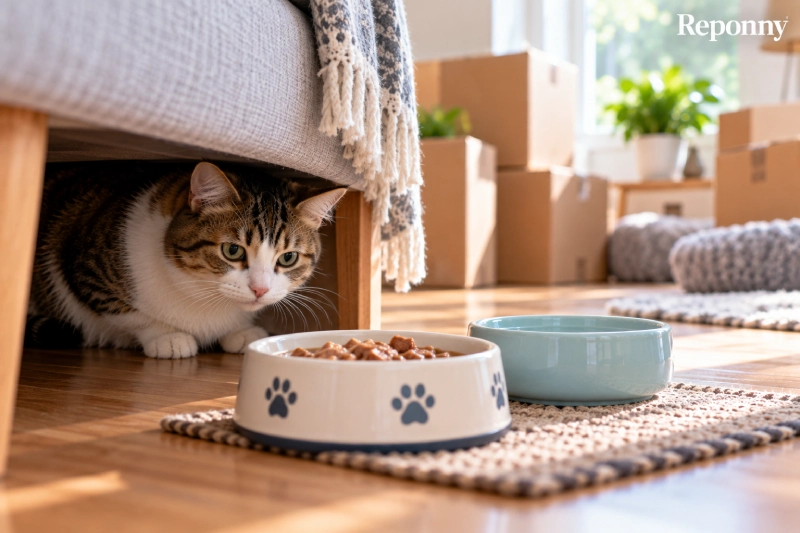
Cornell reports that psychological and environmental factors can contribute to appetite loss, including dislike of a new food and stress related to the arrival of another animal or loss of a companion.
Merck also identifies events such as moving to a new home, boarding, new pets, and other major environmental changes as potential triggers for food refusal.
Possible triggers include changes in household routine, construction noise, unfamiliar visitors, moving the feeding station, competition from another cat, or abruptly replacing a familiar food.
However, stress should not become the automatic explanation for persistent anorexia.
Medical disease and stress can look remarkably similar at home.
If your cat stops eating, especially for a full day, veterinary assessment is safer than assuming the cat is simply upset.
7. A Sudden Change in Food
Sometimes the explanation really is the meal.
Cats can develop strong preferences for specific:
textures, aromas, flavors, temperatures, and shapes of food.
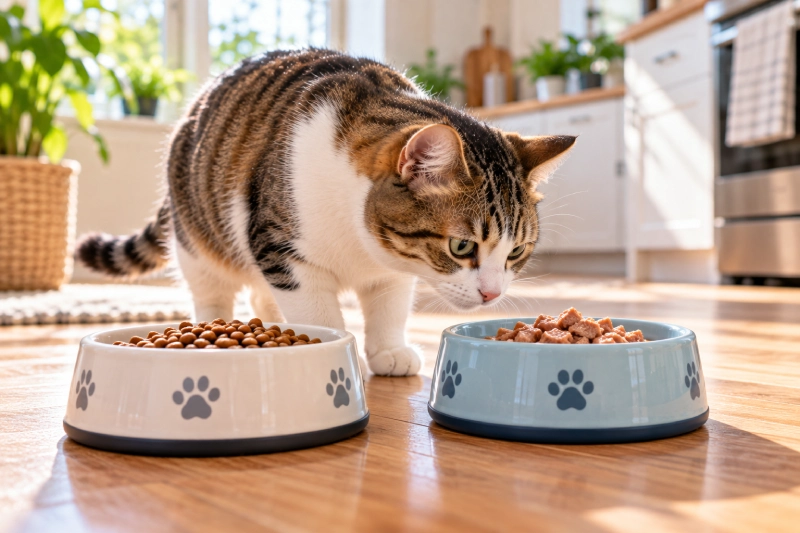
An abrupt change from dry kibble to pâté—or from one flavor to another—may result in rejection even when the new food is nutritionally excellent.
Cornell specifically notes that a cat may lose interest in eating after being presented with an unfamiliar food it dislikes.
When changing diets for a healthy cat, transition gradually.
If your cat refuses the new food but enthusiastically eats its familiar food, food preference becomes a more plausible explanation.
Even then, do not deliberately withhold the familiar food for prolonged periods in an attempt to force acceptance.
A safe dietary transition is more important than winning a battle over the bowl.
8. Medication Side Effects
Some medications can reduce appetite or contribute to nausea.
VCA includes medication side effects among possible reasons for anorexia in cats.
If your cat’s appetite changed shortly after beginning a medication, tell your veterinarian.
Do not simply stop a prescribed medication without guidance unless your veterinarian has already instructed you how to handle adverse reactions.
The veterinary team may need to adjust the dose, change medications, manage nausea, or investigate whether the illness being treated—not the medication—is responsible.
9. Serious Systemic Disease
Appetite loss can accompany many diseases beyond the digestive system.
Cornell lists conditions including diabetes, kidney disease, hepatic lipidosis, hyperthyroidism, pancreatitis, fever, and numerous other illnesses among potential causes.
Cancer can also reduce food intake through inflammation, pain, nausea, or physical interference with eating and digestion. Merck describes anorexia and weight loss as important problems in feline cancer patients.
That is why appetite should be considered a general health indicator.
When a normally food-motivated cat suddenly loses interest in meals, the question is not only:
“What food should I try?”
It is also:
“Why did the appetite change?”
Signs That Mean You Should Contact a Veterinarian
Loss of appetite becomes more concerning when it occurs with other abnormalities.
Seek prompt veterinary attention if your cat has any of the following:
- refuses all food for roughly 12–24 hours, particularly if the change is sudden;
- is a kitten, diabetic, overweight, elderly, or already ill and stops eating;
- repeatedly vomits or has significant diarrhea;
- appears weak, unusually lethargic, dehydrated, painful, or disoriented;
- has trouble breathing;
- develops yellow eyes, skin, or gums;
- cannot chew or swallow normally, drools heavily, or repeatedly drops food;
- has abdominal swelling or obvious discomfort;
- is losing weight or muscle;
- eats substantially less than normal for several days even if it has not stopped completely.
Cornell encourages owners to contact a veterinarian immediately when signs of feline anorexia develop, while VCA recommends prompt investigation of noticeable appetite changes.
What Can You Do at Home While Arranging Veterinary Care?
If your cat is otherwise alert and has only recently become reluctant to eat, there are a few low-risk ways to make food more appealing while you monitor the situation and arrange care if appetite does not return.
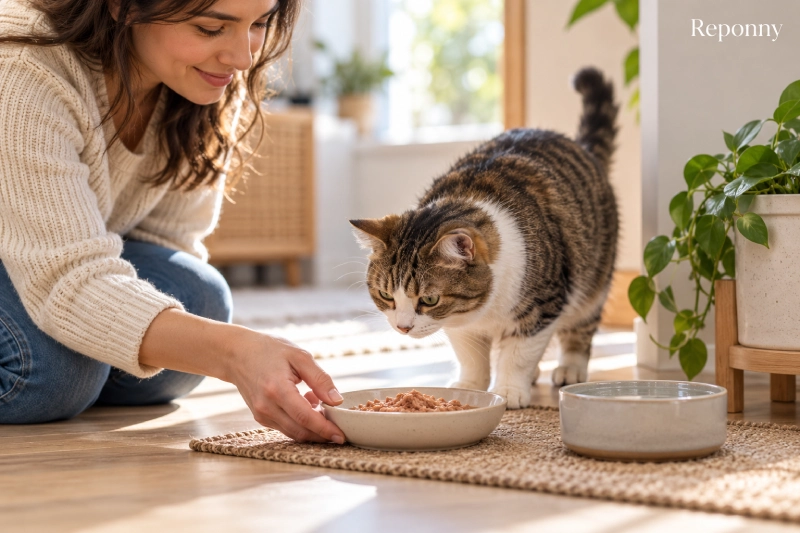
Offer a familiar food rather than introducing several unfamiliar diets at once.
Wet food can be warmed slightly to increase aroma. VCA notes that warming food and offering highly palatable foods can sometimes improve intake in sick cats.
Serve food in a clean, shallow bowl in a quiet area away from noisy appliances, children, or other pets.
Try several small fresh meals rather than leaving one drying bowl of food untouched all day.
Make sure fresh water is readily accessible.
If nasal congestion is present, veterinary guidance may help restore comfort and smell, which can improve food interest. Cornell notes that congestion can interfere with the odor cues that stimulate appetite.
These strategies are meant to support eating temporarily.
They are not a substitute for diagnosing persistent appetite loss.
Should You Force-Feed a Cat That Will Not Eat?
Not unless your veterinarian has specifically instructed you how to provide nutritional support.
Trying to push food into an unwilling cat’s mouth can create additional problems.
Cornell notes that forced oral feeding may worsen food aversion. VCA additionally warns that force-feeding can increase the risk of food entering the airway and causing aspiration pneumonia.
Cats that cannot consume enough food may need professional nutritional support.
In some cases, veterinarians use temporary feeding tubes. Although the idea may sound intimidating, VCA notes that feeding tubes can allow food and medication to be given with considerably less stress and can sometimes be lifesaving.
The important goal is not merely to make food enter the cat.
It is to provide sufficient nutrition safely while addressing the underlying problem.
What Will a Veterinarian Check?
Because appetite loss has so many possible causes, diagnosis usually starts with the history and physical examination.
The veterinarian may examine the mouth and teeth, assess hydration, body weight and temperature, palpate the abdomen, and evaluate the heart, lungs, and general condition.
Depending on the findings, VCA notes that diagnostic testing can include blood counts, blood chemistry, electrolytes, X-rays, ultrasound, and sometimes more specialized procedures.
The tests are not performed simply because the cat is “picky.”
They are intended to identify why the cat stopped eating.
Once the cause is known, treatment might involve pain control, dental treatment, management of nausea, fluids, treatment of the underlying disease, nutritional support, or—in selected cases—a veterinary appetite stimulant.
What About Appetite-Stimulating Medication?
Veterinarians sometimes prescribe appetite stimulants when appropriate.
VCA and Cornell both mention mirtazapine as one medication that may be used in anorexic cats, and other options may be considered depending on the patient.
But stimulating appetite does not eliminate the need to understand why the appetite disappeared.
A cat with a painful tooth, intestinal obstruction, severe nausea, or another significant illness still needs treatment for that underlying condition.
Do not give human medications or leftover veterinary medications without professional guidance.
Is My Cat Sick or Just Picky?
This distinction is not always easy.
A picky cat often maintains normal behavior and body weight and may enthusiastically eat preferred foods while refusing something unfamiliar.
A sick cat may show additional changes such as reduced energy, hiding, vomiting, altered drinking, weight loss, drooling, changes in stool, or general withdrawal.
But cats can hide illness exceptionally well.
Cornell emphasizes that feline anorexia is not simply a cat “deciding not to eat” and recommends investigating persistent food refusal.
If a normally reliable eater suddenly becomes “picky,” especially without an obvious diet change, treat the change as health information rather than personality until you have a reasonable explanation.
Why Overweight Cats Need Extra Attention
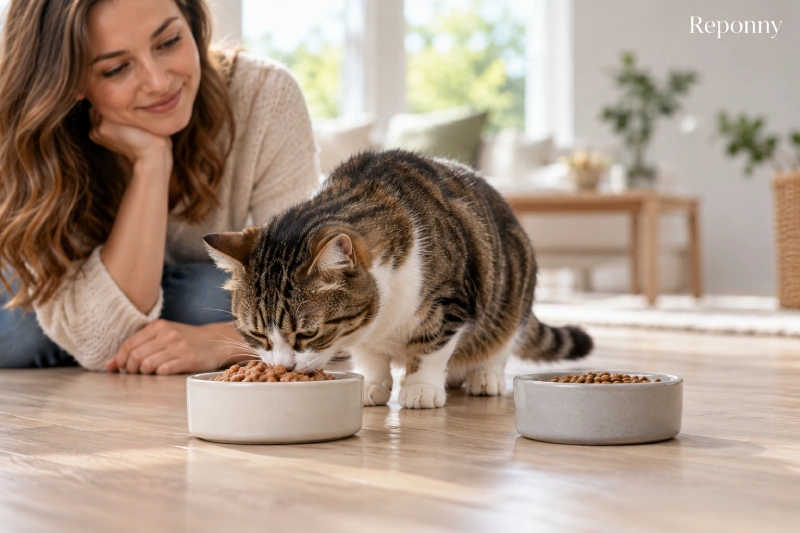
An overweight cat that suddenly stops eating is a particularly important situation.
Because it has substantial fat reserves, it may seem logical to assume that missing food for a while is less dangerous.
The opposite can be true.
Merck explains that hepatic lipidosis commonly develops when an overconditioned cat becomes anorexic and mobilizes large amounts of stored fat to the liver.
Cornell similarly reports a higher incidence of hepatic lipidosis among obese cats.
Therefore, never attempt a crash diet by simply withholding food from an overweight cat.
Weight loss in cats should be gradual, controlled, and nutritionally complete.
If an overweight cat suddenly refuses meals, contact your veterinarian promptly.
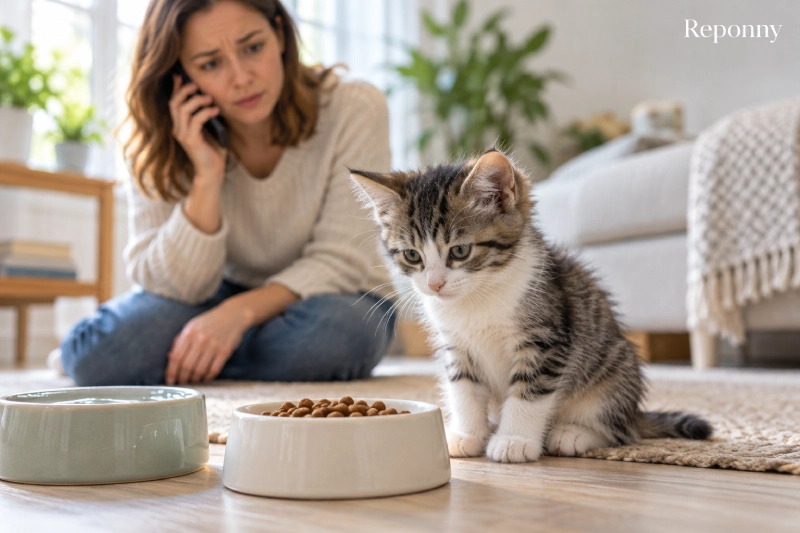
Special Concern: Kittens That Stop Eating
Young kittens have less energy reserve than adults.
Cornell notes that appetite loss can become dangerous much faster in very young kittens; for kittens under six weeks of age, even roughly 12 hours without food may pose a severe threat.
Older kittens still deserve prompt attention when they stop eating.
Potential causes include infection, parasites, gastrointestinal disease, diet changes, pain, congenital problems, and many other conditions.
A kitten that stops eating and also develops vomiting, diarrhea, weakness, fever, or dehydration should be evaluated quickly.
Feline panleukopenia, for example, can cause anorexia, vomiting, diarrhea, severe dehydration, and serious illness, especially in kittens.
Frequently Asked Questions
Why Is My Cat Not Eating but Acting Normal?
A cat can still appear relatively normal during the early stages of dental disease, nausea, stress, infection, kidney disease, or other illnesses.
If your cat refuses all food for around a day—or considerably reduces intake for longer—contact your veterinarian even if behavior otherwise seems normal. Cornell notes that appetite loss itself can have significant consequences.
Why Is My Cat Not Eating but Drinking Water?
Drinking does not rule out illness.
Kidney disease, gastrointestinal disorders, diabetes, nausea, and many other conditions can alter the relationship between food and water intake.
If appetite remains poor, veterinary evaluation is still appropriate.
Why Does My Cat Want Food but Not Eat It?
This pattern may suggest pseudo-anorexia.
Dental disease, painful gums, tooth resorption, oral inflammation, difficulty swallowing, or other painful conditions can make a hungry cat unable or unwilling to eat normally.
Can Stress Make a Cat Stop Eating?
Yes.
Moving, boarding, changes in routine, a new pet, loss of a companion, or other stressful events can suppress appetite in some cats.
Persistent appetite loss should still be investigated rather than automatically attributed to stress.
Can Changing Cat Food Make My Cat Stop Eating?
Yes.
Some cats strongly prefer familiar flavors and textures.
When changing diets for a healthy cat, make the transition gradually rather than abruptly replacing the entire meal.
Should I Give My Cat Tuna If It Will Not Eat?
A small amount of a highly palatable cat-safe food may occasionally tempt a cat, but human tuna should not become the long-term solution to appetite loss.
The priority is identifying why the cat is not eating and maintaining nutritionally appropriate intake.
Can I Syringe-Feed My Cat?
Do not force food into your cat’s mouth without veterinary instruction.
Force-feeding can worsen food aversion and increases the risk of aspiration.
When Is a Cat Not Eating an Emergency?
A complete refusal of food approaching 24 hours warrants prompt veterinary attention, and some veterinary urgent-care guidance recommends evaluation even sooner. Seek help immediately when appetite loss is accompanied by serious illness signs or occurs in a high-risk cat such as a young kitten or diabetic animal.
Final Thoughts
So, why is your cat not eating?
There is no single answer.
Sometimes it is something relatively simple, such as:
a new food, a stressful event, or an unfamiliar feeding environment.
But appetite loss can also be caused by dental pain, nausea, gastrointestinal disease, kidney disease, pancreatitis, infection, medication effects, systemic illness, or many other medical problems.
The most important thing is not to allow prolonged food refusal to become normal.
A cat that eats nothing for roughly a day deserves veterinary attention, and high-risk cats may need help even sooner.
Do not assume your cat will eventually eat because it becomes hungry enough.
Do not force-feed unless a veterinarian has specifically instructed you.
And do not focus so heavily on finding a more tempting flavor that you overlook the reason the appetite disappeared.
A cat’s relationship with its food is one of the simplest health signals owners can observe every day.
When that pattern suddenly changes, pay attention.
Early investigation can sometimes reveal a problem while it is still much easier to manage.