Your cat may eat the same food for years without a problem. But as cats grow older, their bodies can change in ways that affect calories, muscle mass, digestion, appetite, hydration, and the way nutrients are used.
That does not mean every older cat automatically needs a product labeled “senior.”
In fact, senior cat nutrition is highly individual. One older cat may be overweight and need fewer calories, while another may begin losing weight and muscle despite eating normally. Some senior cats remain remarkably healthy, while others develop kidney disease, hyperthyroidism, diabetes, dental disease, arthritis, or gastrointestinal problems that change their nutritional needs.
Under the 2021 AAHA/AAFP Feline Life Stage Guidelines, cats are generally considered senior from about 10 years of age onward. The guidelines emphasize individualized care rather than assuming every older cat needs the same diet.
Quick answer: Healthy senior cats still need complete and balanced nutrition, but aging may change calorie needs, protein and fat digestion, muscle maintenance, hydration, appetite, and feeding comfort. The right diet should be based on body weight, muscle condition, health status, and veterinary assessment—not age alone.
What Changes Nutritionally as a Cat Gets Older?
Aging is not a disease.
Some cats reach their teens with excellent body condition and few obvious changes. Others gradually become less active, lose muscle, gain weight, lose weight, develop dental problems, or become less interested in food.
Merck Veterinary Manual notes an important pattern: middle-aged cats are often more prone to obesity, while older cats may begin having difficulty maintaining body weight. Older cats can also become less efficient at digesting protein and especially fat. Merck Veterinary Manual
That means the nutritional problem can change with age.
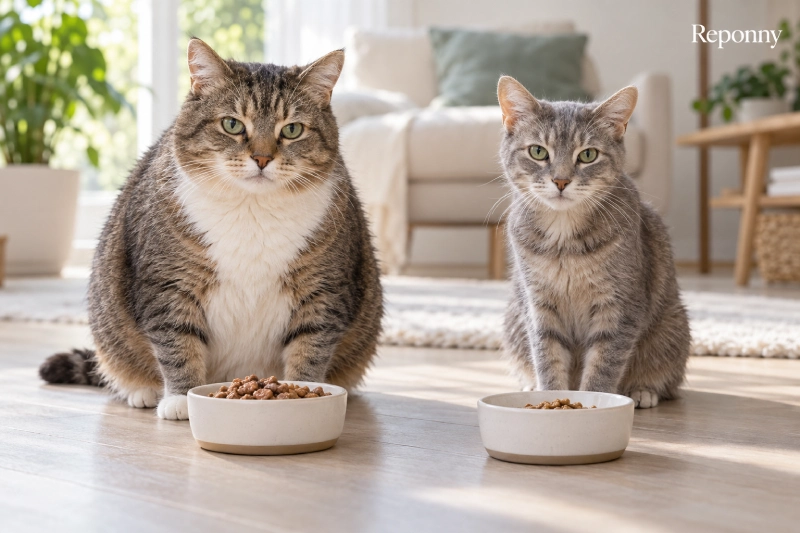
A 9-year-old overweight indoor cat may need careful calorie control.
A thin 15-year-old cat losing muscle may need a more energy-dense and highly digestible diet.
This is why feeding decisions should follow the cat—not simply the number of candles on the birthday cake.
Does Every Senior Cat Need Senior Cat Food?
No.
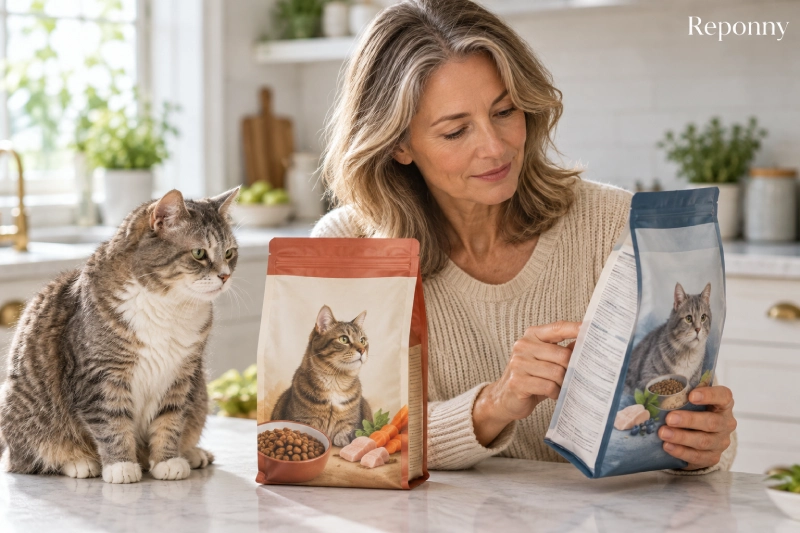
The words “senior cat food” on the front of a package do not automatically mean that food is necessary or superior for every older cat.
AAFCO nutrient profiles primarily identify categories such as growth/reproduction and adult maintenance. Merck notes that these established nutrient profiles do not create a separate universal nutrient standard specifically for healthy senior cats, even though research shows nutritional needs may change during aging.
That means two products labeled “senior” may have very different:
- calorie density,
- protein content,
- fat content,
- fiber,
- phosphorus,
- texture,
- and overall formulation.
Rather than buying food because it says Senior 7+, Mature, or Healthy Aging, look at what your individual cat actually needs.
A healthy older cat maintaining ideal weight and muscle may continue doing well on an appropriate complete and balanced adult diet.
A cat losing muscle, developing disease, or struggling to eat may need something different.
Protein Becomes Especially Important for Aging Cats
One of the most common misconceptions is that older cats should automatically eat less protein.
For a healthy senior cat, that is not a good universal rule.
Cats are obligate carnivores and depend heavily on dietary protein throughout life. Protein helps maintain:
- skeletal muscle,
- skin and coat,
- enzymes,
- immune function,
- organ tissues,
- and many other body structures.
Merck reports that older cats may digest protein less efficiently than younger adults. As a result, senior diets may sometimes need highly digestible protein and adequate protein intake to help maintain body condition and lean tissue.
The FelineVMA’s senior-care materials also highlight muscle loss and a potentially increased need for protein as important considerations in older cats.
Do not confuse healthy aging with kidney disease
Protein recommendations can change when a cat develops a medical condition.
For example, Cornell notes that cats with advanced chronic kidney disease may benefit from diets specifically modified in protein and phosphorus.
That is a therapeutic decision—not evidence that every 10-year-old cat should be placed on a low-protein diet.
Watch Muscle Condition, Not Just Body Weight
A scale tells only part of the story.
An older cat can maintain approximately the same body weight while quietly losing muscle and gaining fat.
This is why veterinarians assess both Body Condition Score (BCS) and Muscle Condition Score (MCS).
Cornell describes an ideal body condition around 5 on a 9-point BCS scale, but senior cats also benefit from regular monitoring for muscle loss.
Pay particular attention to:
- the shoulders,
- spine,
- hips,
- thighs,
- and overall body shape.
If these areas begin looking bonier even though the scale has barely changed, muscle loss may be occurring.
The FelineVMA senior-care guidance recommends monitoring both weight and muscle condition because gradual changes can be difficult for owners to notice at home.
A useful habit
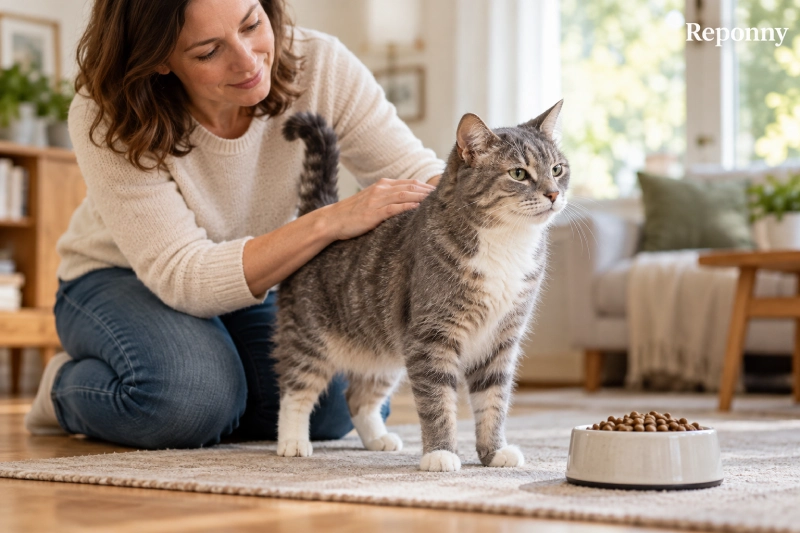
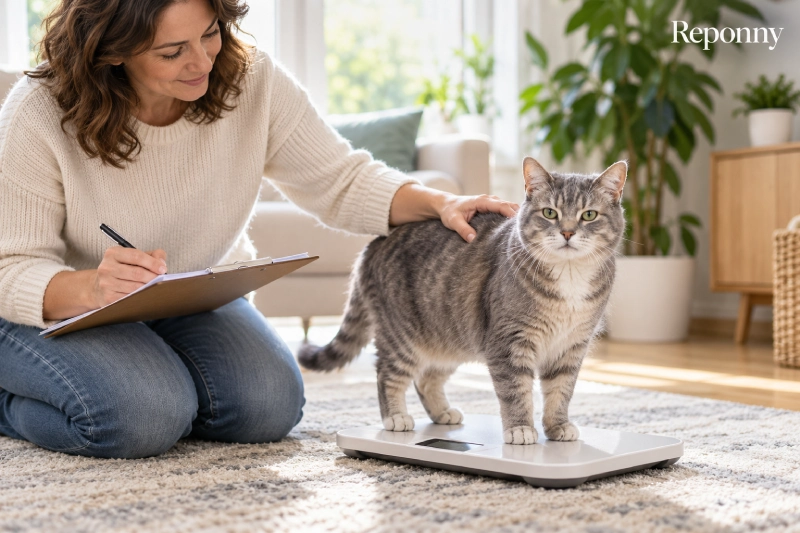
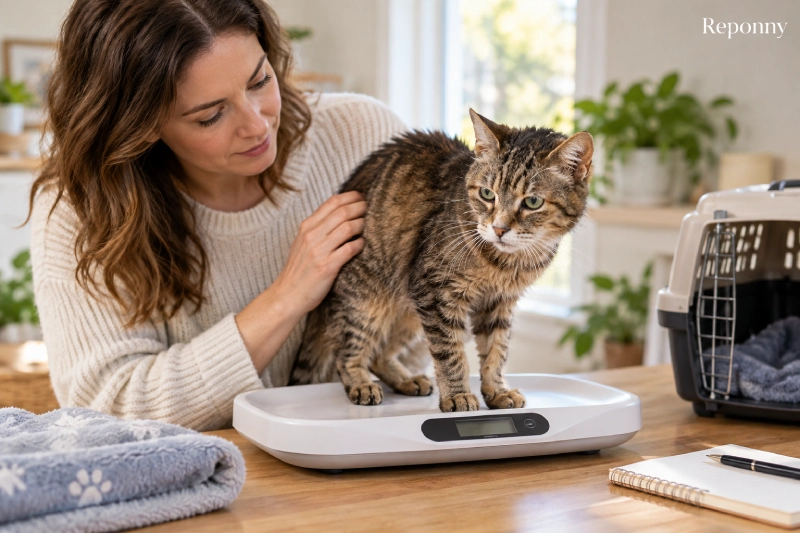
Weigh your senior cat regularly if possible.
Tracking weight monthly can make a gradual decline easier to detect than relying on visual memory.
Unexplained weight loss should not simply be accepted as “normal aging.”
Senior Cats May Need Different Calories
Aging does not always mean eating fewer calories.
During the mature-adult period, reduced activity and neutering can contribute to weight gain in some cats.
Later in life, the situation can reverse.
Merck notes that some older cats become less efficient at digesting fat and may have difficulty maintaining weight. Depending on body condition and activity, dietary energy and fat may need to be adjusted up or down.
That is an important distinction.
If your senior cat is overweight
The priority may be:
- controlled calories,
- measured portions,
- adequate protein,
- preserving muscle,
- and gradual weight management.
If your senior cat is too thin
The priority may shift toward:
- greater calorie density,
- highly digestible food,
- sufficient protein,
- palatable meals,
- and investigating why weight is being lost.
Never dramatically increase or restrict food based only on age.
Use body condition and veterinary guidance.
Fat Is Not Automatically Bad for Senior Cats
Fat is calorie-dense, so it is often discussed negatively in conversations about weight.
But senior cats do not universally require low-fat diets.
Merck reports that fat digestion can decline in aging cats, and some geriatric cats may need diets with greater fat availability or higher energy density to maintain healthy body weight.
For an underweight older cat with no condition requiring fat restriction, a more calorie-dense food may help provide adequate energy without requiring the cat to consume a very large volume.
For an overweight senior cat, however, excessive energy density can make weight control more difficult.
Again, individual body condition determines the goal.
Hydration Becomes Increasingly Important
Fresh water matters at every age, but hydration deserves particular attention in senior cats.
Cornell notes that older cats should have easy access to clean water, especially because kidney function commonly becomes a concern with advancing age.
Water supports:
- circulation,
- digestion,
- electrolyte balance,
- temperature regulation,
- nutrient transport,
- and organ function.
Cats obtain water from both drinking and food.
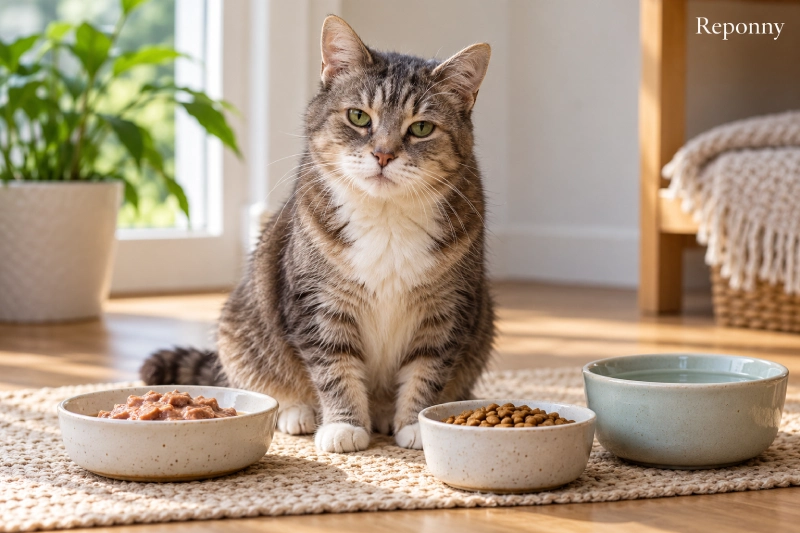
Wet food can provide substantial dietary moisture, while cats eating dry food generally need to obtain more water by drinking.
Cornell also explains that conditions causing increased water loss or reduced intake can predispose cats to dehydration.
Help an older cat reach water easily
Provide:
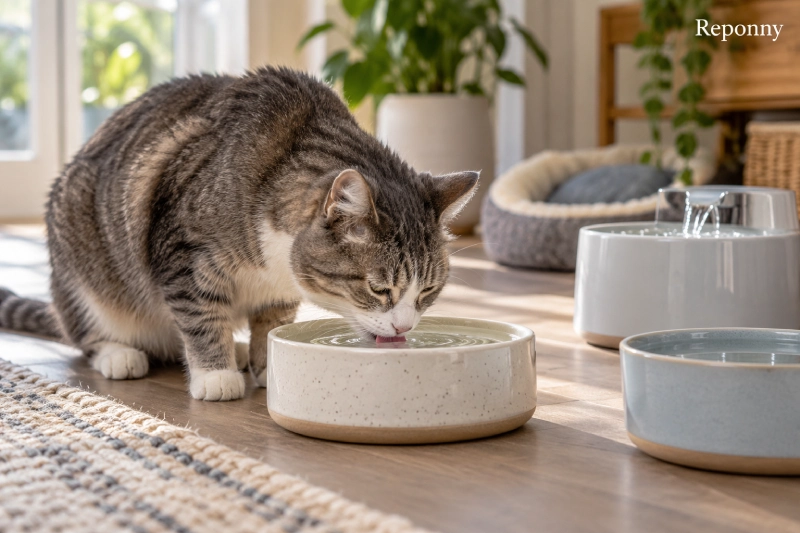
- multiple water bowls,
- low-effort access,
- clean fresh water,
- wide comfortable bowls,
- and possibly a fountain if your cat enjoys moving water.
A senior cat with arthritis should not need to climb stairs every time it wants a drink.
Wet Food or Dry Food for Senior Cats?
Neither format is automatically best for every older cat.
A complete and balanced wet food can offer:
- high moisture,
- softer texture,
- strong aroma,
- and easier eating for some cats with dental problems.
A complete and balanced dry food can offer:
- convenience,
- calorie density,
- puzzle-feeder compatibility,
- and a familiar texture for cats that strongly prefer kibble.
Cornell notes that periodontal disease can make dry food difficult for some cats to chew; wet food, smaller kibble, or food softened with water may be easier in those cases.
Many senior cats can also eat a combination of wet and dry food.
What matters most is that the total diet remains nutritionally appropriate and provides suitable calories.
Dental Problems Can Change How a Senior Cat Eats
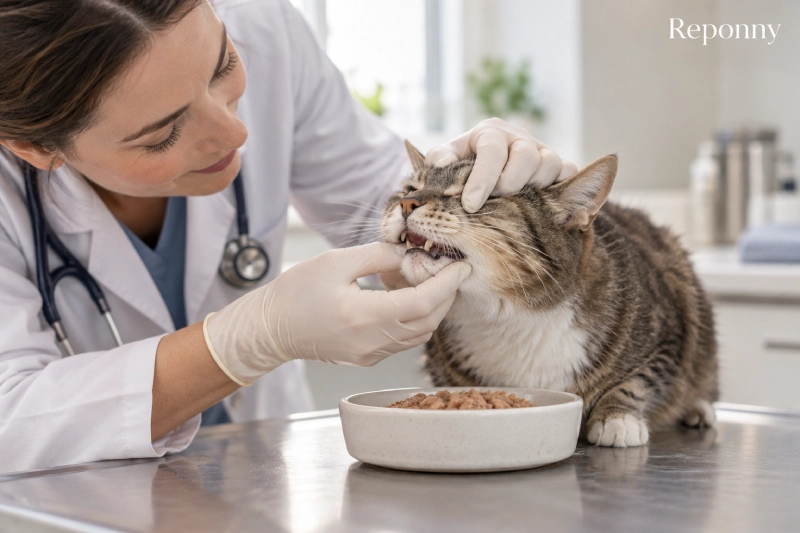
Older cats often develop dental disease.
Painful teeth, inflamed gums, missing teeth, or oral disease can make eating uncomfortable.
A cat may:
- approach food and walk away,
- chew on one side,
- drop food,
- prefer wet food,
- stop eating crunchy treats,
- or eat less overall.
Cornell specifically notes that periodontal disease is common and may make chewing dry food difficult.
Do not simply switch to softer food and assume the problem is solved.
Difficulty eating should prompt a veterinary dental assessment.
Soft food may make meals easier, but it does not treat an infected or painful mouth.
Appetite Can Change With Age
Older cats sometimes become less enthusiastic about meals.
Changes in smell and taste, dental discomfort, nausea, medication, pain, stress, or disease can all influence appetite.
The FelineVMA senior-care brochure notes that decreasing smell or taste may contribute to reduced interest in food in some older cats.
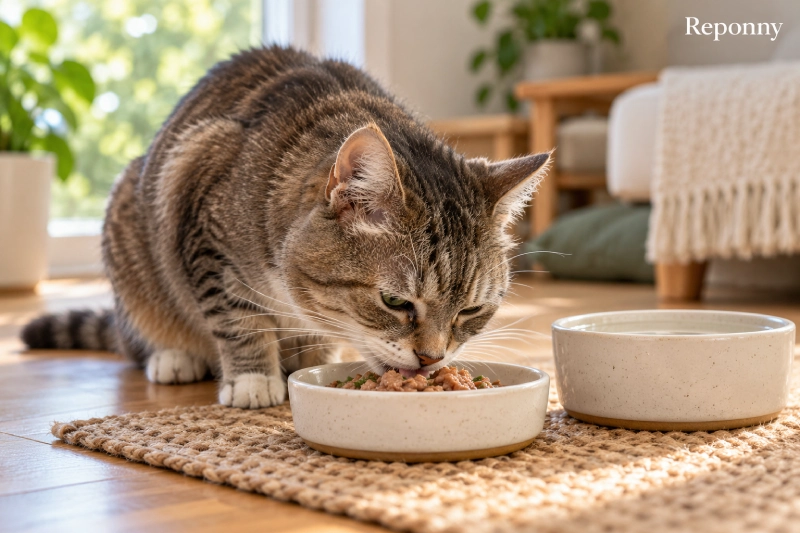
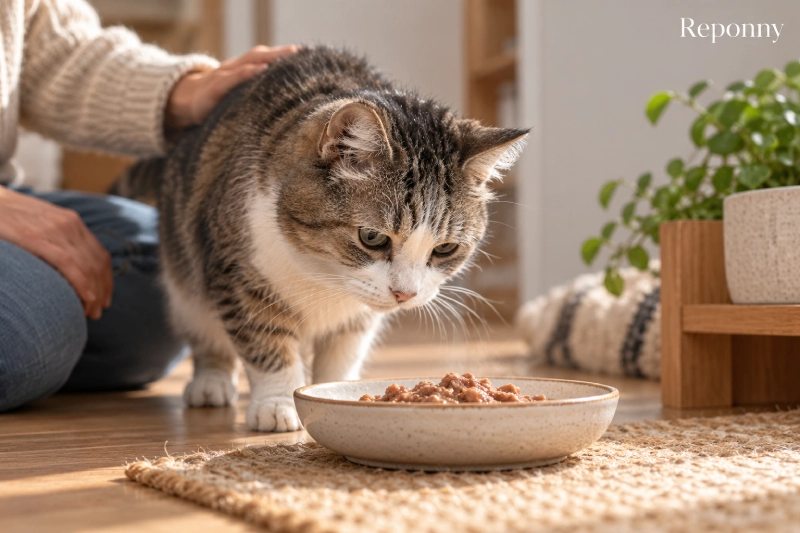
Practical ways to make meals easier may include:
- serving smaller meals more often,
- warming wet food slightly to enhance aroma,
- offering a preferred texture,
- using shallow bowls,
- creating a quiet feeding area,
- and making food physically easy to reach.
But reduced appetite should not automatically be treated as ordinary aging.
A senior cat that begins eating substantially less needs attention, especially if weight loss follows.
Smaller, More Frequent Meals May Help Some Senior Cats
Senior cats generally do not need a completely different feeding frequency simply because of age. Cornell states that cats 10 years and older can often maintain the same general feeding routine unless a veterinarian recommends otherwise.
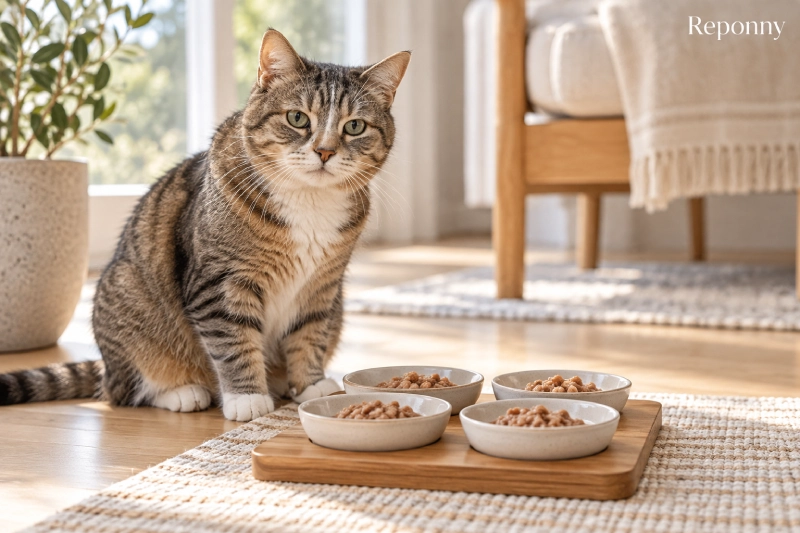
However, smaller meals can be useful when an older cat:
- eats slowly,
- has reduced appetite,
- becomes full quickly,
- struggles with large portions,
- or needs more opportunities to consume enough calories.
For example, instead of two larger meals, you might divide the same daily calories into three or four smaller meals.
The key is still the total daily intake.
More meals should not accidentally mean more calories unless weight gain is intentionally part of the veterinary plan.
Make the Feeding Area Senior-Friendly
Nutrition is not only about the food itself.
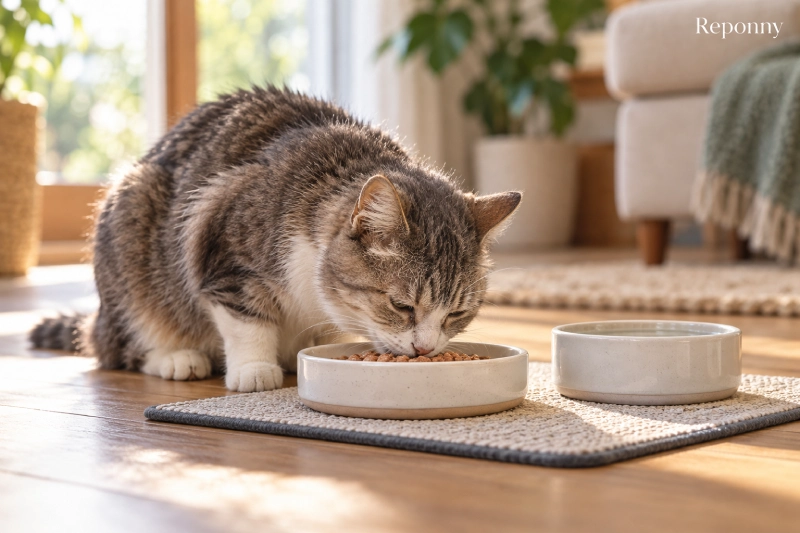
An older cat with arthritis may want to eat but find reaching the bowl uncomfortable.
Consider:
- nonslip mats,
- shallow bowls,
- easy-access feeding locations,
- avoiding unnecessary stairs,
- separating food from other pets if competition exists,
- and adjusting bowl height if your veterinarian believes it improves comfort.
A meal can be nutritionally perfect and still fail if the cat cannot comfortably reach or eat it.
Senior care guidelines emphasize adapting the home to mobility changes and making essential resources more accessible.
Should Senior Cats Receive Supplements?
Not automatically.
If your older cat already eats a complete and balanced food, adding vitamins or minerals “for seniors” can be unnecessary and in some cases could disrupt nutritional balance.
Merck notes that nutritional supplements are generally unnecessary when a complete balanced diet is being fed and may sometimes be harmful.
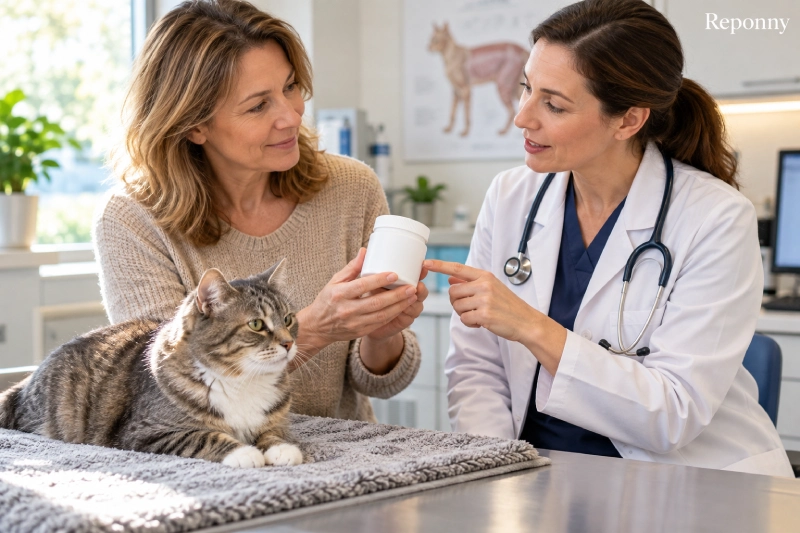
Supplements may be appropriate when a veterinarian recommends them for a specific reason.
Examples might include a professionally chosen supplement used as part of treatment for a diagnosed condition.
That is very different from giving multiple products simply because a cat is old.
Ask:
What problem is this supplement intended to solve?
If there is no clear answer, do not assume more nutrients equal better nutrition.
When a Senior Cat Has Kidney Disease
Chronic kidney disease becomes more common as cats age, but a healthy senior cat should not automatically be treated as though it already has CKD.
Once kidney disease is diagnosed, nutrition can become an important part of medical management.
Cornell notes that cats with more advanced CKD are often fed diets modified in nutrients such as phosphorus and protein, and hydration is particularly important.
The exact dietary strategy depends on:
- disease stage,
- blood and urine results,
- body condition,
- appetite,
- other illnesses,
- and the individual cat.
Do not place a healthy older cat on a kidney diet “just in case.”
Therapeutic diets are designed for specific medical situations.

Weight Loss in a Senior Cat Is Not Something to Ignore
One of the most important nutritional messages for senior cat owners is this:
Do not assume unexplained weight loss is simply old age.
Older cats are more likely to develop conditions that can affect appetite, calorie use, nutrient absorption, or metabolism.
The FelineVMA lists possible age-associated problems including:
- chronic kidney disease,
- hyperthyroidism,
- diabetes,
- gastrointestinal disease,
- dental disease,
- cancer,
- and other chronic conditions.
Cornell similarly advises veterinary evaluation when a cat refuses food and loses weight.
Contact your veterinarian if you notice:
- steady weight loss,
- muscle loss,
- increased thirst,
- increased urination,
- vomiting,
- diarrhea,
- reduced appetite,
- dramatically increased appetite with weight loss,
- difficulty chewing,
- or substantial behavior changes.
Dietary adjustments are most useful when you understand why the cat is losing weight.
What Should You Look for in Senior Cat Food?
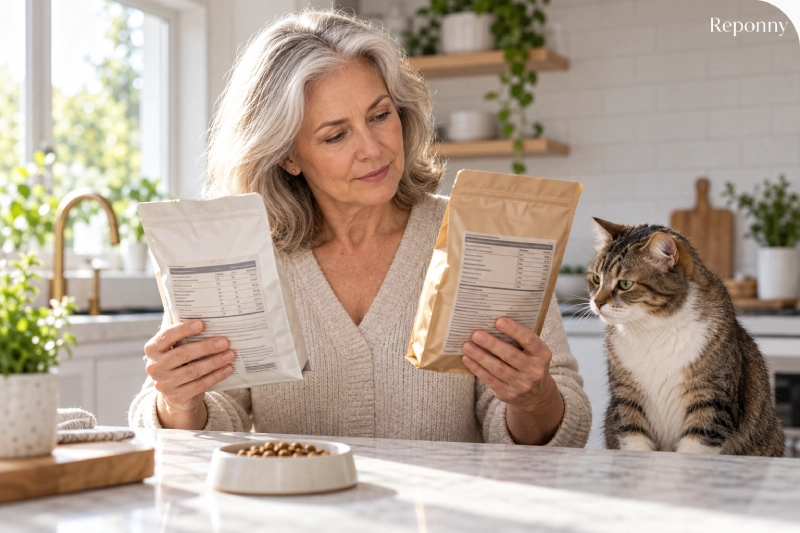
There is no single perfect label, but these questions can help.
| What to Check | Why It Matters |
|---|---|
| Complete and balanced nutrition | Ensures the food is suitable as the main diet |
| Appropriate calories | Helps maintain ideal body weight |
| Adequate high-quality protein | Supports lean muscle |
| Digestibility | Can matter increasingly with age |
| Palatability | Older cats must actually eat enough |
| Moisture | Helps support total water intake |
| Texture | Dental or oral problems may affect preference |
| Medical suitability | Chronic disease can change nutritional priorities |
Do not automatically choose the food with:
the most protein, the least phosphorus, the fewest calories, or the longest list of supplements.
Nutrition is about balance and individual need.
How Often Should a Senior Cat See the Veterinarian?
Nutrition and preventive care are closely connected in older cats.
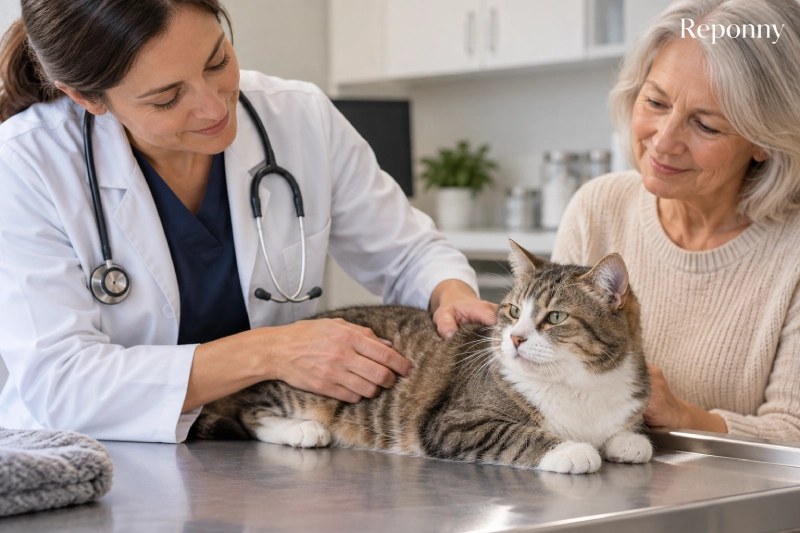
The FelineVMA senior-care guidelines recommend veterinary examinations at least every six months for senior cats roughly 10–15 years old, with even more frequent assessment suggested for very old cats or those with chronic disease.
Regular visits allow the veterinary team to monitor:
- weight,
- muscle condition,
- dental health,
- blood pressure,
- laboratory results,
- mobility,
- appetite,
- and other age-related changes.
A feeding plan that worked perfectly two years ago may no longer be ideal if your cat’s health has changed.
Frequently Asked Questions
At What Age Is a Cat Considered Senior?
The 2021 AAHA/AAFP Feline Life Stage Guidelines classify cats as senior at approximately 10 years and older.
Individual cats still age differently, so chronological age should not replace assessment of health, body condition, and lifestyle.
Should Senior Cats Eat Less?
Not necessarily.
Some mature cats become less active and need fewer calories, while very old cats may struggle to maintain weight and require more energy-dense food.
Do Senior Cats Need More Protein?
Healthy aging cats should not automatically have protein restricted.
Older cats may digest protein less efficiently and maintaining adequate high-quality protein can be important for muscle preservation. Cats with specific diseases may require different dietary strategies.
Is Wet Food Better for Senior Cats?
Wet food can provide additional moisture and may be easier for cats with dental problems to eat.
However, a healthy senior cat can potentially do well on wet food, dry food, or a combination when the diet is complete and balanced and fits the individual cat.
Should Senior Cats Eat Special Kidney Food?
Only when medically appropriate.
Kidney diets are therapeutic diets intended for cats with diagnosed kidney disease. Healthy senior cats should not automatically receive them simply because of age.
Why Is My Senior Cat Losing Weight but Still Eating?
Several medical conditions can produce weight loss despite apparently normal or increased appetite.
Examples can include hyperthyroidism, diabetes, gastrointestinal disease, and other illnesses. Senior-cat weight loss warrants veterinary evaluation rather than simply increasing food indefinitely.
How Many Times a Day Should a Senior Cat Eat?
Many healthy senior cats can continue an adult feeding schedule, often one or two meals daily. Some older cats may benefit from three or four smaller meals when appetite or digestive comfort makes larger meals difficult.
Final Thoughts
Senior cat nutrition should not be based on one rule such as:
“older cats need less food,”
“senior cats need low protein,”
or
“every cat over 10 needs senior food.”
Aging cats become increasingly individual.
One senior may need calorie restriction.
Another may need more energy.
One may maintain excellent muscle.
Another may begin losing lean tissue.
One may eat dry food comfortably.
Another may need soft wet food because dental disease makes chewing painful.
For a healthy senior cat, focus on:
complete and balanced nutrition, adequate high-quality protein, appropriate calories, hydration, body weight, muscle condition, palatability, and comfortable access to food.
Then reassess regularly.
The most important nutritional change with age may not be a specific ingredient.
It may be the need to watch your cat more closely.
Regular weighing, body and muscle assessment, veterinary checkups, and attention to changes in appetite or drinking can reveal problems long before a dramatic decline becomes obvious.
Feed the cat in front of you—not simply the age printed on the calendar.