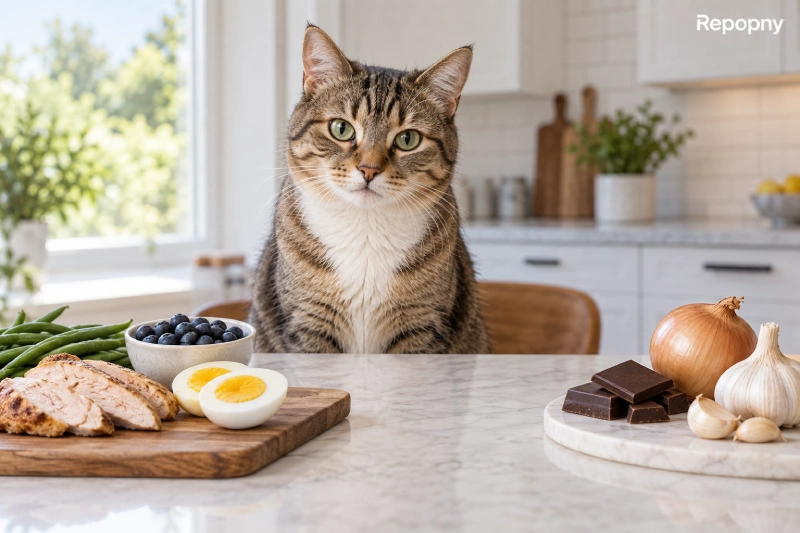
It is hard to resist sharing a small bite of food when your cat sits beside you and watches every movement of your fork.
Some human foods can be offered to cats safely in small amounts. Others can cause digestive upset, interfere with a balanced diet, or create a genuine poisoning emergency.
The important distinction is that “safe for cats” does not mean “good as a regular cat diet.”
Cats are obligate carnivores. They depend on nutrients that are naturally found in animal tissues, and their main diet should provide complete and balanced nutrition formulated specifically for cats. Human foods are best treated as occasional extras rather than replacements for regular cat food.
Quick answer: Plain cooked chicken, turkey, lean beef, cooked eggs, and small amounts of some fruits and vegetables can be safe for many healthy cats. Avoid onions, garlic, chives, chocolate, caffeine, alcohol, grapes, raisins, raw yeast dough, foods containing xylitol, cooked bones, and heavily seasoned foods.
Safe Human Foods for Cats at a Glance
Here is a practical starting point.
| Human Food | Generally Safe? | How to Serve |
|---|---|---|
| Cooked chicken | Yes | Plain, boneless, unseasoned |
| Cooked turkey | Yes | Plain, skinless, boneless |
| Lean cooked beef | Yes | Small pieces, no seasoning |
| Cooked eggs | Yes | Fully cooked, plain |
| Cooked fish | Occasionally | Boneless, unseasoned |
| Plain pumpkin | Yes | Cooked or plain purée |
| Green beans | Yes | Plain, small pieces |
| Zucchini | Yes | Plain, cooked or small raw pieces |
| Blueberries | Yes | Small amounts |
| Strawberries | Yes | Small pieces |
| Seedless watermelon | Yes | No rind or seeds |
| Apple | Small amounts | Remove seeds and core |
| Milk | Usually best avoided | Many cats do not tolerate lactose well |
| Chocolate | No | Avoid completely |
| Onion / garlic | No | Avoid all forms |
| Grapes / raisins | No | Avoid |
| Alcohol | No | Avoid completely |
| Xylitol-containing food | No | Avoid |
| Raw dough | No | Avoid |
| Cooked bones | No | Choking/obstruction risk |
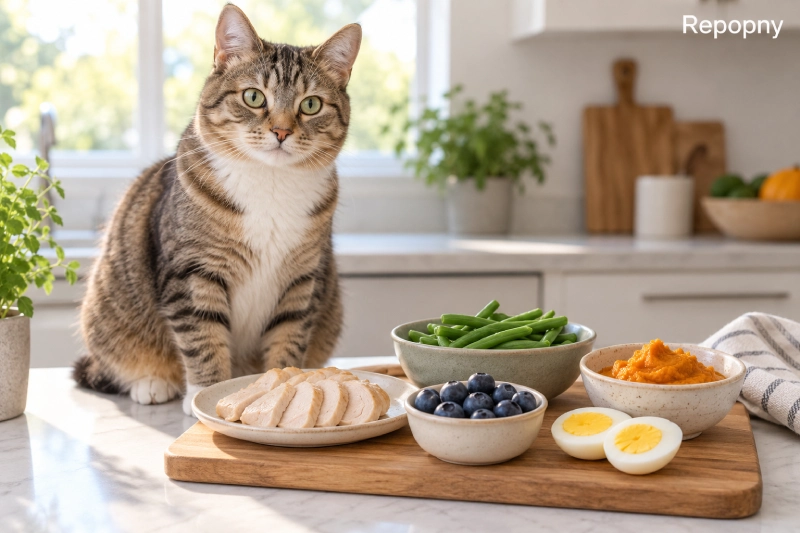
VCA notes that foods such as cooked meats, cooked seafood, cooked eggs, apples, blueberries, strawberries, zucchini, green beans, and seedless watermelon can be used as occasional treats for cats when served appropriately.
1. Plain Cooked Chicken and Turkey
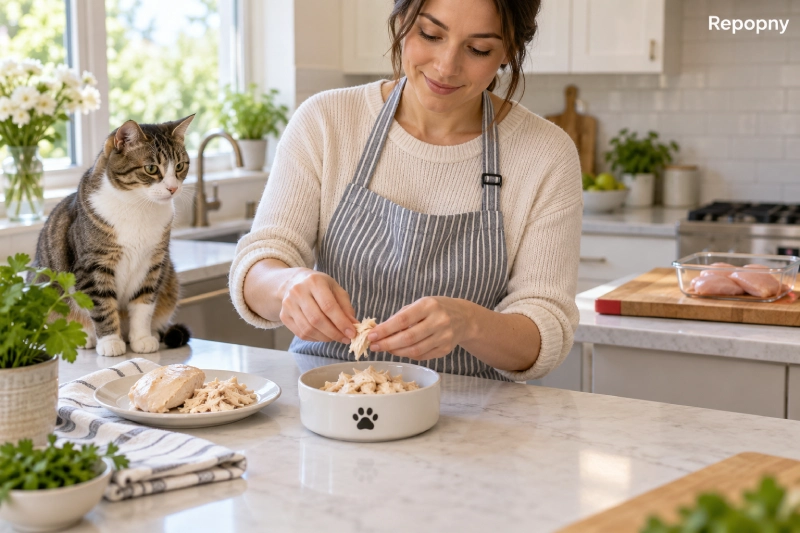
Cats are naturally attracted to meat, and small portions of plain, thoroughly cooked chicken or turkey can make an excellent high-value treat.
Remove:
- bones,
- skin if it is particularly fatty,
- sauces,
- marinades,
- gravy,
- onion,
- garlic,
- and seasoning.
The piece you give your cat should look much more boring than the portion on your own dinner plate.
Plain cooked meat can be used as an occasional treat, but it should not become the cat’s entire diet. Muscle meat alone does not provide every vitamin, mineral, fatty acid, and amino acid that cats require in the correct proportions.
Cornell emphasizes that cats require a nutritionally balanced diet containing a variety of essential nutrients and warns that homemade diets can easily become nutritionally incomplete if they are not professionally formulated.
2. Lean Cooked Beef
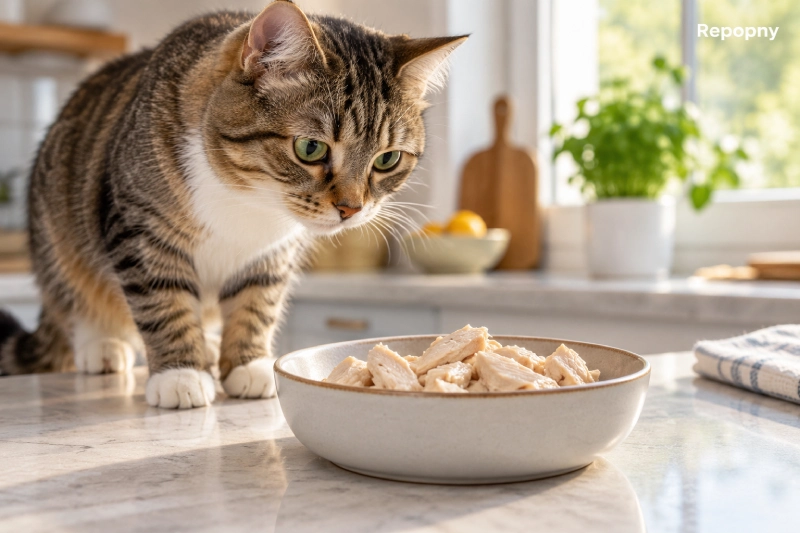
A few small pieces of plain cooked lean beef can also be offered to many healthy cats.
Again, preparation matters.
Avoid meat that has been cooked with:
- onion powder,
- garlic powder,
- excessive salt,
- butter,
- spicy sauces,
- barbecue sauce,
- or rich gravy.
Processed meat products such as sausage, bacon, heavily seasoned deli meat, and cured meats are not equivalent to a simple piece of cooked beef.
They may contain large amounts of sodium, fat, preservatives, or seasonings that are unnecessary for your cat.
If you want to share meat, the safest approach is often to separate a small unseasoned piece before preparing the rest of the meal for humans.
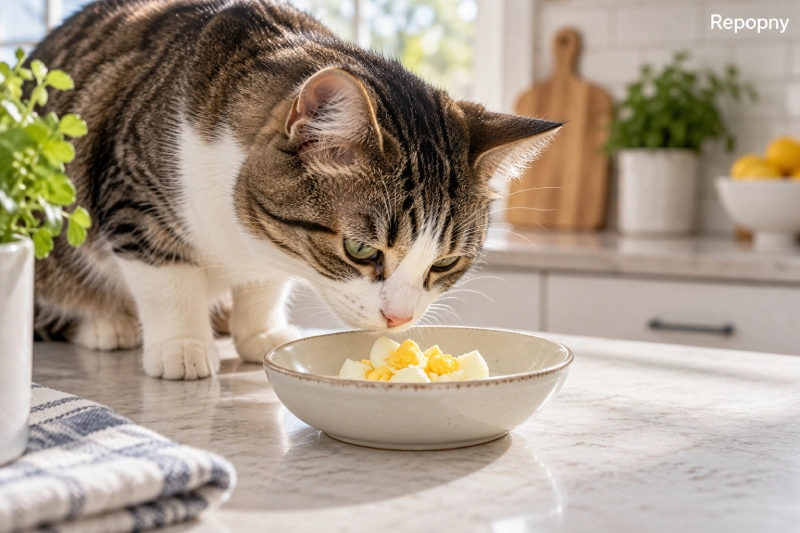
3. Cooked Eggs
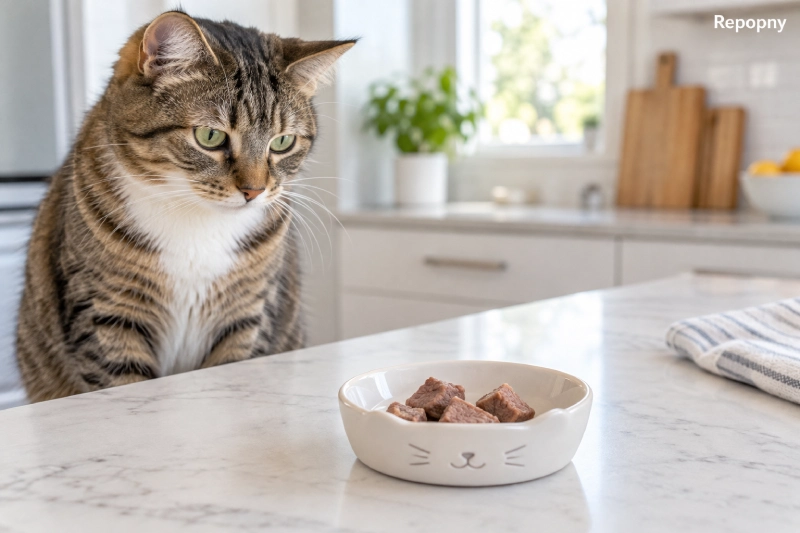
Fully cooked eggs can be given to cats in small amounts.
VCA includes cooked eggs among human foods that can be used as cat treats.
Eggs provide protein and are often highly appealing to cats, but the portion should remain small because treats contribute calories.
A small bite of plain scrambled or hard-boiled egg is much more appropriate than eggs cooked with:
- butter,
- salt,
- cheese,
- onion,
- garlic,
- or sausage.
Avoid routinely feeding raw egg. Raw animal products introduce food-safety concerns, including exposure to potentially harmful microorganisms. Cornell advises against raw meat as food or treats because of infectious-disease risks, and similar food-safety principles apply to other raw animal products.
4. Cooked Fish and Seafood
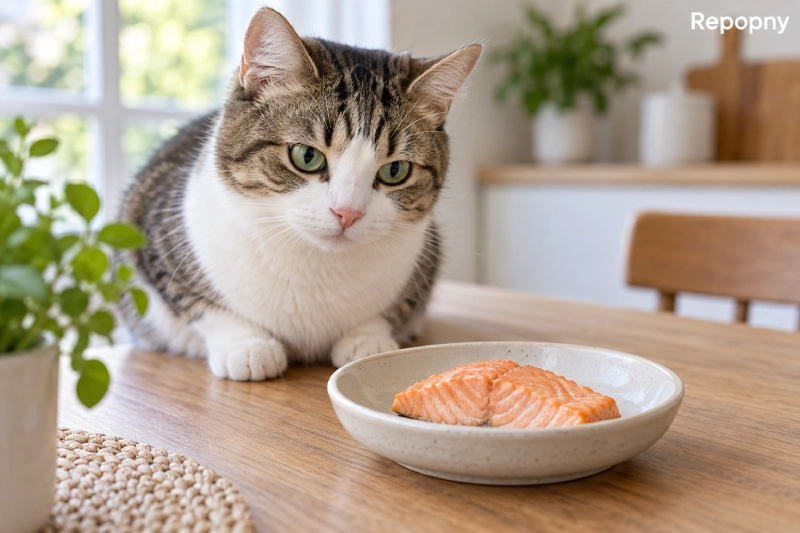
Plain, fully cooked seafood can occasionally be used as a treat.
VCA includes cooked seafood among foods that can be offered to cats in moderation.
Suitable examples may include a small piece of:
- salmon,
- white fish,
- shrimp,
- or another fully cooked, boneless seafood.
Remove all bones and avoid seasoning, oil, sauces, and salt-heavy preparations.
Fish should not automatically become the majority of your cat’s diet simply because your cat loves it.
Cornell notes that some cats fed canned fish products intended for humans have developed serious neurological problems, reinforcing why human canned fish should not replace nutritionally complete cat food.
An occasional bite of plain cooked fish is very different from building an entire diet around canned tuna.
5. Plain Pumpkin
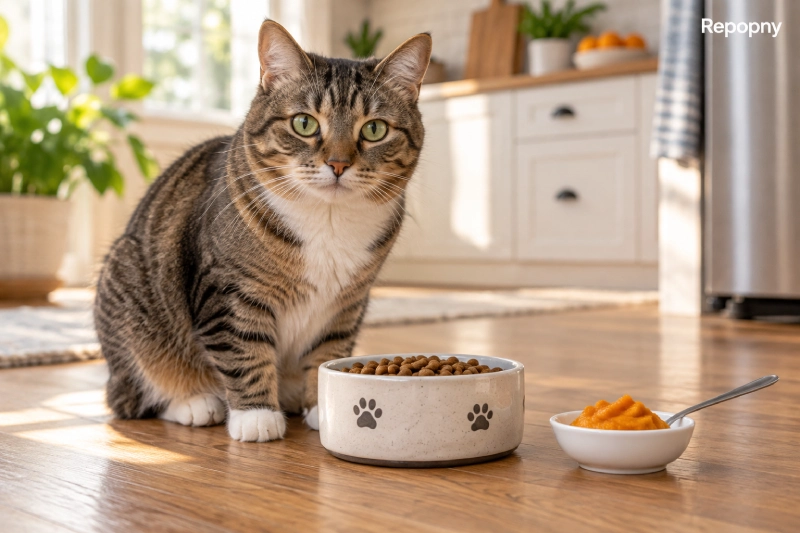
Plain pumpkin can be used in small amounts for many cats.
The key word is plain.
Use cooked pumpkin or pure pumpkin purée rather than pumpkin pie filling, which may contain added sugar, spices, and other ingredients.
VCA lists plain pumpkin as an acceptable occasional food for cats and notes its fiber content.
However, adding pumpkin should not become a substitute for veterinary care if your cat is experiencing persistent diarrhea, constipation, vomiting, or another digestive problem.
Gastrointestinal symptoms can have many different causes.
6. Green Beans and Zucchini
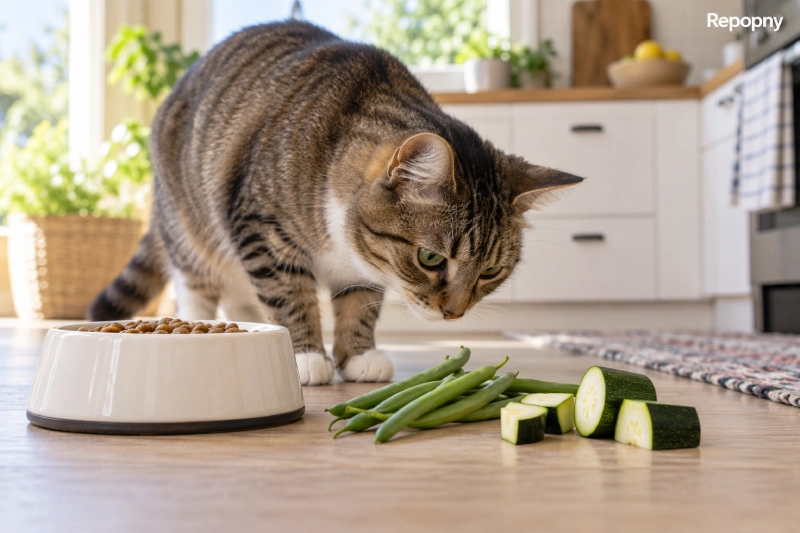
Cats do not need vegetables in the same way humans do, but small amounts of certain vegetables can be safe as treats.
VCA identifies foods such as green beans and zucchini as options that some cats may enjoy.
Serve them:
- plain,
- without salt,
- without butter,
- without garlic or onion,
- and in pieces small enough to eat safely.
Do not be surprised if your cat shows absolutely no interest.
Cats are obligate carnivores, so a cat refusing your carefully prepared zucchini is not exactly unusual.
Vegetables should remain an optional treat rather than an attempt to turn a feline diet into a human-style balanced plate.
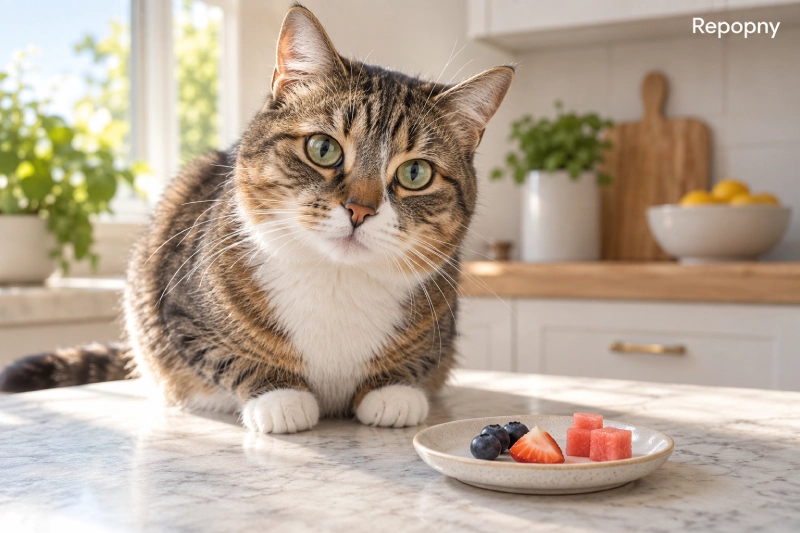
7. Blueberries, Strawberries and Seedless Watermelon
Some fruits can also be given in very small quantities.
VCA includes:
blueberries, strawberries, raspberries, and seedless watermelon
among human foods that can be used as occasional cat treats.
Fruit is not nutritionally necessary for cats, and many cats will ignore it completely.
If yours likes it, offer only a tiny amount.
Remove:
- seeds,
- pits,
- hard cores,
- stems,
- and rind where appropriate.
Fruit also contains naturally occurring sugars, so it should remain an occasional extra rather than a large part of the diet.
Human Foods Cats Should Avoid
The next group is much more important.
Several common foods in human kitchens can be harmful to cats, and some exposures warrant immediate veterinary advice.
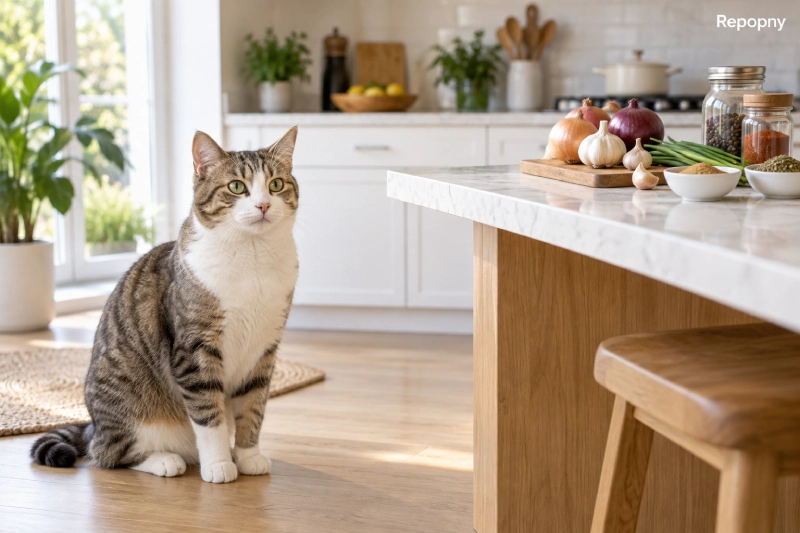
8. Onions, Garlic, Chives and Leeks
Cats should not eat foods from the Allium family, including:
- onions,
- garlic,
- chives,
- leeks.
These ingredients can damage red blood cells and lead to anemia.
Merck Veterinary Manual reports that cats are particularly susceptible to Allium poisoning and that toxicity can occur with raw, cooked, dehydrated, or powdered forms. Concentrated forms such as onion and garlic powders can be especially concerning.
That makes many ordinary human foods unsuitable for cats.
Examples include:
- seasoned chicken,
- gravy,
- soups,
- sauces,
- garlic bread,
- onion-flavored meat,
- seasoning mixes.
Do not assume a food is safe simply because you cannot see pieces of onion. Powdered ingredients may still be present.
9. Chocolate, Coffee and Caffeine
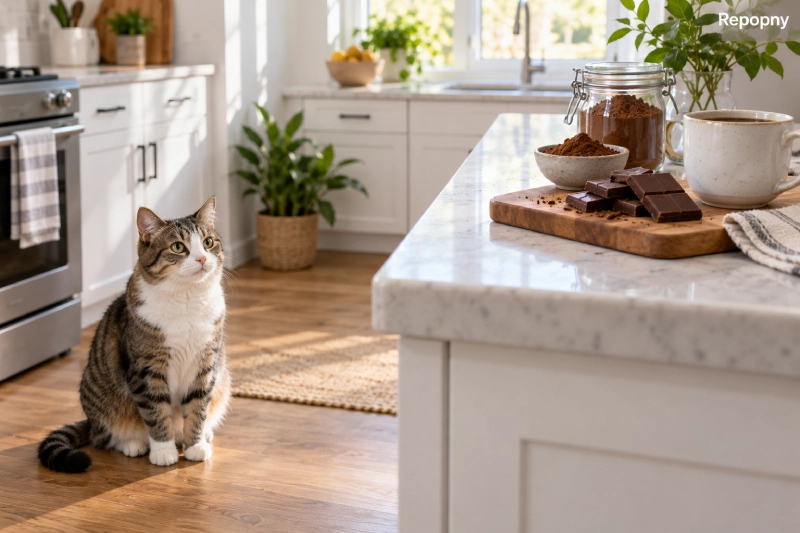
Chocolate is unsafe for cats.
Chocolate, coffee, and other caffeine-containing products contain methylxanthines, including caffeine and theobromine.
ASPCA reports that exposure can cause signs such as vomiting, diarrhea, excessive thirst, abnormal heart rhythms, tremors, seizures, and potentially severe toxicity. Dark chocolate and baking chocolate generally contain higher concentrations of problematic methylxanthines than white chocolate.
Keep cats away from:
- chocolate bars,
- cocoa powder,
- chocolate cake,
- coffee,
- coffee grounds,
- tea,
- energy drinks,
- caffeinated desserts.
Do not intentionally offer even “just a taste.”
10. Alcohol and Raw Yeast Dough
Alcohol should never be offered to a cat.
Alcohol-containing beverages and foods can cause serious poisoning. ASPCA lists possible effects including vomiting, coordination problems, breathing difficulties, tremors, coma, and potentially death.
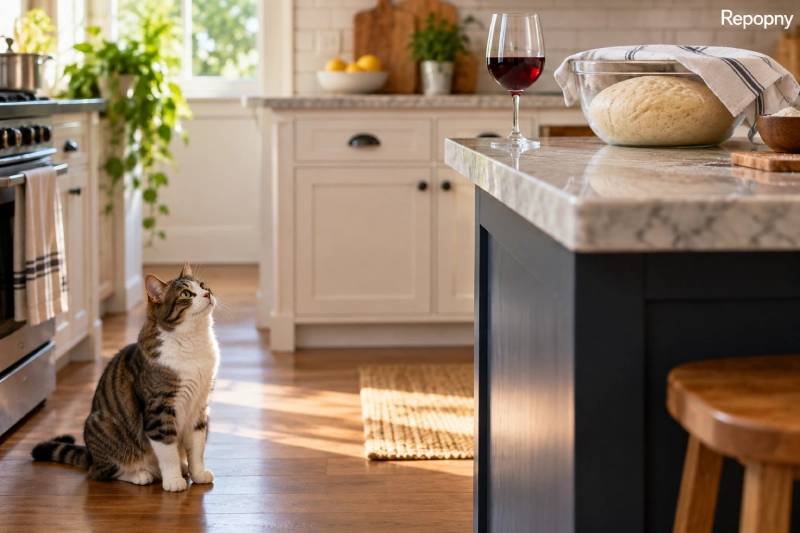
Raw yeast dough is also dangerous.
Dough can expand inside the digestive tract, and fermenting yeast can produce alcohol. ASPCA warns that this combination can create both digestive and alcohol-related emergencies.
Keep cats away from:
- beer,
- wine,
- liquor,
- cocktails,
- alcohol-containing desserts,
- fermenting dough,
- uncooked bread dough.
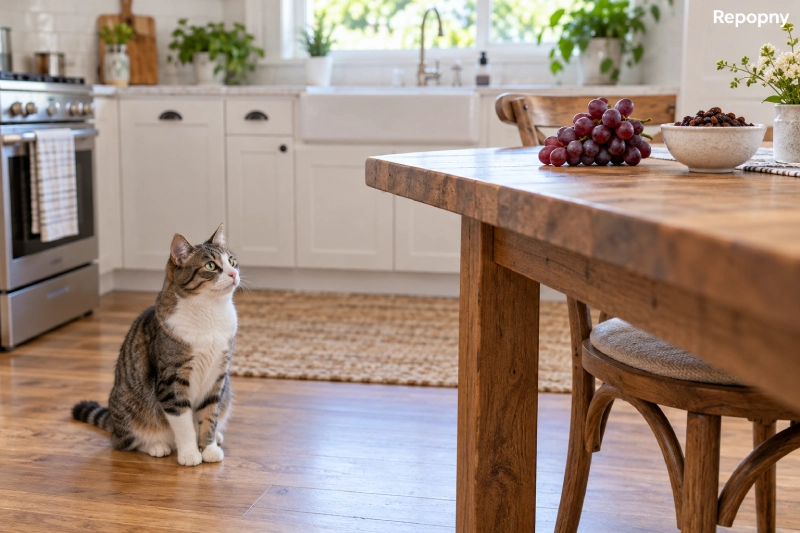
11. Grapes and Raisins
Grapes and raisins should be kept away from cats.
Severe grape and raisin toxicity is particularly well documented in dogs, but major veterinary resources including Cornell and the FDA list grapes and raisins among foods that pets should not be given.
Because the safe exposure level for an individual cat cannot be reliably predicted, the practical approach is simple:
Do not intentionally feed grapes or raisins to cats.
This includes foods containing them, such as:
- raisin bread,
- fruit cake,
- trail mix,
- some cereals,
- desserts.
12. Foods Containing Xylitol
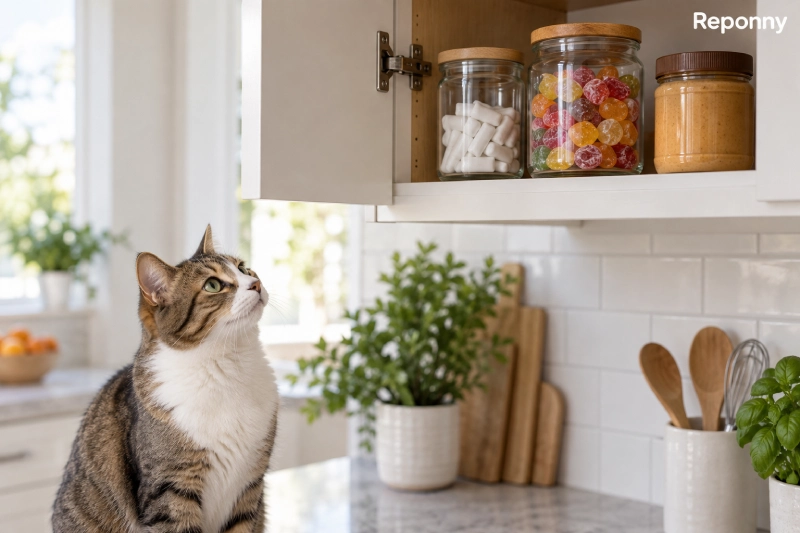
Xylitol is a sweetener that can appear in products such as:
- sugar-free gum,
- candies,
- baked goods,
- toothpaste,
- some nut butters,
- and other sugar-free products.
The strongest evidence for severe xylitol poisoning involves dogs. Nevertheless, Cornell and the FDA include xylitol-containing products among items that should be kept away from cats and pets.
Because formulations change, always check ingredient labels before sharing processed foods.
There is no benefit to deliberately exposing a cat to a xylitol-containing product.
13. Raw Meat, Raw Fish and Raw Eggs
Cats may be predators, but that does not make raw food automatically risk-free in a modern household.
Cornell does not recommend feeding raw meat to cats because it can carry infectious organisms that may affect the cat and potentially people in the household.
Raw foods can carry pathogens such as Salmonella and E. coli, and raw diets can also create food-safety risks through contaminated surfaces, saliva, bowls, or feces.
If you want to give your cat meat as an occasional treat, plain cooked meat is the safer option.
14. Bones
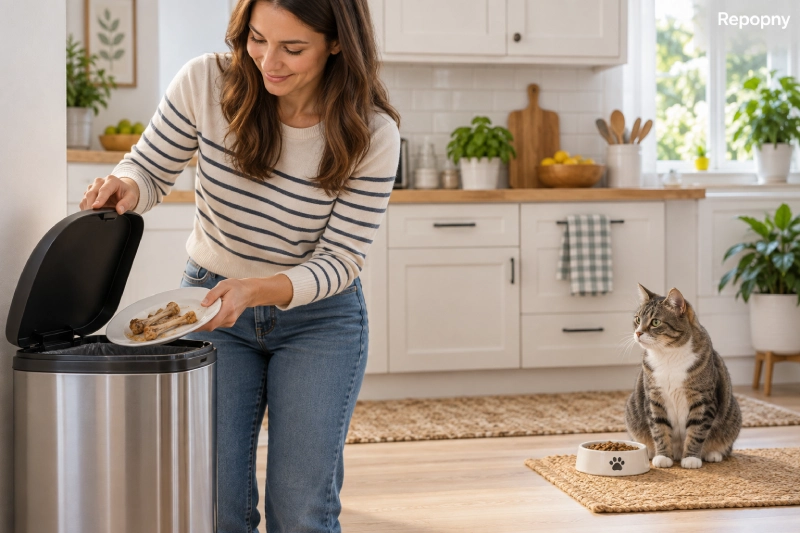
Do not give your cat cooked bones from your dinner.
Bones can cause:
- choking,
- broken teeth,
- mouth injuries,
- digestive obstruction,
- or intestinal injury.
FDA warns that bones and other hard food items can become lodged in the digestive tract, while veterinary nutrition guidance also identifies obstruction and perforation among potential risks associated with bone ingestion.
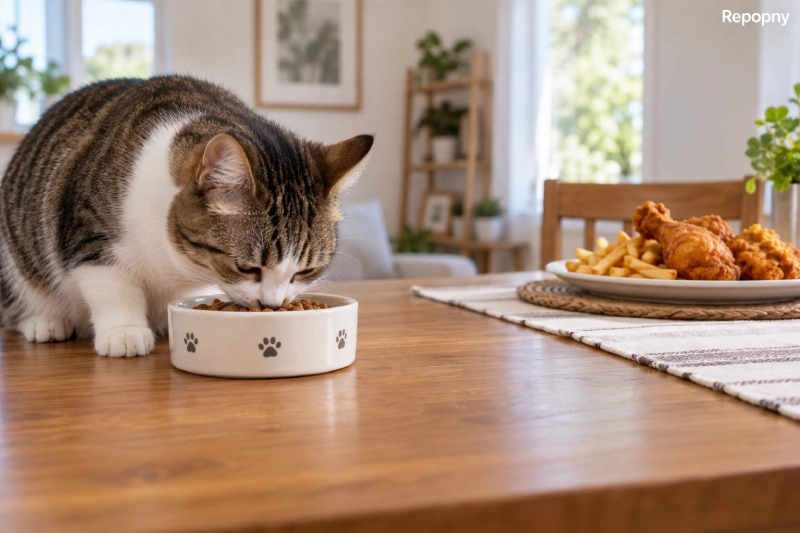
This means the leftover chicken wing or fish skeleton belongs in a secure trash container—not in the cat’s bowl.
15. Milk and Dairy Products
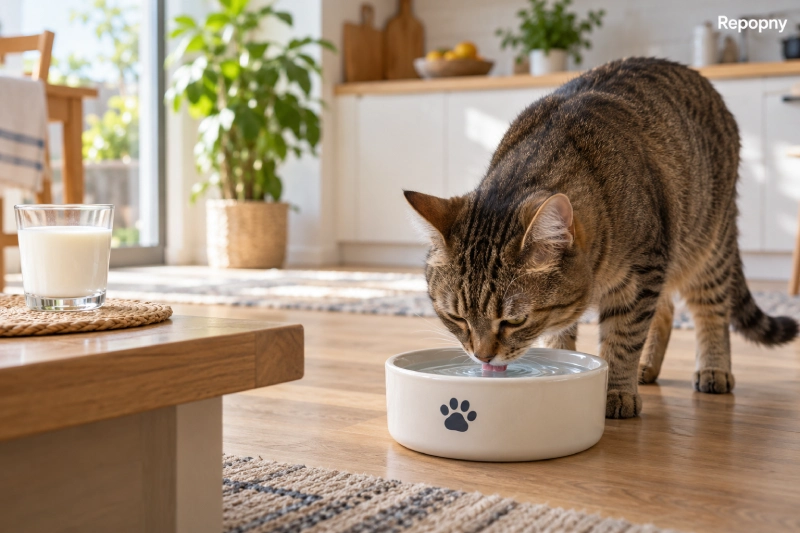
The image of a cat happily drinking a saucer of milk is deeply rooted in popular culture.
It is not necessarily good nutritional advice.
Many adult cats have limited ability to digest lactose. ASPCA notes that milk and dairy products can lead to diarrhea or digestive upset, and Cornell similarly advises that milk is generally not recommended as a cat treat.
A tiny amount of certain dairy foods may not bother every cat, but milk is not necessary for an adult cat.
Fresh water is the drink your cat should always have available.
16. Salty, Fatty and Heavily Seasoned Foods
Not every dangerous food causes classic poisoning.
Some human foods are simply too rich, salty, fatty, or heavily seasoned to make sensible cat treats.
FDA includes excessively salty and fatty foods among foods that can be problematic for pets, and ASPCA notes that high-fat foods may cause digestive problems and potentially contribute to pancreatitis in susceptible animals.
Avoid making habits of sharing:
- bacon,
- sausage,
- fried food,
- chips,
- heavily salted meat,
- fast food,
- rich sauces,
- buttery leftovers.
If you want to give your cat meat, a tiny portion of plain lean meat is a much better choice.
How Much Human Food Can a Cat Have?
Even safe foods should remain treats.
The primary diet should still provide complete and balanced nutrition.
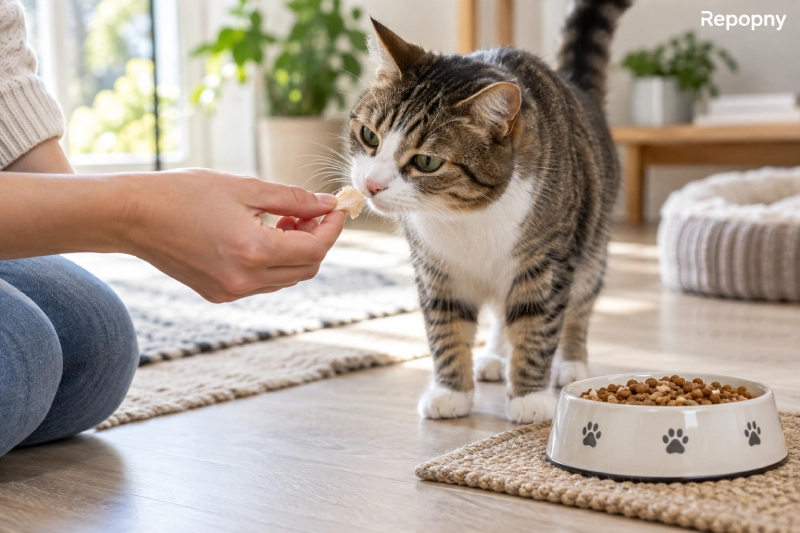
VCA recommends keeping treats to no more than about 10% of daily calories, because excessive treats can dilute the nutritional balance of the main diet and contribute to weight gain.
Imagine a cat eats approximately 220 calories per day.
Ten percent equals:
22 calories
That treat allowance can disappear very quickly.
A few bites of meat may look tiny to a human but represent a meaningful amount of food for a 9-pound cat.
For treats, think:
cat-sized portions, not human-sized portions.
What If Your Cat Eats Something Toxic?
If you suspect your cat has eaten a potentially toxic food, do not wait for severe symptoms before seeking advice.
Try to determine:
- what the cat ate,
- approximately how much,
- when it happened,
- the cat’s approximate weight,
- and whether symptoms have started.
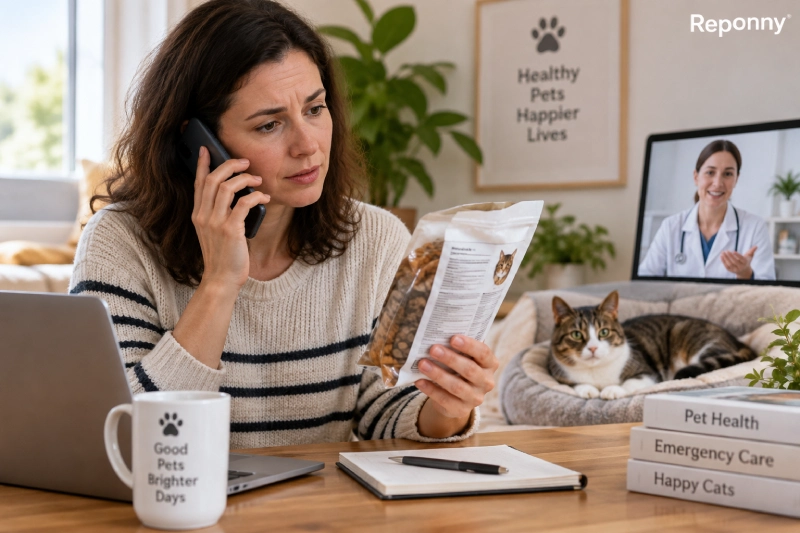
Contact your veterinarian, an emergency veterinary hospital, or an appropriate animal poison-control service promptly.
ASPCA specifically recommends noting the amount consumed and contacting veterinary or poison-control professionals when a potentially toxic food has been eaten.
Do not attempt to induce vomiting or administer a home remedy unless a veterinary professional specifically instructs you to do so.
Bring the package or ingredient list with you when possible.
Frequently Asked Questions
Can Cats Eat Chicken?
Yes. Small amounts of plain, fully cooked, boneless chicken can be used as an occasional treat for most healthy cats. Avoid seasoning, onion, garlic, sauces, and bones.
Can Cats Eat Eggs?
Yes, fully cooked plain eggs can be offered in small amounts. They should be considered a treat rather than a replacement for complete cat food.
Can Cats Eat Tuna?
A small amount of plain cooked tuna may be used occasionally, but human canned fish should not become a primary diet. Cornell notes that cats consuming certain canned fish products intended for humans have developed serious nutritional-related problems.
Can Cats Eat Cheese?
Some cats can tolerate a tiny amount, and VCA lists cheese among possible treat foods. However, many cats do not digest dairy well, so it is not an ideal routine treat.
Can Cats Eat Bananas?
A tiny amount of banana is unlikely to be nutritionally necessary, and many cats will not be interested. If offering unfamiliar fruits or vegetables, keep portions very small and introduce one food at a time.
Can Cats Eat Peanut Butter?
Some cats may tolerate a tiny amount of plain peanut butter, but it is calorie-dense and unnecessary. Most importantly, check the ingredient list and never offer a product containing xylitol.
Can Cats Eat Rice?
A little plain cooked rice is not generally necessary for a healthy cat. Cats are obligate carnivores, so animal-derived nutrients should remain central to their diet.
Final Thoughts
Sharing food can feel like an easy way to show affection, but your cat does not need to eat everything you eat.
The safest human-food treats are usually simple:
plain, fully cooked, unseasoned, boneless, and offered in very small amounts.
Cooked chicken, turkey, lean meat, eggs, and selected fruits and vegetables can occasionally be appropriate.
At the same time, some ordinary kitchen ingredients pose real risks.
Keep onions, garlic, chives, chocolate, caffeine, alcohol, grapes, raisins, raw yeast dough, xylitol-containing products, and bones away from your cat.
And remember that treats are extras.
A nutritionally complete cat food should still provide the overwhelming majority of your cat’s daily calories and nutrients.
When your cat has food allergies, kidney disease, diabetes, urinary disease, obesity, gastrointestinal problems, or is eating a veterinary prescription diet, ask your veterinarian before introducing new treats. Even an otherwise safe food may not be appropriate for every individual cat.