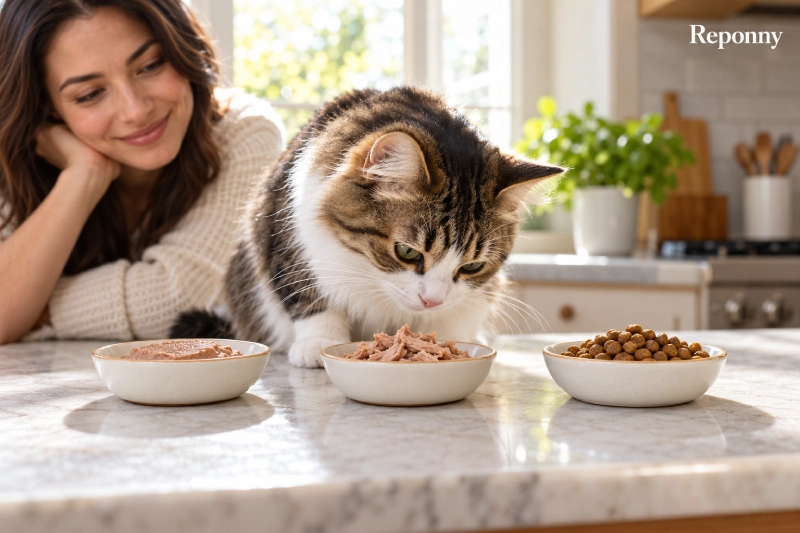
One day your cat devours chicken pâté. The next day, it sniffs the same bowl, looks at you as though you have made a terrible mistake, and walks away.
Many cat owners know this frustration.
Cats can develop strong preferences for flavor, aroma, texture, food shape, temperature, feeding location, and even the bowl itself. Some cats genuinely prefer pâté over chunks in gravy. Others love dry food but refuse wet food. Some seem interested in a new flavor for three days and then suddenly stop eating it.
But there is an important rule before assuming your cat is simply picky:
A sudden or significant loss of appetite can be a medical problem.
Dental disease, nausea, kidney disease, gastrointestinal problems, pancreatitis, pain, infection, and many other conditions can make a cat reluctant to eat. Cornell Feline Health Center notes that persistent appetite loss may have a serious effect on an adult cat in as little as about 24 hours.
For a healthy cat that has been medically cleared and truly is selective about food, several practical strategies can make mealtimes much easier.
Quick answer: To encourage a picky cat to eat, first rule out illness. Then experiment with food texture and aroma, warm wet food slightly, serve small fresh portions, establish consistent meal times, create a quiet feeding area, limit excessive treats, and use toppers sparingly. Do not continually replace refused meals with something more exciting, because some cats can learn to hold out for their favorite food.
First: Is Your Cat Really Picky—or Is Something Wrong?
This is the most important distinction in the entire article.
A cat that has always preferred one particular texture but otherwise maintains normal weight, energy, stool, drinking behavior, and appetite may simply have strong food preferences.
A cat that suddenly stops eating its normal food is different.
VCA recommends ruling out underlying medical causes before labeling a cat a picky eater. Dental disease, gastrointestinal disorders, kidney disease, pain, nausea, and other health problems may reduce appetite.
Warning signs include:
- sudden food refusal,
- weight loss,
- repeated vomiting,
- persistent diarrhea,
- drooling,
- dropping food from the mouth,
- difficulty chewing,
- hiding more than usual,
- unusual lethargy,
- increased thirst or urination,
- or approaching food but seeming unable to eat.
Cornell emphasizes that sustained anorexia can become medically serious quickly and encourages veterinary evaluation when a cat stops eating.
Do not spend three days trying twelve flavors of food if your normally enthusiastic eater suddenly refuses everything.
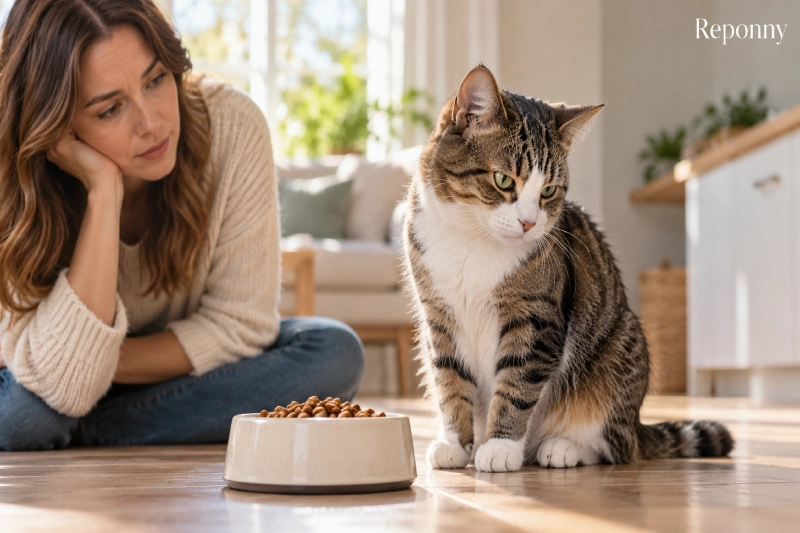
Why Are Some Cats So Picky About Food?
Cats experience food through more than taste alone.
VCA notes that texture, odor, temperature, flavor, and even food shape can strongly influence feline food preferences. Cats often develop preferences for familiar textures and may choose a familiar food over something nutritionally similar that looks or feels different.
A cat may therefore reject food because:
- pâté feels different from shredded meat,
- kibble pieces are a different shape,
- the food is colder than usual,
- a familiar recipe changed,
- the smell is weaker,
- the feeding area has become stressful,
- or another cat is standing nearby.
Cornell also notes that cats can be choosy about where they eat. Noise, foot traffic, nearby litter boxes, dirty dishes, or other animals can discourage eating.
Understanding the reason for the refusal is far more useful than simply opening another can.
1. Learn Your Cat’s Preferred Texture
For many picky cats, texture is more important than flavor.
Your cat may reject turkey pâté but happily eat turkey shreds.
Another may dislike chunks but lick every bit of gravy.
Common wet-food textures include:
- pâté,
- mousse,
- minced,
- shredded,
- flaked,
- chunks in gravy,
- chunks in sauce.
Dry foods also differ in:
- kibble size,
- shape,
- hardness,
- surface coating,
- and aroma.
VCA specifically notes that cats can develop strong preferences for particular textures and shapes.
Before concluding that your cat dislikes an ingredient such as chicken, ask whether the real problem is the form of the food.
Try a simple texture test
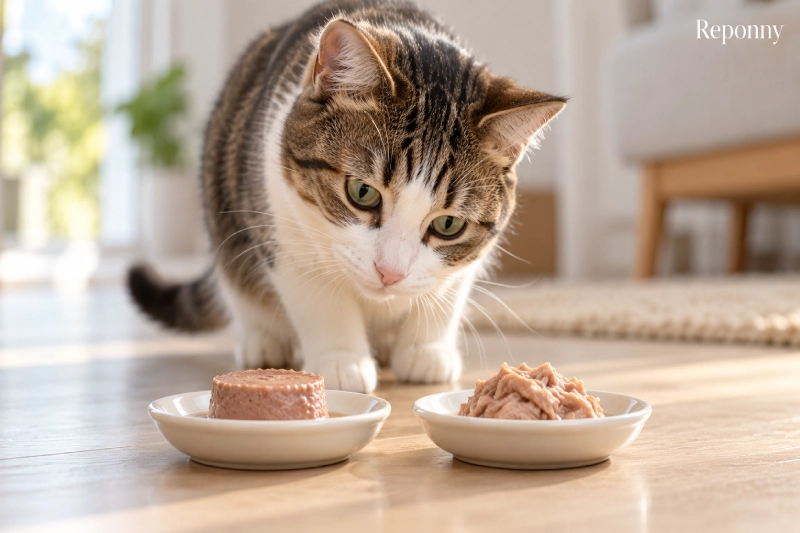
Offer two small portions of nutritionally appropriate food with similar flavors but different textures.
For example:
Chicken pâté vs. chicken shreds
Observe which one your cat approaches first and which one it actually eats.
Once you discover a clear preference, use that information when choosing future foods.
2. Warm Wet Food Slightly
Smell matters enormously to cats.
VCA explains that warming food increases its aroma, which can make it more appealing. Warm food is often particularly useful when trying to encourage a cat with reduced interest in meals.
You do not need to make the food hot.
Aim for approximately body temperature—around 100°F or 38°C when using this strategy. VCA recommends stirring microwaved food thoroughly so there are no dangerously hot spots.
A simple method is to:
add a small amount of warm water to refrigerated wet food and mix thoroughly.
This also adds a little extra moisture.
Always check the temperature yourself
The food should feel comfortably warm—not hot.
Cats do not benefit from burned mouths simply because their dinner smelled stronger.

3. Serve Small, Fresh Portions
A picky cat may be more interested in a small fresh serving than a large bowl sitting out for hours.
This is particularly relevant to wet food.
Food exposed to air gradually:
- dries,
- changes texture,
- loses aroma,
- and becomes less appealing.
VCA recommends offering small quantities at a time to selective cats eating canned or semi-moist foods.
Instead of placing a large portion in the bowl at breakfast, consider serving:
a small breakfast → another fresh portion later → another at dinner.
Keep the total daily calorie amount the same.
You are changing presentation and frequency, not adding unlimited calories.
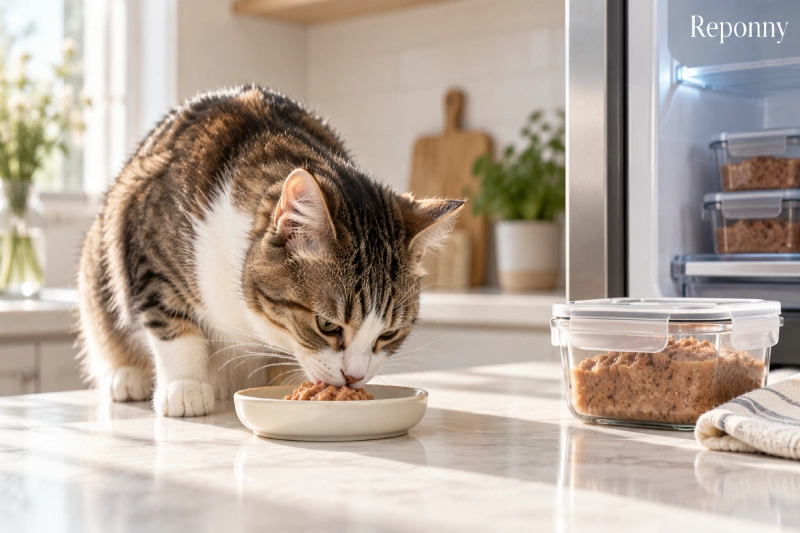
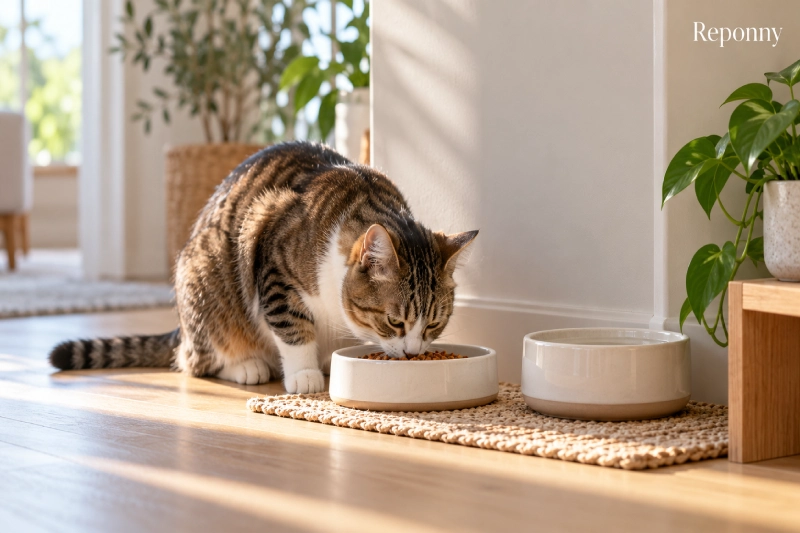
4. Create a Quiet Feeding Area
Location can change eating behavior.
Cornell notes that cats may avoid eating in areas with:
- heavy foot traffic,
- noise,
- other animals,
- dirty food containers,
- or litter boxes nearby.
Imagine trying to eat dinner beside a busy doorway while another animal watches you.
A nervous cat may prioritize safety over food.
Choose a feeding location that is:
quiet, clean, predictable, and easy to access.
In multi-cat households, some cats eat better when physically separated from dominant or highly food-motivated cats.
Older cats may also need food placed somewhere that does not require climbing stairs or jumping onto furniture.
5. Keep Food Bowls Clean
Cats have a strong sense of smell.
A bowl that appears acceptable to you may still contain odors from yesterday’s meal.
Wash food dishes regularly and remove dried residue.
For wet food in particular, use a clean dish for fresh meals.
Some cats may also prefer shallow dishes because they allow easier access to food.
There is no need to buy an expensive bowl marketed specifically for picky cats.
A clean, stable, appropriately sized ceramic or stainless-steel dish is usually a reasonable starting point.
The goal is to remove unnecessary reasons for your cat to walk away.
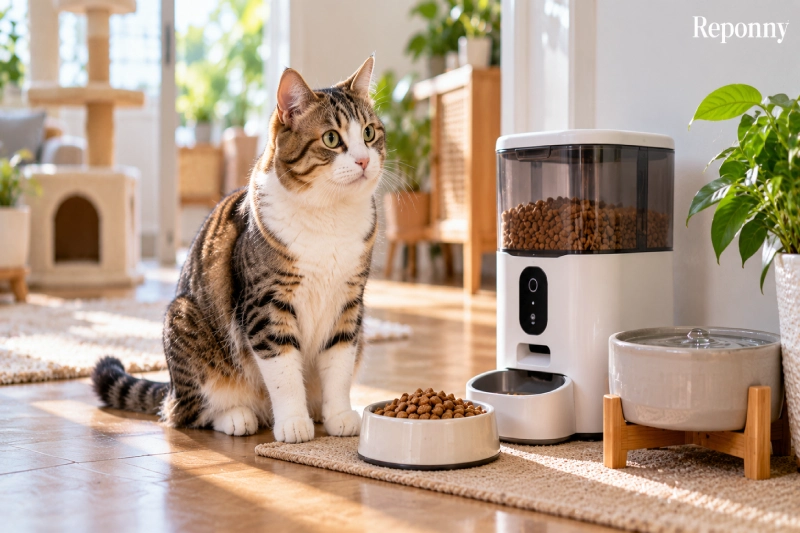
6. Establish Predictable Meal Times
Constantly available food can work for some cats, but scheduled meals may help others develop a stronger appetite at predictable times.
VCA suggests offering food at set times and leaving it available only for limited periods rather than providing unrestricted access when managing a healthy picky eater.
For example:
7:00 a.m. — breakfast
1:00 p.m. — small meal
7:00 p.m. — dinner
The exact schedule is less important than consistency.
Meal feeding also helps you notice how much your cat actually consumes.
With an always-full bowl, it can be difficult to tell whether your cat ate normally overnight or barely ate anything.
7. Do Not Accidentally Train Your Cat to Hold Out for Better Food
This is one of the most common picky-eater cycles.
The cat sniffs dinner and walks away.
The owner opens tuna.
The next day, the cat refuses ordinary food.
The owner adds chicken.
The next meal is refused.
The owner opens an even more expensive pouch.
Eventually, the cat learns:
If I wait long enough, something better appears.
VCA specifically warns that constant access to a huge variety of foods can contribute to selective eating because cats may learn to hold out for preferred options.
This does not mean you should starve your cat until it gives in.
Cats should never be subjected to prolonged food refusal.
Instead, once medical problems have been excluded, provide a reasonable selection of foods your cat accepts and establish consistency.
Avoid turning every hesitation into a restaurant tasting menu.
8. But Some Variety Can Still Be Useful
This seems contradictory, but both ideas can be true.
Cornell notes that feeding two or three different complete cat foods may provide flavor variety and help prevent a cat from developing an exclusive preference for one food.
The difference is between planned variety and reactive variety.
Planned variety
Your cat calmly eats two or three nutritionally complete foods that are rotated in a predictable way.
Reactive variety
Your cat refuses Food A, so you immediately offer B, C, D, tuna, chicken, treats, and whatever else you can find.
The first approach may create flexibility.
The second can reinforce selective behavior.
For kittens and young cats, VCA notes that exposure to different appropriate textures and shapes may make dietary changes easier later in life.
9. Try Wet Food If Your Cat Prefers Strong Aromas
Cornell notes that canned foods are generally highly palatable for many cats and are available in many textures and flavors, which can help with finicky eaters.
Wet food has another useful characteristic:
high moisture content.
If your picky cat eats mainly dry food, introducing an appropriate wet food can also contribute additional water to the diet.
However, not every cat likes wet food.
Some cats raised primarily on kibble develop a strong preference for crunchy textures.
Do not assume refusing wet food means something is wrong.
A gradual introduction may work better.
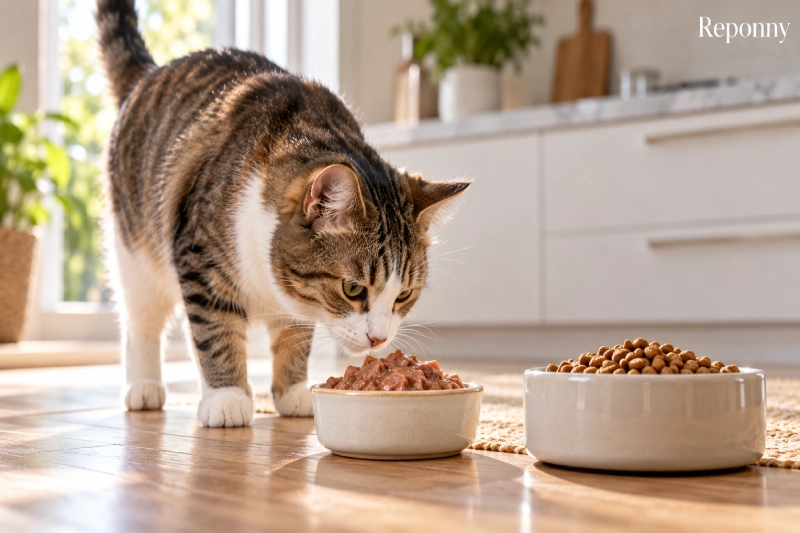
Try placing a tiny amount of wet food beside the familiar food rather than immediately mixing a large quantity into it.
VCA notes that offering a new food separately can be preferable for some cats because mixing it into a familiar food may cause the cat to reject the entire meal.
10. Use Toppers Sparingly
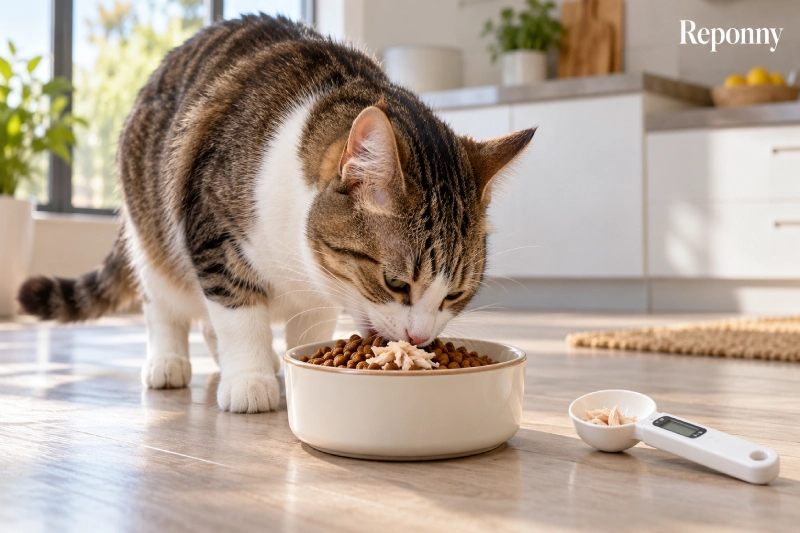
A small topper can sometimes encourage a healthy picky cat to begin eating.
VCA suggests that small amounts of safe, high-value foods may be used as meal enticements. It also recommends keeping treats and toppers within roughly 10% of total daily calories so they do not displace too much complete nutrition.
Possible options for an otherwise healthy cat may include a very small amount of:
- its favorite complete wet cat food,
- plain cooked chicken,
- a tiny quantity of cooked egg,
- or another veterinarian-approved food.
A little warm water may also enhance aroma without adding calories.
Do not create a topper dependency
If every meal gradually becomes:
cat food + chicken + tuna + treats + gravy
you may eventually have a cat that refuses plain complete food.
Use toppers as encouragement, not as the majority of the meal.
11. Avoid Too Many Treats Between Meals
Sometimes a “picky” cat simply is not hungry.
VCA recommends checking whether the cat is receiving excessive calories from:
- treats,
- snacks,
- table food,
- foods used with medication,
- or multiple household members offering extras.
Consider keeping a three-to-five-day food diary.
Record everything your cat consumes.
You may discover that the cat receives:
breakfast, ten treats, some chicken, a lickable snack, dinner, another handful of treats, and access to dry food overnight.
That cat may not be picky.
It may be full.
Treats should generally stay within about 10% of total daily calories.
12. Try Play Before Meals
Cats naturally combine hunting behavior with eating.
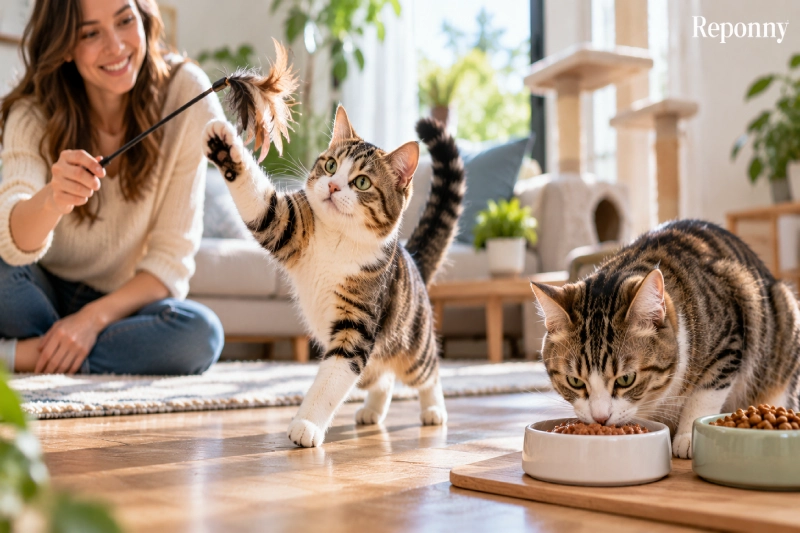
VCA suggests increasing activity and offering food after exercise as one potential strategy for healthy picky eaters. Food puzzles can also make meals more engaging.
Try a short play session using:
- a wand toy,
- feather toy,
- moving toy,
- or other safe interactive activity.
Then offer the meal.
For some cats, the sequence:
play → meal → grooming → rest
fits naturally into their daily rhythm.
Do not exhaust an elderly cat or a cat with medical or mobility problems. Adjust activity to the individual animal.
13. Consider a Puzzle Feeder for Dry-Food Lovers
A picky cat does not always want food served in a conventional bowl.
Some cats become more interested when eating requires a little exploration or activity.
VCA recommends puzzle or interactive feeders as one possible strategy for selective eaters.
Start with something easy.
The goal is to make eating engaging—not frustrating.
Place part of the cat’s normal daily dry-food ration into the puzzle.
Do not add an entire extra meal simply because it is served in a toy.
For cats that seem bored with bowl feeding but still enjoy kibble, this simple change can make mealtime more interesting.
14. Transition New Food Gradually
A picky cat may refuse a food simply because the change happened too quickly.
If your cat must switch diets, do not always replace the old food completely overnight.
A gradual transition over roughly a week—or longer for particularly selective cats—often works better.
One common progression is:
| Transition Period | Old Food | New Food |
|---|---|---|
| Days 1–2 | 75% | 25% |
| Days 3–4 | 50% | 50% |
| Days 5–6 | 25% | 75% |
| Day 7+ | 0% | 100% |
However, some cats reject mixed foods.
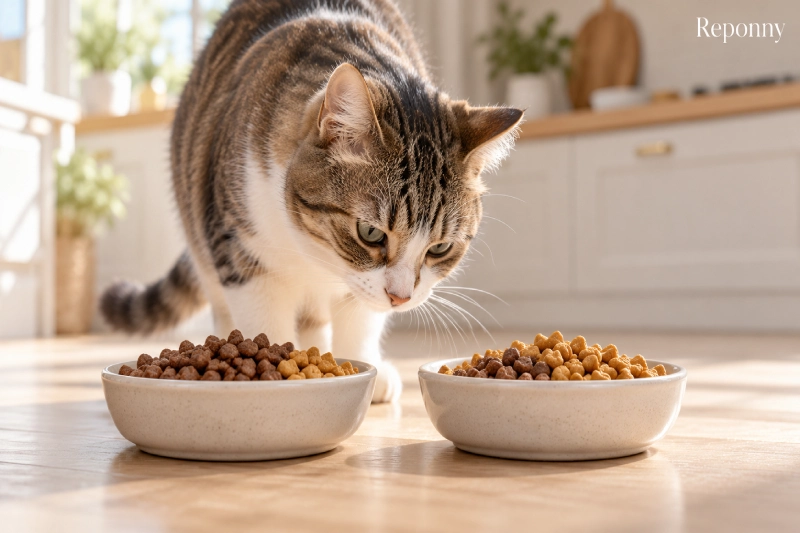
For those cats, VCA suggests offering the familiar and new foods side by side in separate containers rather than contaminating the preferred food with an unfamiliar smell or texture.
There is no prize for completing the transition fastest.
The goal is reliable food intake.
15. Respect Genuine Food Preferences
Not every preference needs to be “fixed.”
If your healthy cat:
- maintains an ideal body condition,
- eats enough complete and balanced food,
- has normal stools,
- has good energy,
- and receives veterinary care,
there is nothing inherently wrong with preferring one texture or flavor.
VCA recommends identifying the preferred formulation and maintaining reasonable consistency for cats with genuine preferences.
You do not need to convince a pâté-loving cat that chunks are superior.
The nutritional adequacy of the diet matters more than whether your cat accepts every texture in the store.
What If My Cat Only Eats Dry Food?
If the dry food is complete and balanced, your cat maintains an appropriate weight, and fresh water is always available, preferring kibble does not automatically indicate a problem.
Cornell notes that cats eating dry food should always have reliable access to fresh water.
If you want to introduce wet food, use patience.
Start with a tiny amount.
Try a texture close to the cat’s current preference.
Warm the wet food slightly.
Offer it separately.
Do not remove the cat’s familiar food for prolonged periods in an attempt to force the switch.
What If My Cat Only Licks the Gravy?
This is a common selective behavior.
The cat may prefer the aroma and liquid texture while leaving the chunks behind.
Try:
- a pâté,
- mousse,
- finely minced food,
- smaller chunks,
- or mashing the existing food gently.
Again, texture may be the real issue rather than flavor.
If this behavior is new, however, consider dental pain.
A cat with painful teeth may lick soft gravy while avoiding pieces that require chewing.
A sudden change should therefore be evaluated rather than automatically treated as pickiness.
What If My Cat Smells Food but Walks Away?
This pattern deserves attention.
A cat may sniff food and leave because:
- the food is unfamiliar,
- it dislikes the aroma,
- it is not hungry,
- it is stressed,
- or it feels nauseated.
Cats with nausea may still show some initial interest in food but fail to eat normally.
If the behavior is persistent or accompanied by vomiting, weight loss, lethargy, hiding, or another abnormality, contact your veterinarian rather than repeatedly changing flavors.
Should You Hand-Feed a Picky Cat?
Occasional hand-feeding can sometimes help a cat begin eating, especially during periods of reduced appetite.
VCA includes hand-feeding among strategies that may encourage certain cats.
But it should not automatically become the only way a healthy cat will eat.
If you hand-feed every meal for months, some cats may begin expecting that interaction.
Use it as a temporary encouragement tool unless there is a medical or behavioral reason to continue.
Should You Force-Feed a Picky Cat?
No.
There is an important difference between encouraging eating and forcing food into the mouth.
Cornell specifically warns that forcing food can worsen a cat’s food aversion. When a cat is genuinely anorexic and unable to consume enough calories, veterinary nutritional support—including feeding tubes in appropriate cases—can be safer and more effective.
If your cat will not eat enough despite gentle strategies, the next step is veterinary care.
It is not a battle of wills.
Should You Cook Homemade Food for a Picky Cat?
Homemade food may smell attractive, but it should not become an improvised long-term solution.
VCA warns that ordinary human foods cannot reliably provide all feline nutrient requirements and that homemade diets require precise recipes and appropriate vitamin and mineral supplementation.
If a cat truly requires a home-prepared diet, work with your veterinarian or a qualified veterinary nutrition specialist.
A bowl of chicken may solve tonight’s appetite problem while creating a nutritional problem months later if it replaces balanced food.
When Should a Picky Cat See a Veterinarian?
A cat that has always been selective but consistently eats enough is different from a cat whose appetite suddenly changes.
Contact your veterinarian when your cat:
- completely refuses food,
- eats substantially less than usual for about a day,
- is losing weight,
- repeatedly vomits,
- has persistent diarrhea,
- seems painful,
- struggles to chew or swallow,
- develops drooling or bad breath,
- becomes weak or unusually quiet,
- or has another major change in behavior.
Cornell notes that appetite loss lasting as little as about 24 hours can significantly affect an adult cat’s health. Very young kittens can become vulnerable even sooner.
Do not assume a cat with a medical problem is simply becoming more “spoiled.”
A Practical Picky Cat Feeding Plan
For a healthy cat whose veterinarian has ruled out illness, try this simple routine:
| Step | What to Do |
|---|---|
| 1 | Calculate the appropriate daily food amount |
| 2 | Choose a complete and balanced food your cat reliably accepts |
| 3 | Identify preferred texture and flavor |
| 4 | Offer small fresh meals at predictable times |
| 5 | Warm wet food slightly if needed |
| 6 | Feed in a quiet, clean location |
| 7 | Limit snacks and treats |
| 8 | Use a tiny topper only when necessary |
| 9 | Add play or puzzle feeding if your cat enjoys it |
| 10 | Monitor weight and actual food intake |
Give the strategy time.
Changing five variables at once makes it impossible to know what actually helped.
Common Mistakes With Picky Cats
Constantly Opening New Foods
This can teach some cats to reject ordinary meals while waiting for something better.
Giving Too Many Treats
A cat filled with snacks may have little interest in dinner.
Assuming Grain-Free or Premium Food Will Taste Better
Marketing claims do not predict an individual cat’s preferences.
Mixing New Food Into the Entire Old Meal Immediately
Some cats may reject both. Offering them separately can work better.
Serving Refrigerated Wet Food Ice-Cold
Warming can increase aroma and interest.
Ignoring the Feeding Environment
Noise, dirty bowls, other pets, and nearby litter boxes can reduce willingness to eat.
Assuming Sudden Pickiness Is Behavioral
A sudden appetite change should raise the possibility of illness.
Frequently Asked Questions
Why Is My Cat So Picky With Food?
Cats can develop strong preferences for flavor, smell, temperature, shape, and texture. Feeding environment and learned behavior can also affect food acceptance.
How Can I Make Cat Food More Appealing?
For wet food, try warming it gently to approximately body temperature. Serve a small fresh portion in a clean bowl in a quiet area. A small veterinarian-approved topper may also help.
Should I Keep Changing Food Until My Cat Eats?
Not continually.
Too much reactive variety can teach some cats to hold out for preferred foods. Once you identify nutritionally appropriate foods your healthy cat accepts, reasonable consistency can help.
Can I Add Tuna to My Cat’s Food?
A tiny amount of a safe food may sometimes be used as an appetite enticement, but it should not turn the meal into an unbalanced diet.
Keep all toppers and treats within approximately 10% of daily calories unless your veterinarian directs otherwise.
Why Will My Cat Eat Treats but Not Cat Food?
Too many treats may reduce hunger at mealtime.
It can also be learned behavior: the cat may discover that refusing regular food produces tastier alternatives.
However, a sick cat may sometimes accept a highly palatable treat while still refusing normal food, so persistent changes should not be ignored.
Why Does My Cat Only Eat Pâté?
Texture preferences are common in cats.
If the food is complete and balanced and appropriate for your cat, there is no need to force a change simply because your cat prefers pâté.
Why Does My Cat Only Eat Dry Food?
Some cats develop strong familiarity with kibble texture and shape.
Introduce wet food slowly, experiment with texture and temperature, and offer new and familiar foods separately rather than forcing the change.
How Long Can a Picky Cat Refuse Food?
Do not intentionally wait for several days.
Cornell warns that sustained appetite loss can seriously affect an adult cat after as little as approximately 24 hours. A cat refusing food should be evaluated, especially when the change is sudden.
How Long Can a Picky Cat Refuse Food?
Do not intentionally wait for several days.
Cornell warns that sustained appetite loss can seriously affect an adult cat after as little as approximately 24 hours. A cat refusing food should be evaluated, especially when the change is sudden.
Final Thoughts
A picky cat does not necessarily need a more expensive food.
Sometimes the solution is surprisingly simple.
Your cat may prefer:
pâté instead of chunks, warm food instead of refrigerated food, several small fresh meals instead of one large serving, or a quiet bowl away from another cat.
VCA confirms that smell, temperature, texture, shape, and flavor can all affect feline food preferences.
The challenge is finding the balance between respecting those preferences and unintentionally encouraging increasingly selective behavior.
Do not immediately replace every rejected meal with tuna or chicken.
Do not allow treats to become a second diet.
Do not force-feed.
And most importantly, do not call a sudden appetite change “pickiness” before considering illness.
Cornell emphasizes that a cat refusing food can develop serious medical problems, particularly when inadequate intake continues.
For a genuinely healthy picky eater, start with the basics:
a complete and balanced food, preferred texture, appealing aroma, small fresh portions, clean dishes, a quiet feeding area, consistent meal times, and controlled treats.
Then change one thing at a time and observe your cat.
The goal is not to make your cat eat everything.
It is to help your cat reliably eat enough of an appropriate diet to maintain healthy weight, muscle, hydration, and overall health.