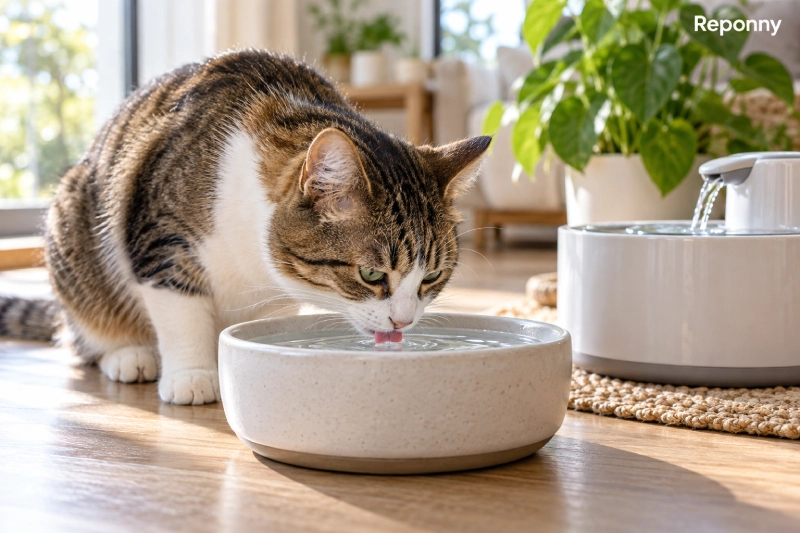
Water is one of the most important nutrients in your cat’s diet, yet it is also one of the easiest to overlook.
Cats have a reputation for not drinking very much. That does not necessarily mean something is wrong. Cats obtain water from both their drinking bowl and their food, so a cat eating mostly wet food may visit the water bowl far less often than a cat eating dry kibble.
The more useful question is not simply, “How much water did my cat drink from the bowl today?” It is:
How much total water is my cat consuming from all sources?
A healthy cat’s water needs vary with body weight, diet, activity, temperature, health status, and other factors. Understanding these differences can help you recognize normal drinking habits, encourage better hydration, and spot changes that may deserve veterinary attention.
Quick answer: Cornell Feline Health Center estimates that cats need about 4 ounces of water per 5 pounds of lean body weight per day from all sources. That means an average 10-pound cat may consume roughly 1 cup of water daily, but cats eating wet food often drink much less from their bowl because their food already contains substantial moisture.
How Much Water Should a Cat Drink Per Day?
There is no single amount that applies perfectly to every cat.
Merck Veterinary Manual gives a general daily water requirement of approximately 44–66 mL per kilogram of body weight for healthy animals in a comfortable environment. Cornell offers a similar practical estimate of around 4 ounces per 5 pounds of lean body weight.
A useful starting guide looks like this:
| Cat Weight | Approximate Total Water Per Day |
|---|---|
| 5 lb / 2.3 kg | About 4 oz / 120 mL |
| 7 lb / 3.2 kg | About 5.5 oz / 165 mL |
| 9 lb / 4.1 kg | About 7 oz / 210 mL |
| 10 lb / 4.5 kg | About 8 oz / 240 mL |
| 12 lb / 5.4 kg | About 9.5 oz / 285 mL |
| 15 lb / 6.8 kg | About 12 oz / 355 mL |
These numbers represent total water intake, not necessarily the amount that must disappear from a water bowl.
A cat eating moisture-rich canned food may obtain much of that water while eating.
A cat eating mostly dry kibble must usually drink considerably more.
Individual requirements can also increase with heat, exercise, pregnancy or nursing, vomiting, diarrhea, certain medications, and diseases that increase water loss.
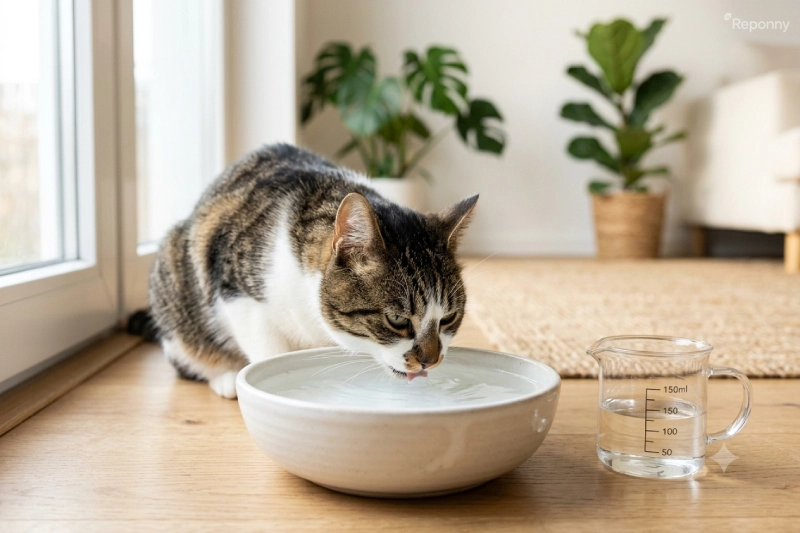
Total Water Intake Is More Important Than Bowl Drinking
One of the biggest sources of confusion is measuring only what a cat drinks.
Cats obtain water from three main places:
food, drinking water, and small amounts generated through normal metabolism.
Food moisture can make an enormous difference.
Cornell reports that wet food may contain up to about 80% water, while its feeding guidance describes many wet foods as approximately 70–80% water. Dry food contains far less moisture.
Imagine two cats that both need roughly 240 mL of total water per day.
One eats wet food that already contributes a large amount of moisture. That cat may drink only occasionally.
The other eats dry kibble containing very little water. That cat may need to obtain much more of its daily requirement directly from a bowl or fountain.
Both cats could still be adequately hydrated.
This is why comparing your cat’s drinking habits with another owner’s cat is often misleading.
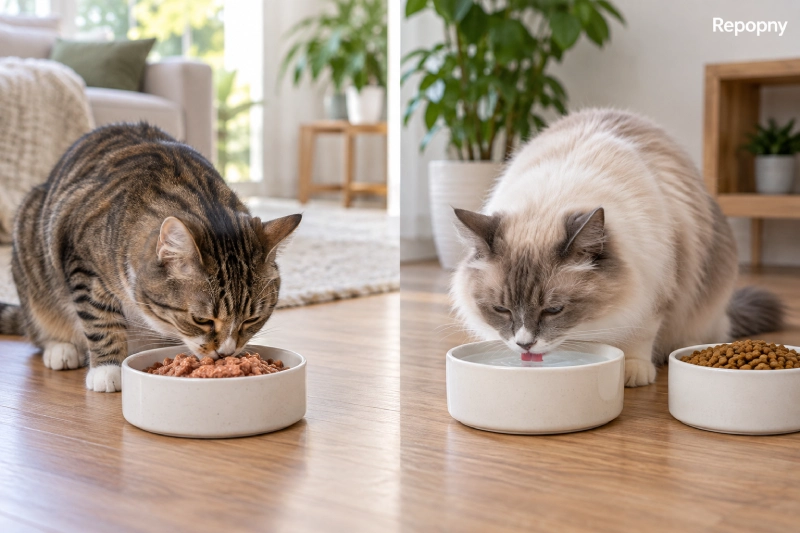
Wet Food vs. Dry Food for Hydration
When hydration is the main consideration, wet food has an obvious advantage: it contains much more water.
Cornell notes that canned food is a useful dietary source of water, while cats eating dry food usually need to obtain a greater proportion of their water by drinking.
Merck similarly reports that canned pet foods can contain roughly 60% to more than 87% moisture, compared with approximately 3–11% in dry foods.
That does not make dry food inherently unhealthy.
A healthy cat can do well on a nutritionally complete dry diet if adequate fresh water is available and the cat drinks sufficiently.
However, if your cat naturally drinks very little, adding wet food can be one practical way to increase total fluid intake.
Hydration can be especially important in cats with certain urinary or kidney conditions, although therapeutic feeding plans should be chosen with a veterinarian rather than by changing diets randomly. Cornell specifically emphasizes maintaining good hydration in cats with chronic kidney disease.
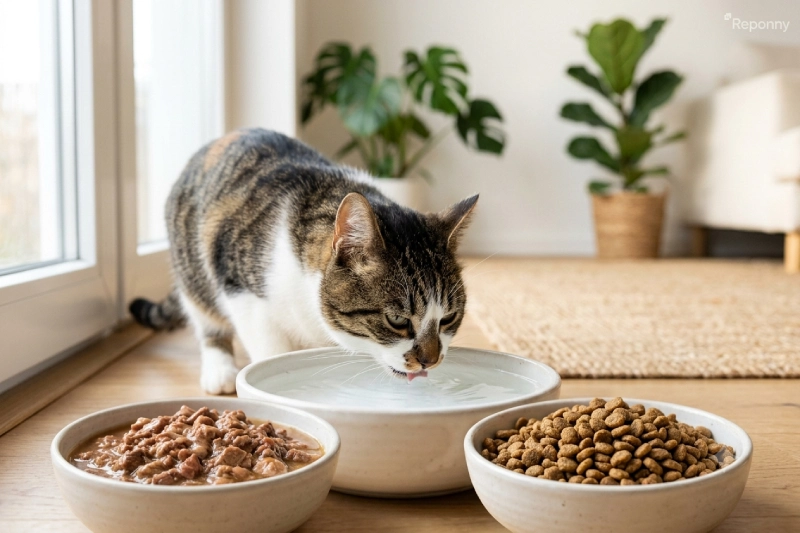
How Can You Tell If Your Cat Is Drinking Enough?
You do not need to measure every milliliter your cat consumes under normal circumstances.
Instead, observe patterns.
A healthy cat that is eating normally, urinating normally, maintaining body weight, behaving normally, and showing no signs of dehydration is usually regulating water intake effectively.
Merck notes that healthy animals generally regulate their own water intake when they have unrestricted access to fresh water.
What matters most is recognizing changes from your cat’s normal pattern.
A cat that suddenly begins emptying the water bowl may deserve just as much attention as a cat that stops drinking.
Likewise, changes in litter box output can provide useful clues.
A noticeable increase in both drinking and urination can occur with medical conditions such as kidney disease or diabetes and should be discussed with a veterinarian. Merck specifically advises owners to seek veterinary advice when cats begin drinking and urinating substantially more than usual.
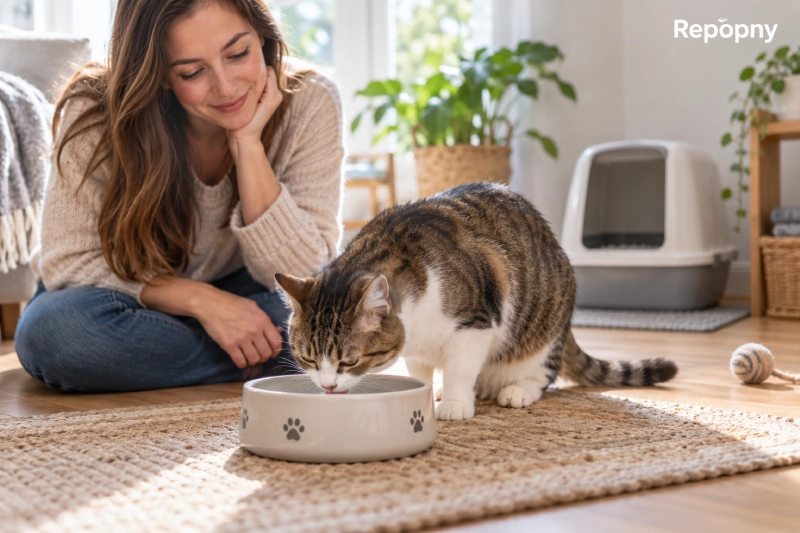
Signs a Cat May Be Dehydrated
Dehydration occurs when the body loses more water than it takes in.
Cornell lists possible signs including lethargy, weakness, reduced appetite, dry or tacky gums, and—in more severe cases—sunken eyes. Reduced skin elasticity may also occur.
Possible warning signs include:
- unusual tiredness or weakness,
- poor appetite,
- dry or sticky gums,
- reduced skin elasticity,
- sunken-looking eyes,
- vomiting or diarrhea accompanied by reduced drinking,
- noticeable changes in urination or general behavior.
One commonly discussed home check involves gently lifting a small fold of skin over the shoulders and observing how quickly it returns to position.
However, this is not a perfect diagnostic test.
Cornell points out that older cats may naturally have reduced skin elasticity even when adequately hydrated, so skin tenting should not be used as the sole basis for deciding whether a cat is dehydrated.
If you suspect meaningful dehydration, veterinary assessment is safer than attempting to determine the severity at home.
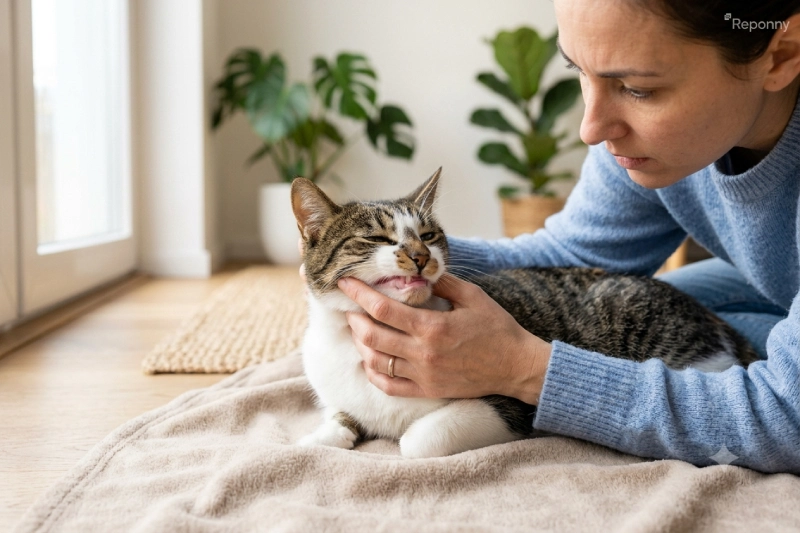
Why Might a Cat Become Dehydrated?
Not drinking enough is only one possible cause.
Cats can become dehydrated because they lose excessive fluid or because illness makes drinking and eating more difficult.
Cornell identifies several conditions associated with increased water loss, including chronic kidney disease, diabetes, vomiting, diarrhea, and hyperthyroidism. Certain medications such as diuretics can also increase fluid loss.
Other cats may consume less water because they feel weak, have poor appetite, experience dental discomfort, cannot easily reach their water source, or face competition from another pet.
That last issue is easy to overlook.
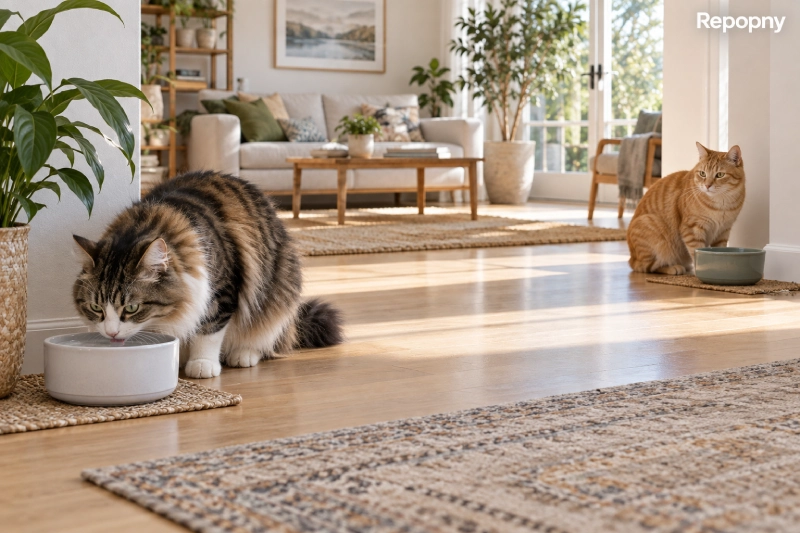
In a multi-cat household, a confident cat can unintentionally—or intentionally—control access to a bowl. A more timid cat may avoid the area rather than risk confrontation.
This is one reason multiple water stations can be helpful.
How to Encourage Your Cat to Drink More Water
Cats can be surprisingly particular about how and where they drink.
Cornell recommends keeping fresh water readily accessible, providing multiple water sources, considering fountains, feeding wet food, or adding water to food when appropriate.
In practice, try making hydration easy rather than forcing it.
Place several wide, clean bowls in quiet locations around the home. Some cats dislike having their whiskers pressed tightly against narrow bowl edges, while others simply prefer one bowl material or location over another.
Keep water fresh and clean bowls regularly.
Merck recommends providing multiple bowls of fresh, clean water and cleaning them daily.
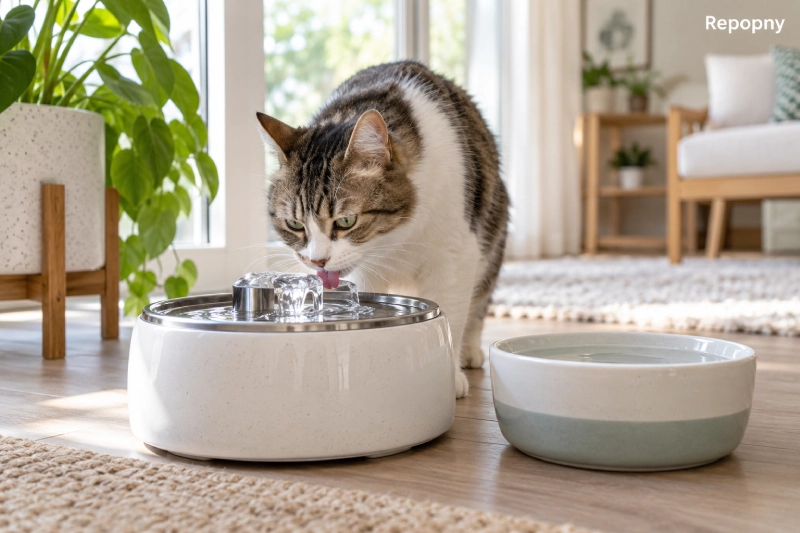
Some cats prefer moving water and may drink more readily from a fountain.
Others prefer an ordinary ceramic or stainless-steel bowl.
You can also experiment with moving the water bowl away from high-traffic areas or from another pet’s feeding station.
If appropriate for your cat, feeding more wet food or adding a little water to meals can increase moisture intake without requiring additional bowl drinking.
The best method is the one your individual cat actually uses.
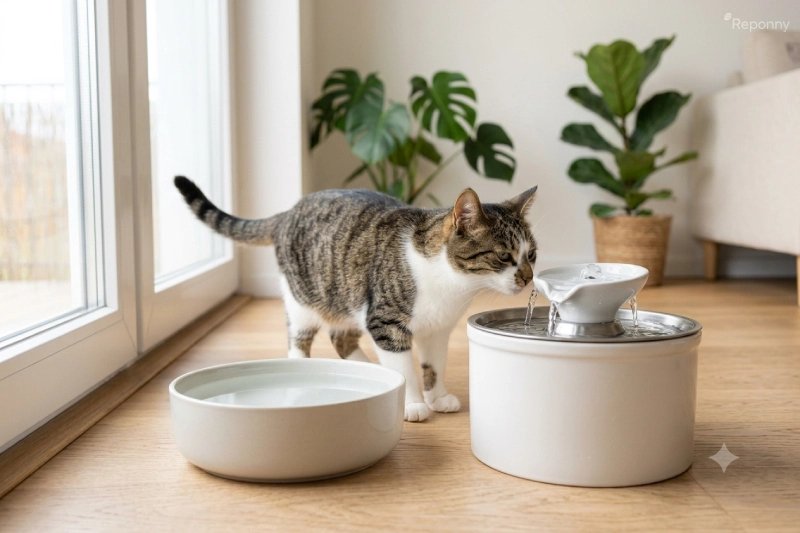
Is a Cat Water Fountain Better Than a Bowl?
Not necessarily.
Water fountains can be useful because some cats appear attracted to moving water. Cornell and Merck both mention fountains as an option that may encourage drinking.
But cats have individual preferences.
One cat may enthusiastically use a fountain while another completely ignores it.
A fountain also requires regular cleaning. Pumps, filters, and reservoirs can accumulate debris or biofilm if maintenance is neglected.
Therefore, a fountain is not automatically “healthier” than a bowl.
Freshness, cleanliness, accessibility, and your cat’s willingness to use the water source matter more.
If you purchase a fountain, it can still be useful to keep at least one ordinary bowl available elsewhere in the home.
Where Should You Put Your Cat’s Water Bowl?
Location can influence drinking more than many owners realize.
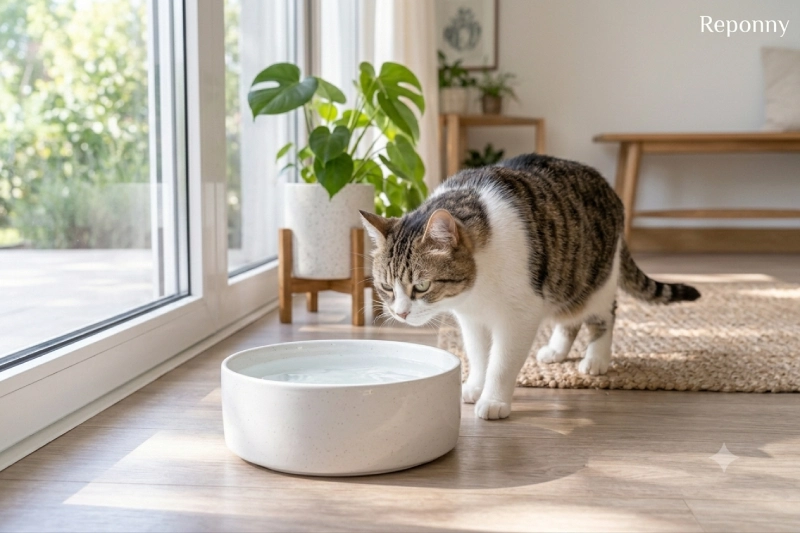
Choose an area that is quiet, easy to access, and unlikely to be blocked by another pet.
For older cats or cats with mobility problems, place water where they do not need to climb stairs or jump onto furniture.
In multi-cat households, distribute several water stations throughout the home rather than grouping every resource together.
Cornell specifically recommends ensuring that territorial conflict does not prevent one cat from accessing water.
Your cat’s preferred location may also surprise you.
Some cats drink more readily from a bowl placed away from their food. Others are perfectly comfortable having both nearby.
Observe behavior rather than assuming every cat has the same preference.
Can You Add Water to Cat Food?
For many cats, yes.
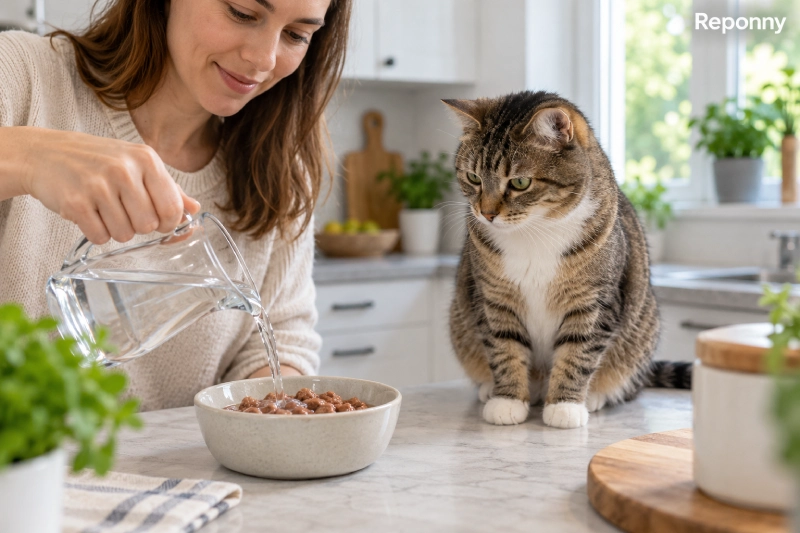
Adding a small amount of fresh water to wet or dry food can increase moisture intake, provided your cat still likes the food.
Start with a small quantity rather than turning the meal into soup immediately.
Some cats happily accept extra water mixed into wet food. Others may refuse a meal if the texture changes too much.
Cornell lists adding water to food as one way owners can encourage increased fluid intake.
Do not leave moistened food sitting at room temperature for extended periods. Adding water changes the food environment and can make spoilage more of a concern.
And if your veterinarian has prescribed a specific therapeutic diet or feeding plan, ask before making significant changes.
Is Milk a Good Way to Hydrate a Cat?
For most adult cats, fresh water is the better choice.
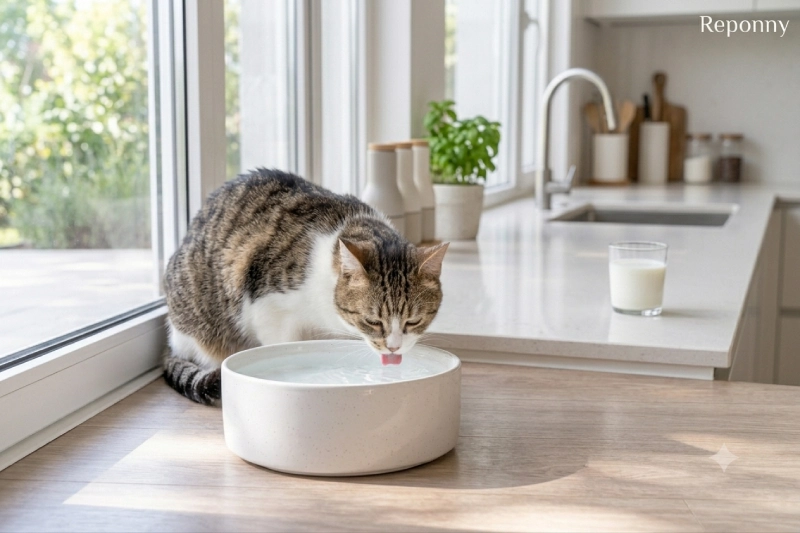
The familiar image of a cat drinking milk can be misleading. Many adult cats do not tolerate lactose particularly well, and dairy may lead to digestive upset.
Milk is also not a substitute for water.
If the goal is hydration, provide clean water and moisture-rich food rather than routinely using cow’s milk.
Cats should always have unrestricted access to fresh drinking water regardless of what food they eat. Cornell emphasizes that clean, fresh water should remain available at all times.
What If Your Cat Suddenly Drinks Much More Water?
A sudden increase in thirst should not automatically be celebrated as “good hydration.”
It may indicate that the body is trying to compensate for excessive fluid loss.
Cornell lists diseases such as chronic kidney disease, diabetes, and hyperthyroidism among conditions that can contribute to increased water loss and dehydration risk.
If you notice that your cat is repeatedly emptying the bowl, visiting the fountain far more often, producing much larger urine clumps, losing weight, or showing appetite or behavior changes, arrange a veterinary examination.
Do not intentionally restrict water in an attempt to reduce urination.
Merck specifically states that water intake should generally not be restricted when water is freely available to healthy animals.
The goal is to identify why drinking has changed.
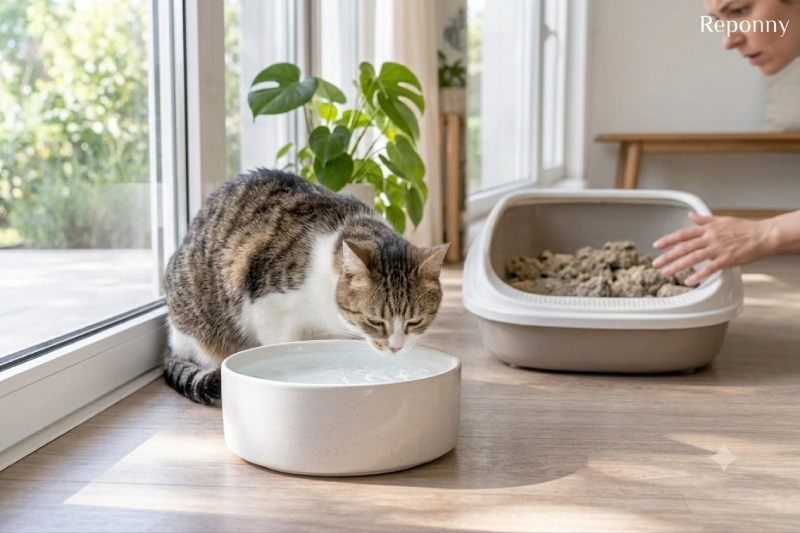
What If Your Cat Barely Drinks?
First consider the diet.
A cat eating mostly wet food may rarely be seen drinking because much of its water arrives through meals.
That can be completely normal.
But a cat consuming mostly dry food while barely drinking deserves closer observation.
Look at the whole picture: appetite, urination, stool, activity, body weight, and general behavior.
If your cat suddenly stops drinking and eating, becomes lethargic, vomits repeatedly, develops diarrhea, or appears dehydrated, contact a veterinarian rather than simply waiting for thirst to return.
Cornell advises prompt veterinary attention when dehydration is suspected.
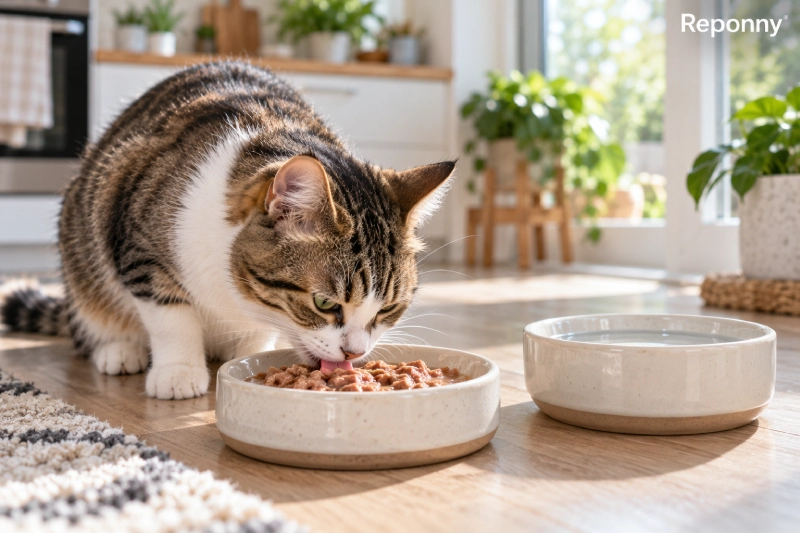
Frequently Asked Questions
How Much Water Should a 10-Pound Cat Drink?
A 10-pound cat may need approximately 8 ounces, or around 1 cup, of total water per day as a general estimate. This includes water obtained from food, so a cat eating wet food may drink considerably less than one cup directly from the bowl.
How Much Water Should a 5-Kg Cat Drink?
Using Merck’s broad estimate of approximately 44–66 mL/kg daily, a 5 kg cat might consume roughly 220–330 mL of total water per day. Individual needs vary with diet, environment, activity, and health.
Do Cats on Wet Food Need to Drink Water?
Yes. Fresh water should still be available at all times.
However, cats eating wet food may drink much less because canned food contains a high percentage of water.
Do Cats on Dry Food Need More Water?
They generally need to obtain more of their total daily fluid intake by drinking because dry food contains far less moisture than wet food.
Is Tap Water Safe for Cats?
If the tap water is considered safe for human consumption in your area, it is generally used for pets as well. However, individual water quality and local conditions vary. Some cats may also prefer filtered water because of taste or odor.
How Often Should I Change My Cat’s Water?
Fresh water should be provided daily, and bowls should be cleaned regularly. Merck recommends multiple bowls of fresh, clean water and daily cleaning.
Final Thoughts
So, how much water should a cat drink each day?
For an average healthy cat, a useful starting estimate is around 4 ounces for every 5 pounds of lean body weight per day, or broadly about 44–66 mL per kilogram depending on the individual and circumstances.
But remember: that is total water intake.
A cat eating wet food may obtain a large proportion of daily water through meals and drink surprisingly little from the bowl. A cat eating dry food generally needs to drink more.
Rather than obsessing over one exact number, pay attention to your cat’s normal pattern.
Provide clean fresh water at all times, consider multiple bowls or a fountain, use wet food or added water when appropriate, and watch for meaningful changes in thirst, urination, appetite, weight, and behavior.
If your cat suddenly drinks dramatically more or less than usual—or shows signs of dehydration—contact your veterinarian.
Hydration is simple in principle, but changes in water intake can sometimes be one of the earliest clues that something has changed in your cat’s health.