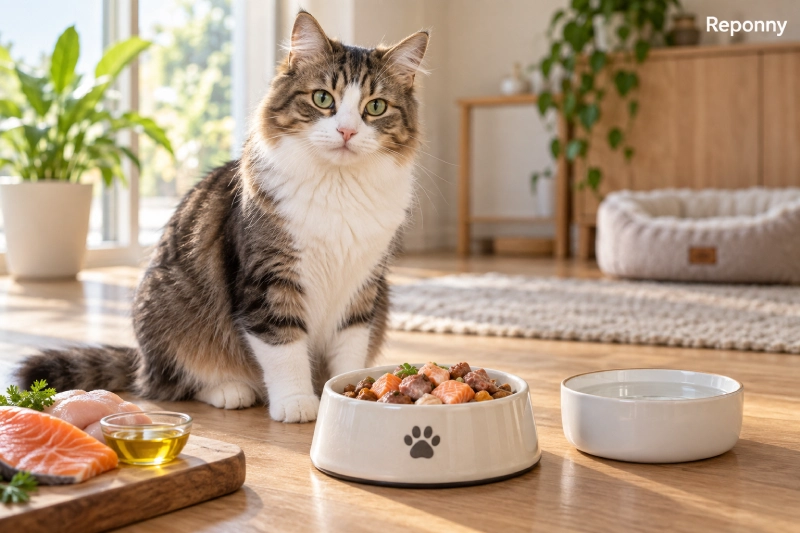
Cats may look adaptable at the dinner bowl, but their nutritional biology is unusually specific.
Unlike humans—and even unlike dogs—cats are obligate carnivores. Their bodies evolved around a diet based largely on animal tissues, creating nutritional requirements for certain amino acids, fatty acids, vitamins, minerals, and other nutrients that must be supplied in appropriate amounts through food.
That does not mean a cat should simply eat meat from your refrigerator. Plain meat alone is not a complete cat diet. A properly formulated food must provide dozens of nutrients in the right amounts and proportions.
Understanding these essential nutrients can help you make more informed decisions when reading cat food labels, comparing diets, or wondering whether your cat needs supplements.
Quick answer: Cats require adequate protein, essential amino acids such as taurine and arginine, fats and essential fatty acids, vitamins including preformed vitamin A and vitamin D, minerals, and water. The safest everyday approach for most healthy cats is a food labeled complete and balanced for their appropriate life stage.
Why Cats Have Unique Nutritional Needs
Cats are not simply small dogs when it comes to nutrition.
Their metabolism has adaptations associated with eating prey and relying heavily on animal-derived nutrients. Cornell describes cats as obligate carnivores and notes that their natural nutritional pattern includes relatively high protein, moderate fat, and relatively little carbohydrate.
Cats also have specific dietary requirements that differ from those of dogs. For example, they require dietary taurine, preformed vitamin A, arachidonic acid, and higher amounts of certain amino acids such as arginine.
This is one reason dog food should not be used as a regular diet for cats. Some dog foods do not provide enough taurine, protein, arachidonic acid, or other nutrients required by cats.
A nutritionally complete cat food is therefore more than meat plus vitamins. It is a carefully balanced combination of nutrients designed to meet feline requirements.
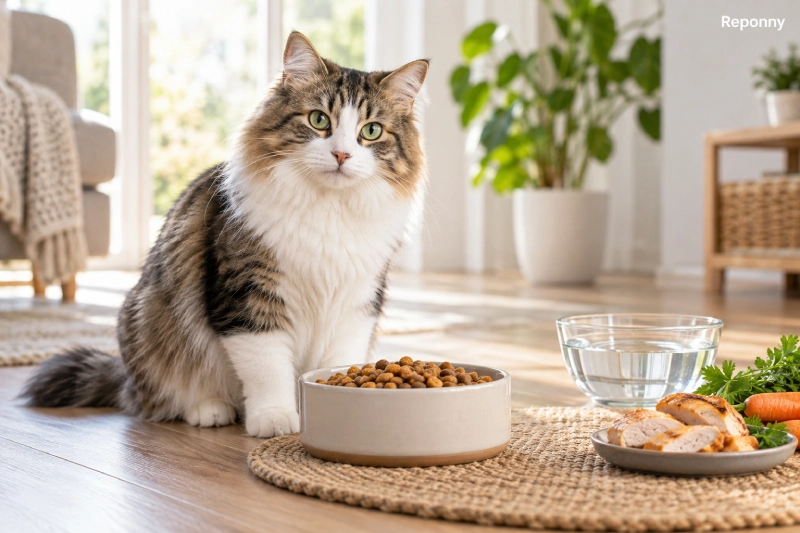
1. Protein: A Foundation of Feline Nutrition
Protein is one of the most important parts of a cat’s diet.
Dietary protein supplies amino acids that the body uses to build and maintain:
- muscles,
- skin,
- fur,
- enzymes,
- hormones,
- antibodies,
- and many other tissues and compounds.
Cats have relatively high protein requirements compared with many other animals.
According to the Merck Veterinary Manual, AAFCO nutrient profiles specify a minimum of 26% crude protein on a dry-matter basis for adult maintenance and 30% for growth and reproduction. These are minimum nutritional standards—not necessarily targets that every cat food should exactly match.
Protein quality matters too.
A food needs to provide the appropriate amino acids in adequate amounts, not simply display a high crude-protein percentage on the package.
This is particularly important for kittens because growing cats are more sensitive to protein quality and amino-acid balance than healthy adults.
Does More Protein Always Mean Better?
Not necessarily.
A higher protein number on a label does not automatically make one food healthier than another.
You also need to consider:
- digestibility,
- amino-acid balance,
- calorie density,
- life stage,
- total formulation,
- and the individual cat’s health.
Cats with particular medical conditions may also require a therapeutic nutrition plan established with a veterinarian.
2. Taurine: An Essential Nutrient Cats Cannot Ignore
Taurine is probably the best-known nutrient that makes feline nutrition unique.
It is an amino sulfonic acid that cats must obtain in adequate quantities through their diet.
Cats cannot synthesize enough taurine on their own to meet their needs. A prolonged dietary deficiency can have serious consequences, including dilated cardiomyopathy and central retinal degeneration, which may impair vision.
Animal tissues naturally provide taurine, while plant proteins do not naturally provide meaningful taurine in the same way. Commercial cat foods can also be fortified with synthetic taurine to ensure nutritional adequacy.
This is one reason feeding a cat an improvised diet can be risky.
Even if a homemade meal contains plenty of meat, processing, ingredients, proportions, and other factors can affect whether the total diet provides sufficient taurine and other nutrients.
Does Your Cat Need a Taurine Supplement?
Usually not if your cat is eating a properly formulated complete and balanced commercial cat food.
Cornell notes that supplements are generally unnecessary when a complete and balanced diet is being fed, and excessive supplementation of some nutrients can be harmful.
Do not add supplements simply because taurine sounds important. The important goal is an appropriately formulated overall diet.
3. Arginine: Less Famous but Extremely Important
Arginine receives far less attention than taurine, but it is also essential for cats.
Arginine is an amino acid involved in the urea cycle, which helps the body safely process nitrogen waste generated during protein metabolism.
Cats have a particularly important dietary requirement for arginine. Merck notes that cats require higher amounts of certain amino acids, including arginine, than dogs.
This is one reason feline nutrition must be viewed as a complete system.
Simply knowing that a food contains “lots of protein” does not tell you whether all essential amino acids are available in appropriate proportions.
Commercial foods formulated to meet recognized feline nutrient profiles account for requirements such as arginine along with many other essential nutrients.
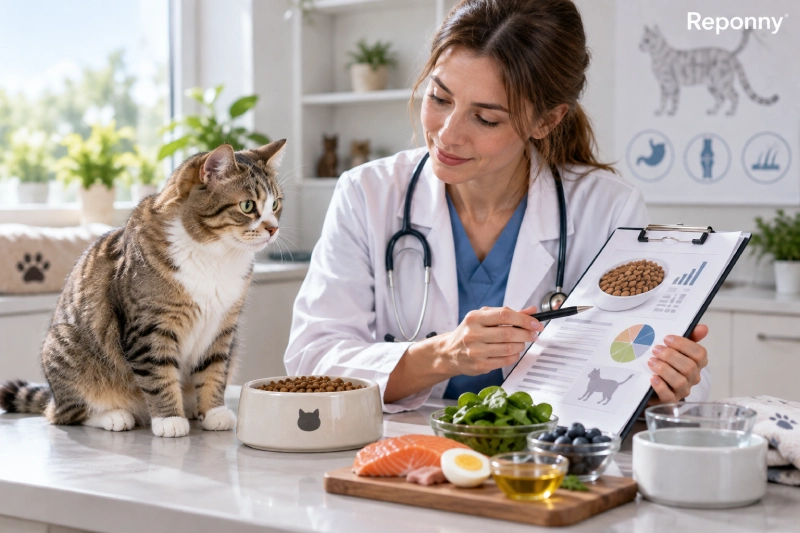
4. Fat: Energy, Flavor and Essential Fatty Acids
Fat is not simply something to avoid.
For cats, dietary fat is an important concentrated source of energy. It also helps transport and absorb the fat-soluble vitamins A, D, E, and K.
Fat also supplies essential fatty acids.
All mammals require linoleic acid, but cats have an additional dietary requirement for arachidonic acid, an omega-6 fatty acid naturally found in animal fats such as meat, poultry, and eggs.
Unlike dogs, cats cannot efficiently convert enough linoleic acid into arachidonic acid to meet their needs.
That distinction is another example of why cat food must be formulated specifically for cats.
What About Omega-3 Fatty Acids?
Omega-3 fatty acids can also play important biological roles, and some feline diets include fish oils or other omega-3 sources.
However, more is not automatically better.
The overall fatty-acid balance, calorie content, food formulation, and individual health condition matter. Adding large amounts of oils or supplements without veterinary guidance can introduce unnecessary calories or disrupt the nutritional balance.
5. Vitamin A: Cats Need the Preformed Version
Vitamin A supports several important functions, including:
- vision,
- immune function,
- growth,
- reproduction,
- and healthy epithelial tissues.
Humans and some animals can convert beta-carotene from plant foods into usable vitamin A.
Cats are different.
Merck explains that cats cannot efficiently perform this conversion and therefore require preformed vitamin A in their diet. Appropriate sources can include animal-derived ingredients or vitamin A added during food formulation.
This does not mean owners should begin feeding large amounts of liver.
Too much vitamin A can also be harmful. Merck specifically notes that diets consisting heavily of liver can result in vitamin A toxicity.
Nutrition is about balance—not simply maximizing individual nutrients.
6. Vitamin D: Food Matters More Than Sunshine for Cats
Humans commonly associate vitamin D with sunlight.
Cats cannot rely on sunshine in the same way.
Merck explains that cats and dogs have limited ability to produce vitamin D through the skin and therefore require dietary vitamin D.
Vitamin D plays an important role in regulating calcium and phosphorus and contributes to normal bone mineralization.
Both deficiency and excess can cause problems.
That means giving a cat a human vitamin D supplement without veterinary instruction is not appropriate.
A complete and balanced feline food should provide vitamin D in an amount designed for the cat’s life stage.
7. B Vitamins and Other Important Vitamins
Cats also need a variety of water-soluble vitamins.
These include B vitamins involved in:
- energy metabolism,
- nervous-system function,
- blood-cell production,
- and many cellular processes.
Cats have relatively high requirements for some B vitamins, including niacin and pyridoxine (vitamin B6).
Thiamine, or vitamin B1, is another important example.
Diet formulation and processing matter because certain ingredients can interfere with nutrient availability. Merck notes that thiaminases found in some raw fish can destroy thiamine.
This is another reason an improvised diet consisting mainly of one ingredient—such as fish—is not nutritionally equivalent to a complete cat food.
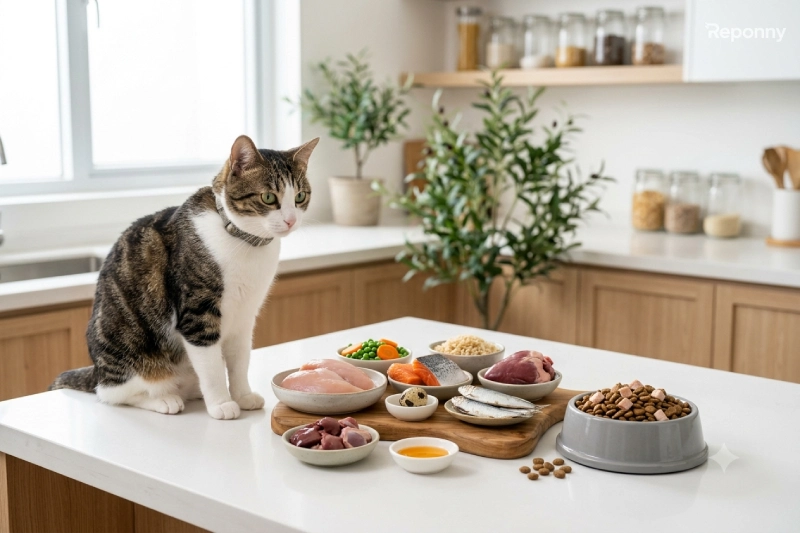
8. Minerals: Calcium, Phosphorus and More
Minerals may be needed in relatively small quantities, but their balance is critical.
Cats require minerals including:
- calcium,
- phosphorus,
- potassium,
- sodium,
- chloride,
- magnesium,
- iron,
- copper,
- zinc,
- iodine,
- selenium,
- and others.
Calcium and phosphorus are particularly important for bones and teeth, but feeding the right ratio matters—not simply providing more of each nutrient.
For example, Merck warns that diets consisting mainly of meat can cause calcium deficiency because muscle meat alone does not provide a nutritionally balanced mineral profile.
This is an important point for owners considering homemade diets.
A bowl full of chicken may look biologically appropriate for a carnivore, but chicken breast alone does not reproduce the nutrient composition of a complete prey animal or a professionally formulated feline diet.
9. Water: The Essential Nutrient Owners Sometimes Forget
Water may be the least glamorous nutrient, but it is essential.
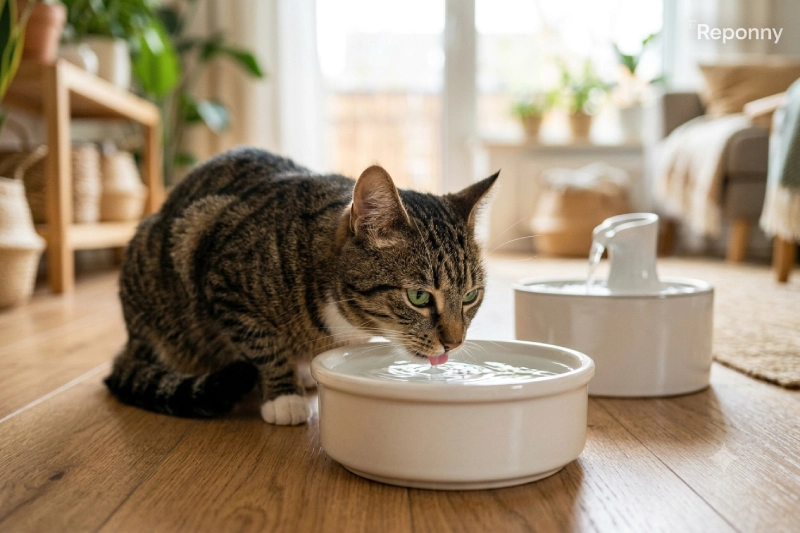
Cats need constant access to clean, fresh water.
Cornell specifically recommends that fresh water be available at all times.
How cats obtain that water can differ depending on diet.
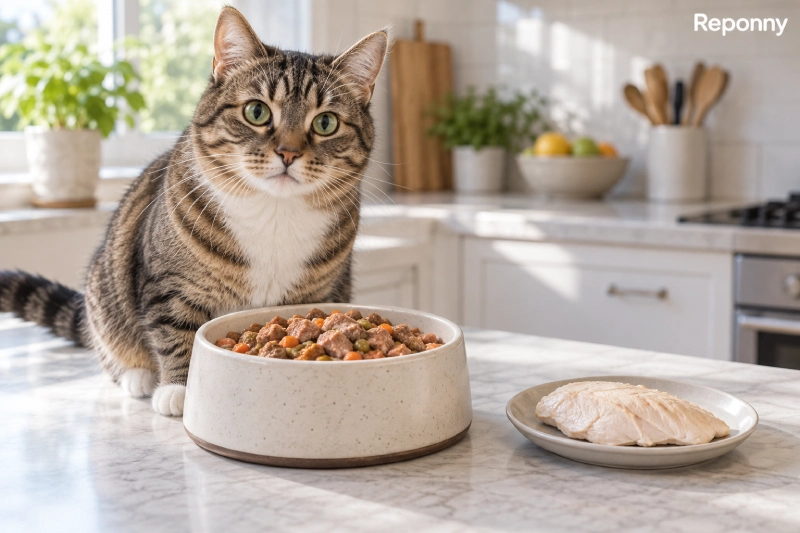
Wet food contains substantially more moisture than dry food, so cats eating a moisture-rich diet may obtain a larger portion of their total water intake through food.
Cats eating dry food need to compensate through drinking.
You can encourage water intake by:
- providing multiple clean water stations,
- washing bowls frequently,
- experimenting with bowl materials and locations,
- using a cat fountain if your cat prefers moving water,
- and incorporating wet food when appropriate.
If your cat suddenly begins drinking dramatically more or less than usual, especially with changes in urination, appetite, or weight, discuss the change with your veterinarian.
10. Do Cats Need Carbohydrates?
This question causes considerable confusion.
Cats are obligate carnivores, but that does not mean they are physically incapable of digesting carbohydrates.
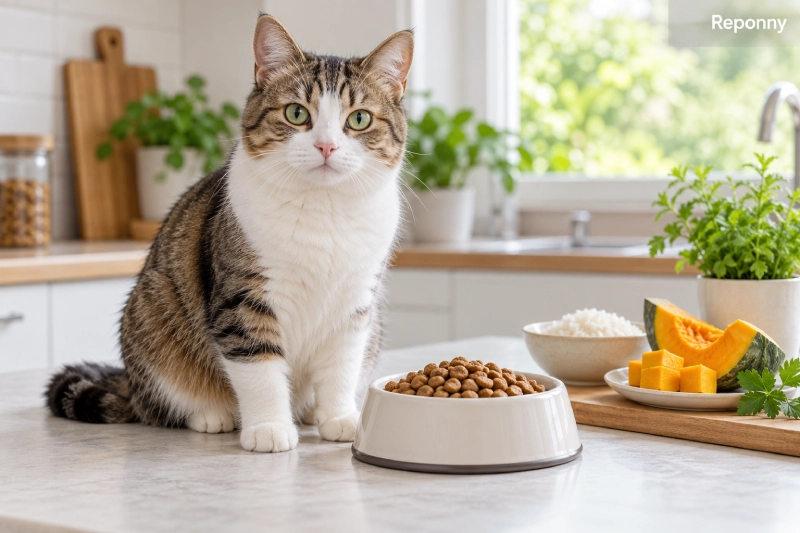
Merck notes that healthy adult cats can metabolize diets containing moderate amounts of calories from carbohydrates and can efficiently digest properly cooked starches.
However, cats do not have a specific dietary requirement for carbohydrates in the same way they require taurine or certain essential fatty acids.
The more useful question is therefore not:
“Does this food contain any carbohydrates?”
but:
“Does the complete diet meet the cat’s nutritional needs and provide appropriate calories?”
A moderate amount of carbohydrate in an otherwise well-formulated cat food does not automatically make the food inappropriate.
11. What About Fiber?
Fiber is another nutrient category that should not be reduced to “good” or “bad.”
Different fibers have different physiological effects.
Some types influence stool quality, gut bacteria, satiety, or gastrointestinal movement. Merck notes that simply reading the percentage of crude fiber on a pet-food label does not fully describe the type or physiological effect of the fiber present.
Some commercial diets deliberately adjust fiber for:
- weight management,
- hairball management,
- digestive support,
- or other specific purposes.
That does not mean owners need to add fiber supplements to every cat’s diet.
If your cat has persistent constipation, diarrhea, or another digestive problem, identify the cause with veterinary help rather than continually changing fiber intake at home.
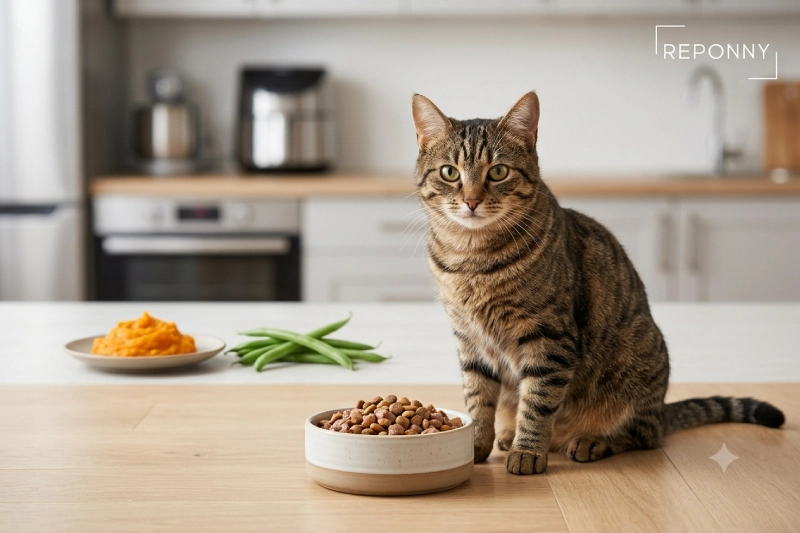
12. Why “Complete and Balanced” Matters
When choosing everyday cat food, one of the most useful things on the package is the nutritional adequacy statement.
A complete and balanced diet is formulated to provide all required nutrients in appropriate amounts for a specified life stage.
This is crucial because individual ingredients do not tell the whole story.
Chicken is nutritious.
Fish can be nutritious.
Eggs are nutritious.
Liver contains many nutrients.
But none of these foods alone provides the complete nutrient balance a cat requires over the long term.
Merck emphasizes that complete and balanced commercial diets are formulated to provide adequate amounts of required nutrients without excessive levels.
When checking a package, look for whether the food is intended for:
- growth / kittens,
- adult maintenance,
- growth and reproduction,
- or another recognized life stage.
Foods labeled only for intermittent or supplemental feeding should not normally serve as the sole daily diet unless your veterinarian has a specific reason for using them.

13. Should You Give Your Cat Vitamin or Mineral Supplements?
For most healthy cats eating a complete and balanced diet, routine vitamin and mineral supplements are generally unnecessary.
Cornell specifically cautions that more is not always better, particularly with vitamins and minerals, and recommends that supplements not be given without veterinary approval.
Extra nutrients can create problems.
For example:
- excess vitamin A can be toxic,
- excessive vitamin D can disturb calcium metabolism,
- mineral imbalances can interfere with the overall diet,
- and added oils can significantly increase calories.
There are situations where a veterinarian may prescribe a supplement because of illness, deficiency, or a specially formulated homemade diet.
That is very different from routinely adding supplements “just in case.”

14. Why Homemade Cat Diets Require Special Care
It is easy to imagine that a bowl of fresh meat must be healthier than packaged food.
But feline nutrition is much more complicated.
A homemade diet may look wholesome while still being deficient in:
- calcium,
- taurine,
- essential fatty acids,
- vitamins,
- trace minerals,
- or other nutrients.
Merck notes that diets based on a limited number of ingredients can be nutritionally inadequate, and even meat-heavy diets can produce serious mineral deficiencies.
If you want to feed a fully homemade diet long term, the safest approach is to use a recipe specifically formulated for your individual cat by a board-certified veterinary nutrition specialist or another appropriately qualified veterinary professional.
Do not build a diet by combining recipes from social media and adding random supplements.

15. Nutritional Needs Change Throughout Life
A kitten, healthy adult, pregnant cat, and older cat do not necessarily have identical nutritional requirements.
Kittens
Growing kittens require more protein and energy relative to body size and need food formulated for growth.
Adults
Healthy adult cats need enough nutrients and calories to maintain lean body mass and healthy body condition without excessive weight gain.
Pregnant and Nursing Cats
Pregnancy and lactation increase nutritional demands substantially, so diets designed for growth and reproduction may be appropriate under veterinary guidance.
Senior Cats
Older cats may develop changes in appetite, body weight, muscle mass, dental health, digestion, or chronic disease. Their diets may need to be adjusted according to individual health rather than age alone.
AAFCO therefore distinguishes nutritional profiles for stages such as adult maintenance and growth/reproduction instead of using one nutrient profile for every cat.
How to Evaluate Your Cat’s Food
You do not need to become a veterinary nutritionist to make a reasonable food choice.
Start with a few practical questions.
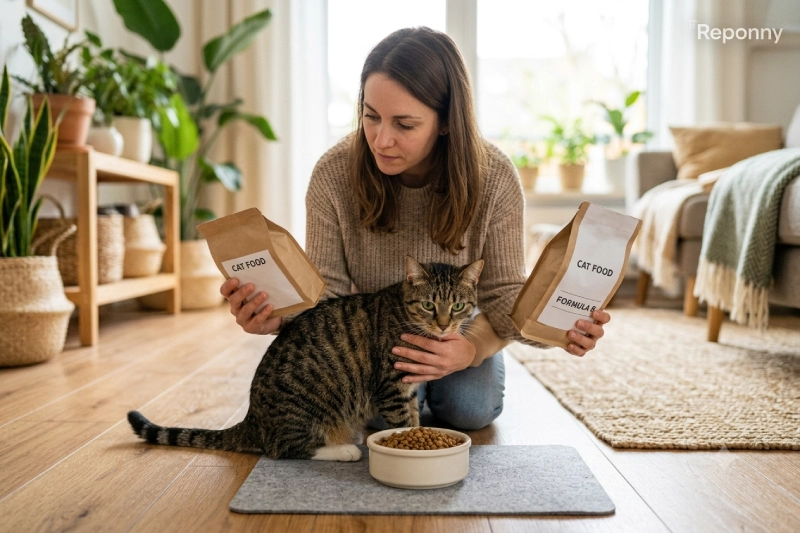
1. Is It Complete and Balanced?
Check the nutritional adequacy statement.
2. Is It Appropriate for Your Cat’s Life Stage?
Kitten food and adult-maintenance food are not interchangeable in every situation.
3. How Many Calories Does It Provide?
Calories influence portion size and weight management.
4. Does Your Cat Maintain a Healthy Body Condition?
A food can look excellent on paper but still require portion adjustment for your individual cat.
5. Does Your Cat Tolerate It Well?
Monitor appetite, stool quality, coat condition, weight, and general well-being.
6. Does Your Cat Have a Medical Condition?
Cats with kidney disease, diabetes, urinary disease, food allergies, gastrointestinal disease, obesity, or other conditions may have different nutritional priorities.
In those cases, choose food with veterinary guidance rather than relying on general rankings of “best” ingredients.
Frequently Asked Questions
What Is the Most Important Nutrient for Cats?
There is no single nutrient that can replace all the others.
Cats require an appropriate balance of protein, essential amino acids, fats, fatty acids, vitamins, minerals, and water. A severe deficiency of one essential nutrient can cause health problems even if all the others are present.
Why Is Taurine So Important for Cats?
Cats cannot make enough taurine to meet their physiological needs. Prolonged deficiency can contribute to serious problems including retinal degeneration and dilated cardiomyopathy.
Can Cats Live on Meat Alone?
Not safely as a long-term feeding strategy.
Muscle meat alone does not provide the appropriate balance of calcium, vitamins, fatty acids, trace minerals, and other nutrients required in a complete feline diet.
Can Cats Eat Dog Food?
A small accidental amount is not the same as using dog food as the regular diet.
Dog food should not routinely replace cat food because feline nutritional requirements differ, including requirements for taurine, arachidonic acid, preformed vitamin A, protein, and other nutrients.
Do Cats Need Carbohydrates?
Cats do not have a specific dietary carbohydrate requirement comparable to their requirements for taurine or essential fatty acids. However, healthy cats can digest and utilize properly processed carbohydrate sources, so the presence of carbohydrates alone does not make a food unsuitable.
Should I Add Taurine to My Cat’s Food?
Not routinely if you are feeding an appropriately formulated complete and balanced commercial cat food.
If you feed a homemade diet or your veterinarian suspects a nutritional issue, supplementation should be based on professional dietary formulation rather than guesswork.
Final Thoughts
Cats have nutritional requirements shaped by their biology as obligate carnivores.
Protein is essential, but protein alone is not enough.
Cats also depend on nutrients such as taurine, arginine, arachidonic acid, preformed vitamin A, vitamin D, essential fatty acids, minerals, vitamins, and water.
The goal is not to chase one fashionable ingredient or the highest possible number on a pet-food label.
It is to provide the right nutrients in the right proportions.
For most healthy cats, the simplest way to accomplish that is to choose an appropriately formulated food labeled complete and balanced for the cat’s life stage, feed an appropriate number of calories, provide fresh water, and monitor body condition over time.
And when a cat has a medical condition—or when you want to feed a long-term homemade diet—nutrition becomes individualized enough that veterinary guidance is worth seeking.