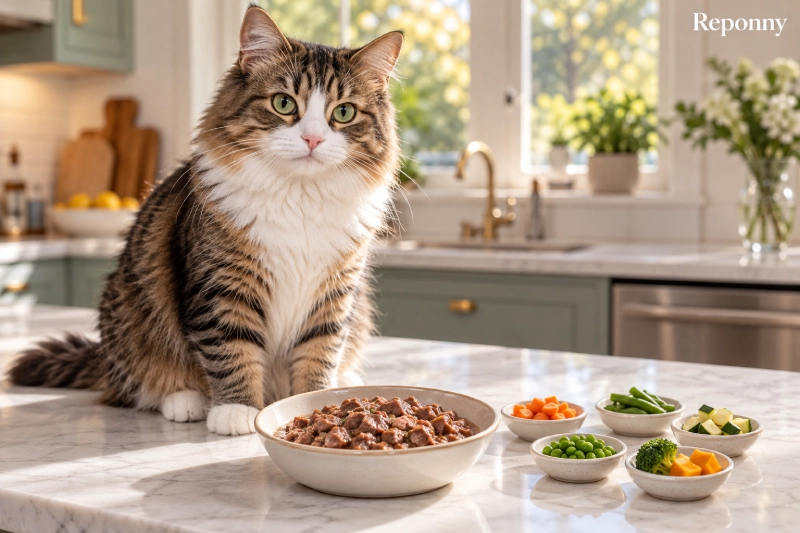
Cats may occasionally show surprising interest in foods that do not look very “cat-like.”
A piece of cucumber falls from your cutting board and your cat investigates it. Your cat steals a cooked green bean from your plate. Another cat seems fascinated by pumpkin or peas.
So, can cats eat vegetables?
Yes—many vegetables are safe for cats in small amounts when prepared plainly. Examples include green beans, zucchini, carrots, broccoli, cucumber, peas, pumpkin, and some cooked vegetables.
But vegetables are not nutritionally essential for cats.
Cats are obligate carnivores, meaning their nutritional requirements depend heavily on nutrients found in animal tissues. VCA notes that although cats can eat foods such as grains and vegetables, they still require animal-derived nutrients and cannot obtain everything they need from plants alone.
Some vegetables can also be dangerous. Onions, garlic, chives, and leeks should never be used as cat treats, while raw potatoes, green tomatoes, and parts of tomato or potato plants can also present risks.
Quick answer: Cats can eat small amounts of plain vegetables such as cooked carrots, green beans, zucchini, peas, broccoli, pumpkin, cucumber, and cooked sweet potato. Keep vegetables and other treats to about 10% or less of daily calories, and avoid onions, garlic, chives, leeks, raw or green potatoes, and unripe tomato plants.
Do Cats Need Vegetables?
No.
A cat does not need vegetables in the way humans do.
Cats evolved as obligate carnivores and have nutritional adaptations that make animal tissue especially important. For example, VCA notes that cats cannot convert beta-carotene from vegetables into sufficient vitamin A the way some other species can. They need preformed vitamin A, which naturally occurs in animal tissues.
Cats also require nutrients such as:
- taurine,
- arginine,
- arachidonic acid,
- animal-derived protein,
- essential fatty acids,
- vitamins,
- minerals,
- and adequate water.
A carrot cannot replace those requirements.
Vegetables are best viewed as:
optional treats or small additions—not essential components of a feline diet.
Cornell recommends that the main diet be nutritionally complete and balanced and suggests keeping treats to roughly 10–15% or less of daily calories.
For practical everyday feeding, staying around 10% or less gives even more room for complete cat food to supply essential nutrition.
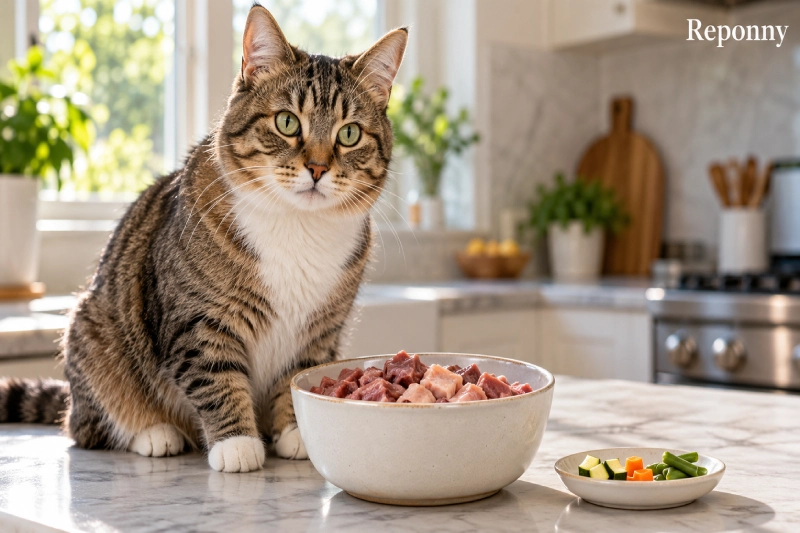
Safe Vegetables for Cats at a Glance
For most healthy cats, these vegetables can be offered plain and in small portions:
| Vegetable | Generally Safe? | Best Preparation |
|---|---|---|
| Green beans | Yes | Plain, cooked or softened |
| Zucchini | Yes | Plain, raw in tiny pieces or lightly cooked |
| Carrots | Yes | Cooked until soft |
| Peas | Yes | Plain, cooked |
| Pumpkin | Yes | Plain cooked pumpkin or pure pumpkin |
| Broccoli | Yes | Plain, lightly cooked, tiny pieces |
| Cucumber | Yes | Fresh, small pieces |
| Celery | Yes | Finely chopped, small amount |
| Lettuce | Usually | Clean, tiny amount |
| Sweet potato | Yes | Fully cooked, plain |
| Plain cooked potato | Small amounts | Fully cooked only |
| Ripe tomato flesh | Generally non-toxic | Small amount only; avoid plant/green fruit |
VCA specifically lists zucchini and green beans among foods that can be offered to cats and also identifies carrots, cucumber, broccoli, and other vegetables as low-calorie snack options.
ASPCA also lists vegetables including carrots, celery, zucchini, peas, beans, ripe tomatoes, and cooked potatoes as options that can be fed in moderation.
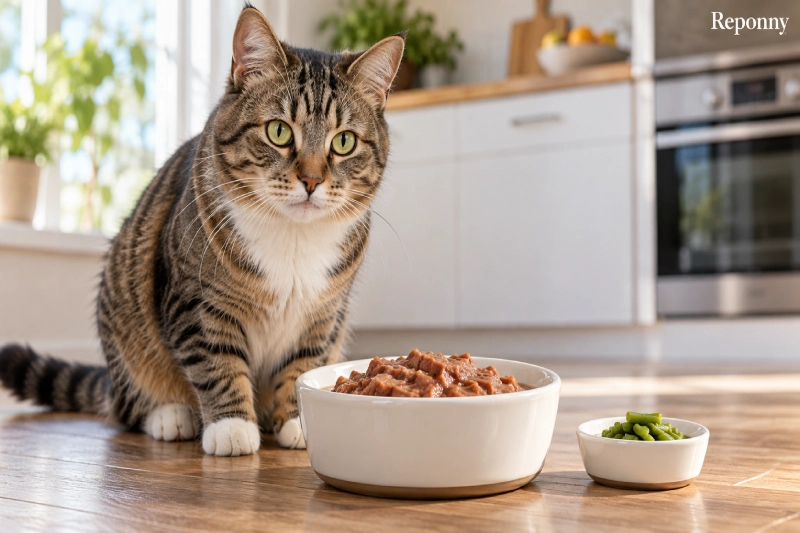
1. Can Cats Eat Green Beans?
Yes.
Plain green beans are one of the simplest vegetable treats for cats.
They are relatively low in calories and contain water and fiber.
VCA specifically includes green beans among safe human-food treats for cats.
For easier eating, serve them:
- plain,
- without salt,
- without butter,
- and cut into small pieces.
Fresh, frozen, or cooked green beans can all work as long as no unsafe seasonings are added.
Avoid canned green beans packed in salty sauces unless you have checked the sodium and rinsed them thoroughly.
Can green beans help an overweight cat?
They may provide a low-calorie snack, but they should not become a substitute for a properly formulated weight-management diet.
Weight loss requires control of total daily calories, not simply adding vegetables.
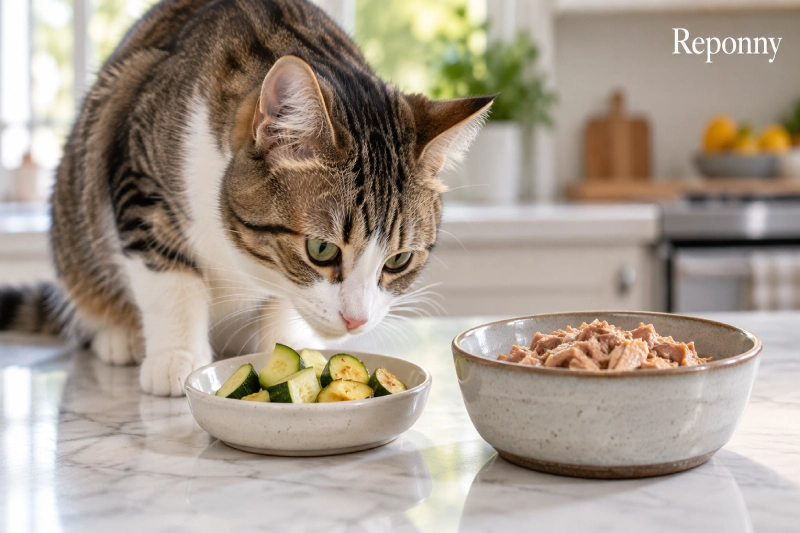
2. Can Cats Eat Zucchini?
Yes.
Zucchini is generally considered non-toxic to cats, and ASPCA includes zucchini among non-toxic members of the squash family.
VCA also lists zucchini among human foods that may be used as cat treats.
Serve it:
- plain,
- finely chopped,
- or lightly cooked.
Avoid frying it in oil or coating it with garlic, onions, salt, or sauces.
Because zucchini contains relatively little energy, a tiny portion can be useful when you want to provide a food reward without adding many calories.
But if your cat ignores zucchini completely, that is fine.
Cats do not need it.
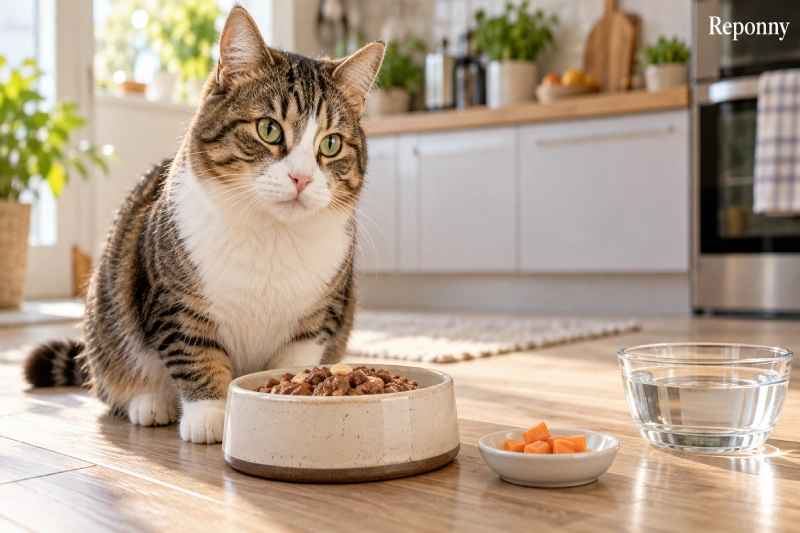
3. Can Cats Eat Carrots?
Yes, in small amounts.
VCA includes carrots among low-calorie vegetable snacks that may be offered to cats.
However, carrots are much easier for cats to eat when cooked until soft.
A large raw carrot chunk could be difficult to chew and may create a choking concern, particularly for a cat that tries to swallow food quickly.
The safest option is:
plain cooked carrot cut into tiny pieces.
Do not add:
- butter,
- sugar,
- salt,
- honey,
- garlic,
- or seasoning.
Remember that cats cannot rely on the beta-carotene in carrots to meet their vitamin A needs. VCA notes that cats require preformed vitamin A from animal-derived sources.
So carrots are a treat, not a nutritional replacement for animal-based feline food.
4. Can Cats Eat Peas?
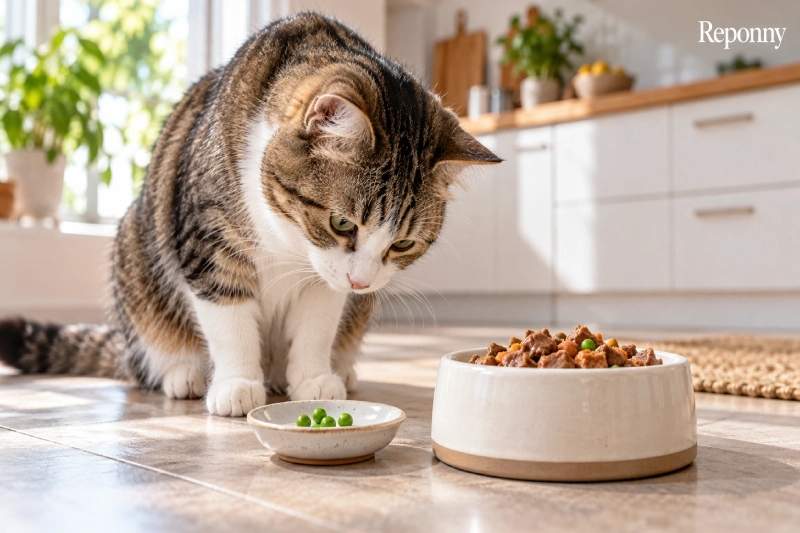
Yes.
Plain cooked peas can be offered to many healthy cats in small quantities.
ASPCA lists peas among garden vegetables that may be used as occasional pet snacks.
Peas also appear in many commercial cat-food formulations.
Serve them:
- plain,
- cooked,
- without butter,
- without sauce,
- and preferably slightly mashed or offered individually.
Do not assume that because peas are safe, cats require them nutritionally.
They remain an optional extra.
5. Can Cats Eat Pumpkin?
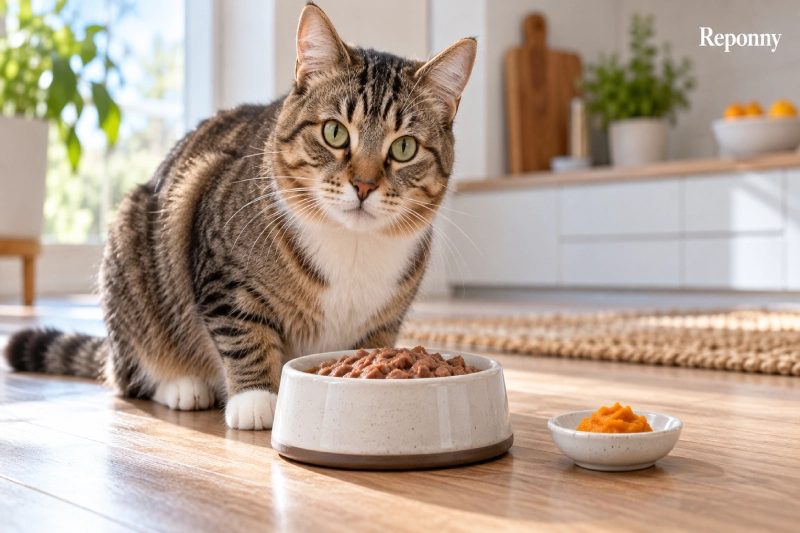
Yes—plain pumpkin can be appropriate in small amounts.
VCA lists cooked pumpkin as a low-calorie, fiber-containing treat.
The important word is plain.
Good options include:
- cooked fresh pumpkin,
- or plain canned pumpkin containing only pumpkin.
Avoid pumpkin pie filling, which can contain sugar, spices, and other ingredients that were never intended for cats.
Is pumpkin good for constipation or diarrhea?
Pumpkin contains fiber and may affect stool consistency, but it should not be treated as a universal remedy.
Constipation and diarrhea have many possible causes.
If your cat repeatedly has abnormal stool, talk with your veterinarian rather than simply increasing pumpkin indefinitely.
Too much added fiber may also be inappropriate for some cats.
6. Can Cats Eat Broccoli?
Yes, in small quantities.
VCA lists broccoli among vegetable treats that can be offered to cats.
Steam or lightly cook it and cut it into very small pieces.
Broccoli is high in fiber relative to the quantities a cat normally eats, so giving a large serving may contribute to gastrointestinal upset.
Use only a few small pieces.
Do not cover broccoli with:
- cheese sauce,
- garlic butter,
- salt,
- or other seasonings.
The vegetable itself may be safe.
The human recipe often is not.
7. Can Cats Eat Cucumber?
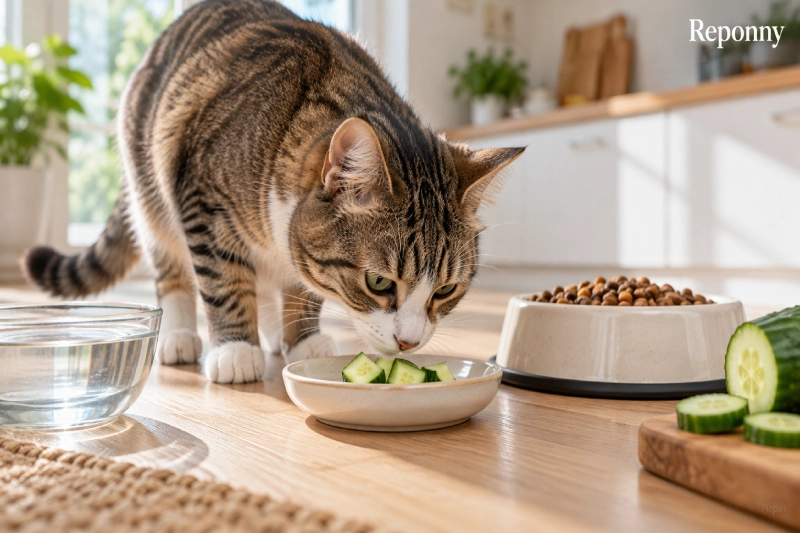
Yes.
Plain fresh cucumber can be offered in tiny amounts.
VCA includes cucumber among low-calorie vegetable snack options.
Cucumber is mostly water, so it is relatively low in calories.
Remove thick peel if it is difficult to chew and cut the cucumber into very small pieces.
Do not serve pickles as a substitute.
Pickles can contain large amounts of salt, garlic, onion, or other seasonings.
8. Can Cats Eat Celery?
Generally, yes in small amounts.
ASPCA and VCA list celery among vegetable snack options for pets.
Because celery can be fibrous and stringy, cut it into very small pieces.
Large pieces may be difficult for a cat to chew.
Again, plain is best.
Celery from soups and casseroles may have been cooked with onion, garlic, or salty stock and should not automatically be shared.
9. Can Cats Eat Sweet Potato?
Plain, fully cooked sweet potato can be offered in very small quantities.
VCA lists cooked sweet potato as a low-calorie, fiber-containing treat option.
Serve it:
- completely cooked,
- plain,
- mashed or cut small.
Avoid:
- butter,
- sugar,
- marshmallow,
- syrup,
- nutmeg,
- or seasoned casseroles.
Cats have no nutritional requirement for sweet potato.
It is simply an occasional food that some cats may enjoy.
Vegetables Cats Should Avoid
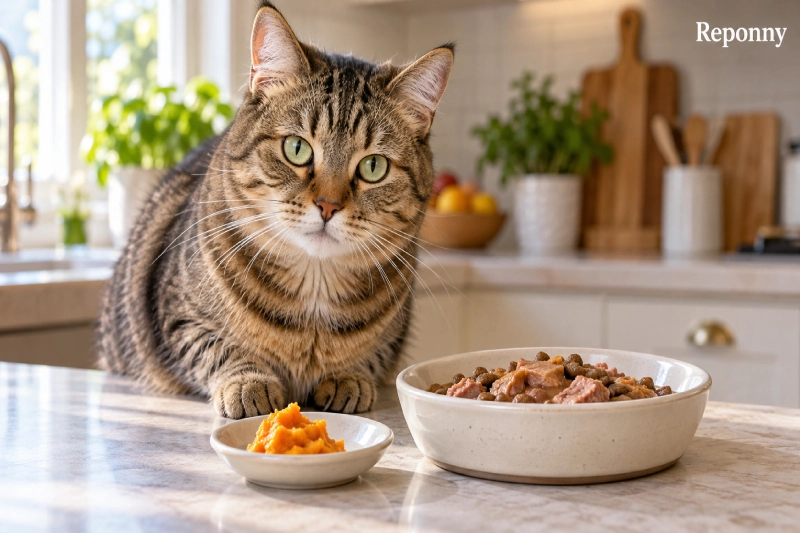
Some vegetables are not suitable for feline treats.
The most important are members of the Allium family.
Onions Are Toxic to Cats
Cats should not eat onions.
This applies to:
- raw onion,
- cooked onion,
- fried onion,
- dehydrated onion,
- onion flakes,
- and onion powder.
Merck explains that onions contain sulfur-containing compounds capable of causing oxidative damage to red blood cells and hemolytic anemia. Cats are particularly susceptible to Allium poisoning.
Clinical signs may not appear immediately.
They can include:
- weakness,
- poor appetite,
- pale gums,
- rapid heart rate,
- rapid breathing,
- yellow discoloration,
- dark urine,
- and collapse.
ASPCA likewise warns that onions can damage feline red blood cells.
Do not assume cooked onions are safer.
They are not.
Garlic Is Also Toxic to Cats
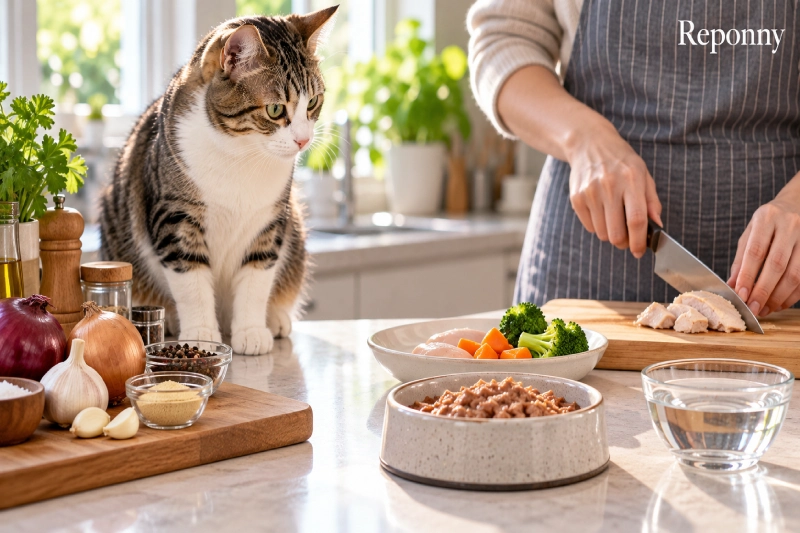
Garlic belongs to the same Allium family.
Merck states that garlic may be three to five times more toxic than onion on a comparable basis and notes that concentrated forms such as powders can be particularly concerning.
Avoid:
- fresh garlic,
- cooked garlic,
- garlic powder,
- garlic salt,
- garlic-flavored sauces,
- and foods cooked in concentrated garlic seasoning.
This is especially important because garlic powder appears in many human foods that do not obviously look like they contain garlic.
Examples include:
- seasoning blends,
- sauces,
- gravies,
- marinades,
- flavored vegetables,
- soups,
- and processed meats.
Never judge a human dish safe for your cat only by looking at the main ingredient.
Chives, Leeks and Scallions Are Unsafe Too
The Allium family also includes:
- chives,
- leeks,
- scallions,
- and related plants.
ASPCA and Merck identify Allium vegetables as potentially toxic to cats.
Therefore:
onion-free but containing leek is not safe.
garlic-free but containing chives is not safe.
Keep the entire Allium family out of your cat’s treat bowl.
What About Potatoes?
Potatoes require more nuance.
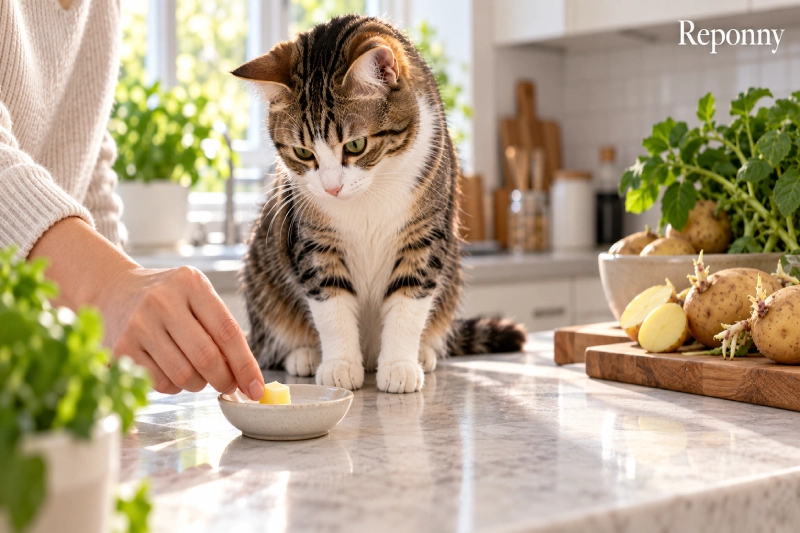
ASPCA states that cooked potato can be offered in moderation, while raw potatoes may be problematic.
The green parts of potatoes and the potato plant contain higher concentrations of glycoalkaloids such as solanine.
For practical feeding:
Safer
A tiny amount of fully cooked plain potato.
Avoid
- raw potato,
- green potato,
- potato sprouts,
- leaves,
- stems,
- or large quantities.
Also avoid human preparations such as:
- French fries,
- chips,
- mashed potatoes loaded with butter,
- garlic mashed potatoes,
- or heavily salted baked potatoes.
Your cat does not need potato, so there is no reason to take unnecessary risks.
Can Cats Eat Tomatoes?
The ripe tomato fruit is different from the green parts of the plant.
ASPCA notes that unripe tomatoes and tomato plants contain tomatine, while levels fall substantially as the fruit ripens. Ripe tomato fruit is generally considered non-toxic in small amounts.
However, cats do not need tomatoes nutritionally.
If you offer any, use only a very small piece of:
fully ripe, plain tomato flesh.
Avoid:
- green tomatoes,
- stems,
- leaves,
- vines,
- tomato sauces containing onion or garlic.
Because tomato products commonly contain salt, sugar, garlic, and onion, plain ripe tomato is very different from pasta sauce or pizza topping.
What About Mushrooms?
This is one food category where caution makes sense.
Some commercially sold edible mushrooms may not be inherently toxic, but wild mushrooms can contain dangerous toxins, and identifying mushroom species correctly can be difficult.
For that reason, mushrooms are not a vegetable treat worth deliberately introducing to a cat.
If your cat eats an unknown mushroom outdoors, contact your veterinarian or an animal poison service promptly.
Do not wait for symptoms if the species is unknown.
Can Cats Eat Spinach?
Small amounts of plain spinach are not generally considered a major concern for most healthy cats.
However, spinach contains oxalates.
For cats with particular urinary problems or a history of certain urinary crystals or stones, deliberately adding spinach may not be appropriate.
Because cats have no nutritional requirement for spinach, it is reasonable to choose simpler vegetable treats such as zucchini or green beans instead.
If your cat is on a veterinary urinary diet, do not add vegetables or other foods without checking first.
How Should Vegetables Be Prepared for Cats?
Preparation is often more important than the vegetable itself.
Follow a few simple rules.
Keep It Plain
Avoid:
- salt,
- butter,
- cooking oil,
- sauces,
- gravy,
- onion,
- garlic,
- cheese sauce,
- or spice blends.
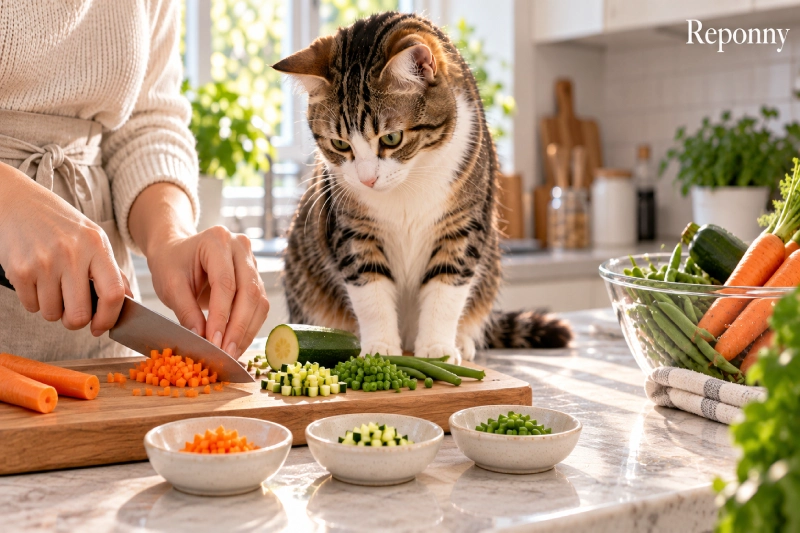
Cut It Small
Cats do not chew food the way humans do.
Large hard pieces may create choking concerns.
Cook Hard Vegetables
Carrots, sweet potatoes, broccoli, and potatoes are generally easier to eat when fully cooked and softened.
Wash Raw Produce
Rinse vegetables thoroughly before serving.
Start With a Tiny Amount
A sudden large quantity of fiber may cause:
- gas,
- softer stools,
- diarrhea,
- or digestive discomfort.
A teaspoon-sized portion can be more than enough for many cats.
How Much Vegetable Can a Cat Eat?
Vegetables should remain part of the treat allowance, not become a major component of the daily diet.
VCA recommends keeping all treats to approximately 10% or less of total daily calories.
Suppose your cat needs around:
200 calories per day.
A 10% treat allowance is:
20 calories total.
That includes:
- vegetables,
- chicken,
- commercial treats,
- lickable snacks,
- toppers,
- and all other extras combined.
It does not mean 20 calories of vegetables plus 20 calories of chicken plus 20 calories of treats.
For many vegetables, a few tiny bites are enough.
Can Vegetables Help an Overweight Cat?
Some low-calorie vegetables may be useful as small treats for a cat that enjoys them.
Green beans, zucchini, cucumber, or small carrot pieces can provide far fewer calories than many commercial treats.
VCA specifically notes that water-rich vegetables such as green beans, carrots, cucumber, broccoli, and lettuce may serve as low-calorie snacks.
However, vegetables should not be used to “bulk out” an overweight cat’s meals without veterinary guidance.
Weight-management diets are formulated to provide:
- adequate protein,
- vitamins,
- minerals,
- essential fatty acids,
- and other nutrients
while calories are restricted.
Replacing a large portion of balanced food with green beans could reduce total nutrient intake.
Use vegetables as tiny rewards, not as a homemade weight-loss formula.
Can Kittens Eat Vegetables?
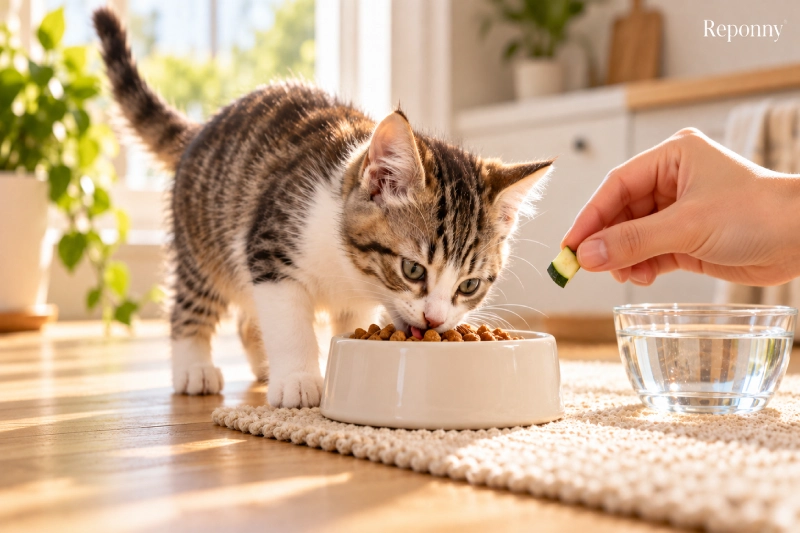
A fully weaned kitten can potentially taste tiny amounts of safe vegetables.
But kittens have very high nutritional demands for growth.
Their calories should come overwhelmingly from a complete and balanced kitten or growth diet.
Vegetables should never replace meaningful quantities of kitten food.
If you want to use food rewards during training, tiny pieces of the kitten’s normal food are often a better option because they preserve nutritional balance.
What About Cats on Prescription Diets?
Be careful.
A vegetable that is safe for a healthy cat may interfere with a carefully designed veterinary diet.
Examples include cats receiving diets for:
- food allergies,
- urinary disease,
- kidney disease,
- diabetes,
- gastrointestinal disease,
- or obesity.
During a veterinary elimination trial, even a harmless vegetable can potentially introduce an ingredient that was not part of the controlled diet.
If your cat eats prescription food, ask your veterinarian before adding regular treats or human foods.
What If My Cat Ate Onion or Garlic?
Contact your veterinarian or an animal poison-control service promptly.
Do not wait several days for symptoms.
Merck explains that signs of Allium poisoning may be delayed because red-cell damage can progress before obvious anemia develops. Clinical signs can appear several days after ingestion.
Provide as much information as possible:
- what was eaten,
- whether it was onion, garlic, leek, or chive,
- raw, cooked, or powdered form,
- approximate amount,
- your cat’s weight,
- and when the exposure occurred.
Do not induce vomiting at home unless specifically instructed by a veterinarian.
A Simple Safe Vegetable Guide
| Vegetable | Recommendation |
|---|---|
| Green beans | ✅ Small plain portions |
| Zucchini | ✅ Small plain portions |
| Carrots | ✅ Best cooked and softened |
| Peas | ✅ Plain and cooked |
| Pumpkin | ✅ Plain pumpkin only |
| Broccoli | ✅ Small cooked pieces |
| Cucumber | ✅ Small fresh pieces |
| Celery | ✅ Very small chopped pieces |
| Sweet potato | ✅ Fully cooked and plain |
| White potato | ⚠️ Fully cooked only, small amount |
| Ripe tomato | ⚠️ Small ripe fruit only |
| Green tomato / tomato plant | ❌ Avoid |
| Raw / green potato | ❌ Avoid |
| Onion | ❌ Toxic |
| Garlic | ❌ Toxic |
| Chives | ❌ Toxic |
| Leeks | ❌ Toxic |
| Wild mushrooms | ❌ Avoid |
Frequently Asked Questions
Can Cats Eat Vegetables?
Yes.
Many cats can safely eat small amounts of plain vegetables such as zucchini, green beans, carrots, broccoli, cucumber, peas, and pumpkin.
Vegetables are optional treats, not dietary necessities.
What Vegetables Are Best for Cats?
Simple low-calorie options include:
green beans, zucchini, carrots, cucumber, broccoli, peas, and pumpkin.
Keep portions small and avoid seasonings.
Can Cats Eat Carrots?
Yes.
Plain cooked carrot in small pieces can be an occasional treat. VCA includes carrots among suitable low-calorie vegetable snacks.
Can Cats Eat Green Beans?
Yes.
Plain green beans are generally safe and relatively low in calories.
Can Cats Eat Broccoli?
Yes, in small amounts.
Plain lightly cooked broccoli can be offered as an occasional vegetable snack.
Can Cats Eat Peas?
Yes.
Plain cooked peas can be used as a small treat.
Can Cats Eat Pumpkin?
Yes.
Plain cooked pumpkin or pure canned pumpkin can be offered in small amounts. Avoid pumpkin pie filling.
Can Cats Eat Potatoes?
Plain fully cooked potato can be offered in a small amount.
Avoid raw potatoes, green potatoes, sprouts, leaves, and stems.
Can Cats Eat Tomatoes?
Small amounts of fully ripe tomato fruit are generally considered non-toxic.
Avoid green tomatoes and the leaves and stems of tomato plants.
Can Cats Eat Onions?
No.
Onions can damage feline red blood cells and cause potentially serious hemolytic anemia. Cats are particularly sensitive.
Can Cats Eat Garlic?
No.
Garlic is toxic to cats and may be even more potent than onion. Garlic powder is also unsafe.
Can Cats Be Vegetarian?
A vegetarian diet should not be improvised for cats.
Cats are obligate carnivores and depend on nutrients associated with animal tissues. VCA specifically notes that cats require animal protein and preformed vitamin A, among other nutrients.
Final Thoughts
So, can cats eat vegetables?
Yes—but they do not need them.
A healthy cat can occasionally enjoy small amounts of plain:
green beans, zucchini, carrots, peas, pumpkin, broccoli, cucumber, celery, or cooked sweet potato.
For many cats, these foods can serve as low-calorie treats.
But cats remain obligate carnivores. Vegetables cannot provide all of the nutrients required for normal feline health, and they should never replace a nutritionally complete cat food.
Keep all vegetables and other treats to roughly 10% or less of total daily calories.
Prepare vegetables simply:
wash them, cook hard vegetables when appropriate, cut them into tiny pieces, and leave out the salt, butter, sauces, onion, and garlic.
Most importantly, know the exceptions.
Onion, garlic, chives, and leeks can damage feline red blood cells and should never be intentionally fed. Raw or green potatoes and unripe tomato plants should also stay out of reach.
The best rule is straightforward:
Vegetables can be a small bonus. Complete and balanced cat food should remain the nutritional foundation.