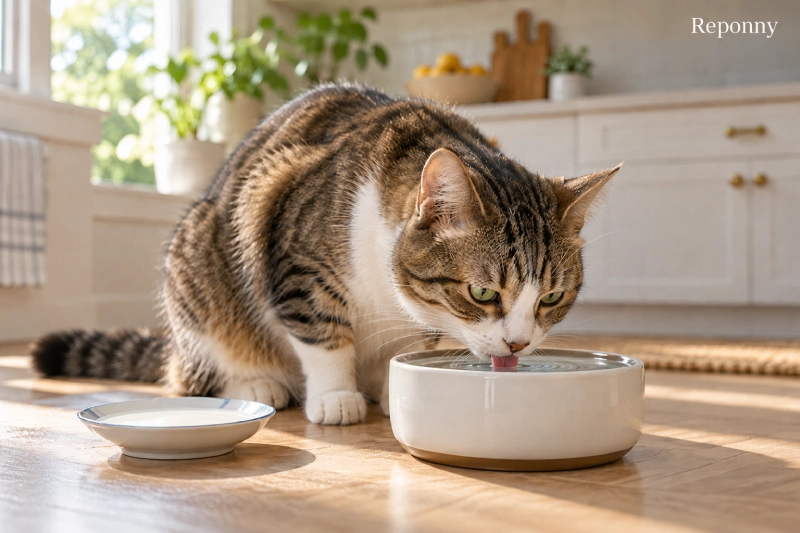
The image of a cat happily drinking milk from a saucer is everywhere—in cartoons, movies, children’s books, and advertisements.
But real feline nutrition is different.
Most adult cats do not need milk, and many lose much of their ability to digest lactose as they grow. For those cats, cow’s milk can cause diarrhea, vomiting, bloating, gas, or abdominal discomfort rather than providing a healthy treat. VCA notes that by around 12 weeks of age, most kittens have lost much of their ability to digest lactose.
That does not mean every cat will become sick after licking a teaspoon of milk. Individual tolerance varies. But ordinary dairy milk offers no nutritional advantage that a properly balanced cat diet and fresh water cannot provide more appropriately.
This guide explains whether cats can drink milk, why lactose can be a problem, whether kittens need milk, what happens if a cat drinks dairy, and whether goat milk, lactose-free milk, or plant-based alternatives are better choices.
Quick answer: Most adult cats should not routinely drink cow’s milk. Many cats are lactose intolerant, and milk may cause digestive upset. Fresh water should be the primary drink for cats, while unweaned kittens require an appropriate kitten milk replacer—not ordinary cow’s milk.
Why Do People Think Cats Should Drink Milk?
For generations, milk has been associated with cats.
Part of the reason is simple: many cats enjoy the taste.
Whole milk contains fat and protein, and its aroma can be attractive to an animal that naturally seeks calorie-rich foods. A cat eagerly licking milk, however, does not prove that the food is nutritionally appropriate.
Cats may also enthusiastically eat foods that are:
- too calorie-dense,
- difficult to digest,
- nutritionally unnecessary,
- or inappropriate as part of their regular diet.
Modern domestic cats should receive most of their nutrition from complete and balanced cat food appropriate for their life stage.
Cornell specifically states that milk is generally not recommended as a cat treat because many cats are lactose intolerant and may develop gastrointestinal problems after consuming dairy products.
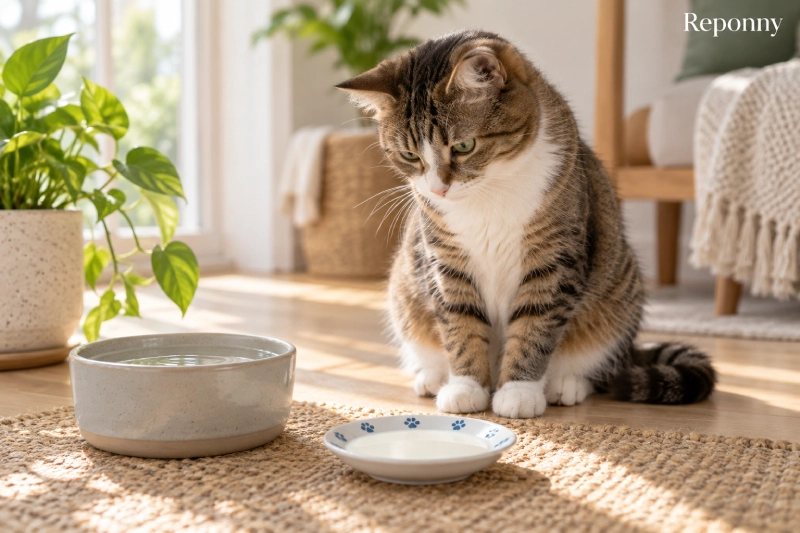
So the classic saucer of milk is better viewed as a cultural image than a modern feline nutrition recommendation.
What Is Lactose Intolerance in Cats?
Lactose is the natural sugar found in milk.
To digest lactose efficiently, the digestive system needs an enzyme called lactase.
Young kittens naturally need lactase because their mother’s milk is their primary food during early life.
As kittens mature and begin transitioning to solid food, lactase activity decreases in many cats.
VCA reports that by roughly 12 weeks of age, most kittens lose much of their ability to digest lactose effectively.
When lactose is not properly digested in the small intestine, it moves farther through the digestive tract.
There it can contribute to gastrointestinal symptoms.
VCA lists possible signs of lactose intolerance in cats including:
- diarrhea,
- vomiting,
- bloating,
- and abdominal discomfort.
Not every cat has exactly the same tolerance.
One adult cat may consume a small amount of milk with no obvious reaction, while another develops diarrhea after a relatively modest serving.
That variability does not make milk necessary or beneficial.
What Happens If a Cat Drinks Milk?
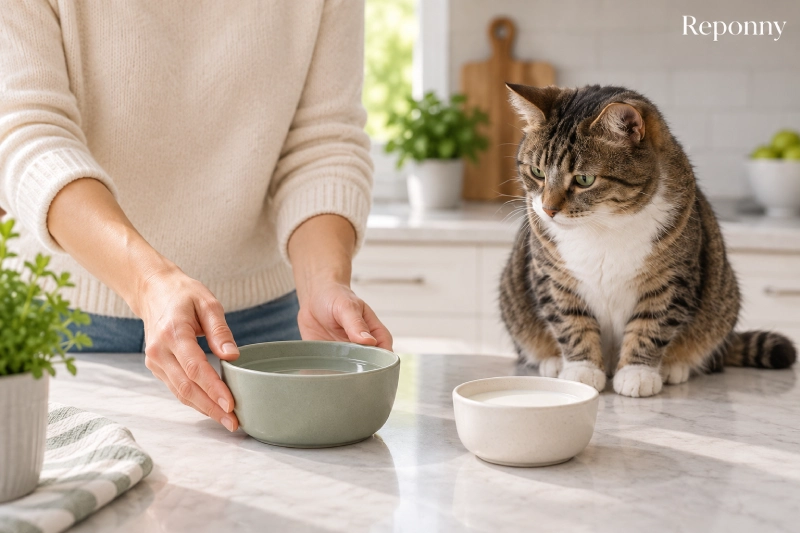
For a lactose-intolerant cat, milk may cause digestive problems rather than poisoning.
Possible symptoms can include:
- loose stool,
- diarrhea,
- vomiting,
- gas,
- bloating,
- abdominal discomfort,
- or reduced appetite.
ASPCA explains that pets generally do not possess significant amounts of lactase and that milk and dairy products may therefore cause diarrhea or other digestive upset.
The amount matters.
A tiny accidental lick is different from drinking an entire bowl.
The fat content and quantity of dairy can also affect tolerance.
If your cat steals a few licks of ordinary milk and remains completely normal, it is generally a matter of observation rather than panic.
If your cat develops persistent vomiting, significant diarrhea, lethargy, refuses food, or appears unwell, contact your veterinarian.
For cats with other medical conditions, even apparently minor digestive upset can be more concerning because vomiting and diarrhea can contribute to dehydration.
Do Kittens Need Milk?
Yes—but there is an important distinction.
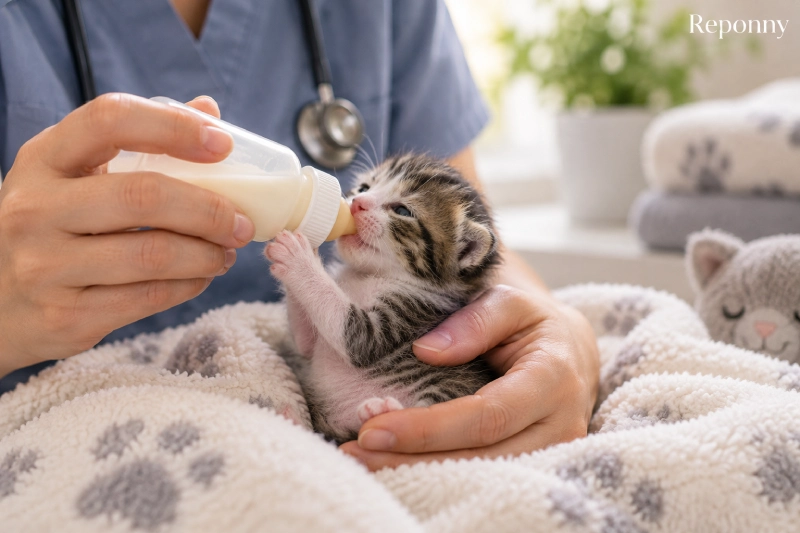
Very young kittens naturally need their mother’s milk.
If the mother is unavailable or unable to nurse, an unweaned kitten may require a commercial kitten milk replacer formulated specifically for kittens.
Ordinary cow’s milk is not a suitable substitute.
VCA recommends consulting a veterinarian for an appropriate milk replacement when caring for very young kittens that have not yet been weaned.
Cow’s milk differs from queen’s milk in nutrient composition and can cause gastrointestinal upset.
Young orphaned kittens also have needs that go far beyond simply giving them a bowl of liquid. Depending on age, they may require:
- specific feeding intervals,
- appropriate milk-replacer concentration,
- correct feeding technique,
- warmth,
- weight monitoring,
- and assistance with elimination.
So if you find an orphaned neonatal kitten, do not improvise with a bowl of grocery-store milk.
Seek veterinary or experienced neonatal kitten-care guidance.
When Should Kittens Stop Drinking Milk?
Weaning is gradual.
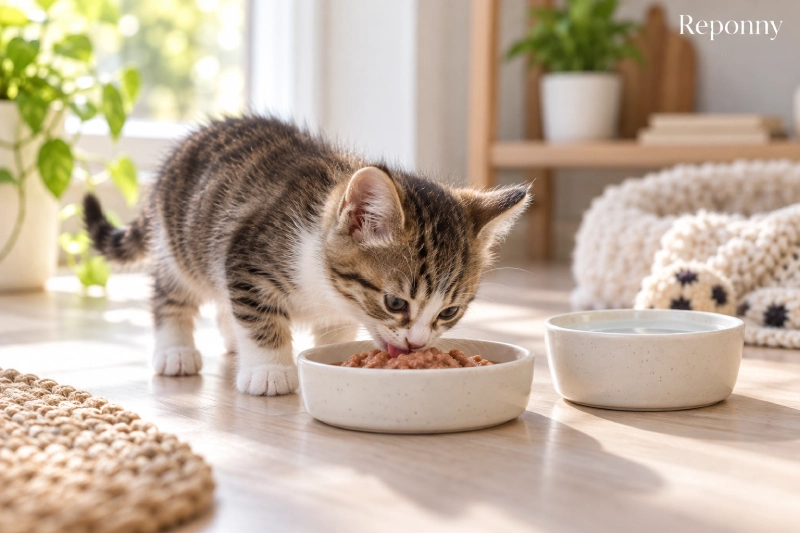
Kittens begin transitioning from their mother’s milk or kitten milk replacer toward nutritionally complete kitten food as they develop.
By the time a kitten is eating solid kitten food successfully, ordinary milk is not required as a nutritional supplement.
VCA notes that kittens and adult cats do not require cow’s milk and that lactose digestion declines as kittens mature.
Once your kitten is weaned, focus on:
- complete and balanced kitten food,
- appropriate daily calories,
- multiple age-appropriate meals,
- and constant access to clean fresh water.
Do not continue giving cow’s milk simply because the kitten enjoyed milk during the nursing stage.
Mother’s milk and supermarket cow’s milk are not nutritionally interchangeable.
Can Adult Cats Drink Cow’s Milk?
They can physically drink it.
The better question is whether they should.
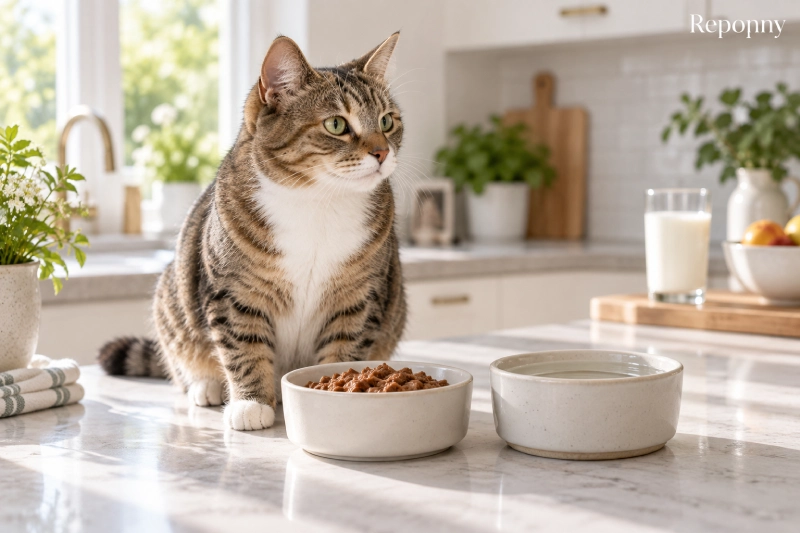
For most adult cats, there is no nutritional reason to provide cow’s milk routinely.
Cornell advises that milk is generally not recommended as a treat because many cats are lactose intolerant.
ASPCA similarly advises against using milk as a treat or substitute for water and notes that milk-based products may produce vomiting or diarrhea.
Milk also contributes calories.
That matters because a small cat has a much lower daily calorie requirement than a human.
An owner may think a small saucer is insignificant, but additional calories from milk, treats, and table food can accumulate over time.
If your cat is already receiving a nutritionally complete diet, milk adds calories without filling an essential nutritional gap.
Can Cats Drink Lactose-Free Milk?
Lactose-free cow’s milk removes or breaks down much of the lactose that causes digestive problems.
That means it may be better tolerated by some cats than ordinary milk.
But “better tolerated” does not mean “needed.”
Lactose-free human milk can still:
- contribute unnecessary calories,
- contain fat,
- alter your cat’s normal diet,
- and encourage a preference for treats over nutritionally complete food.
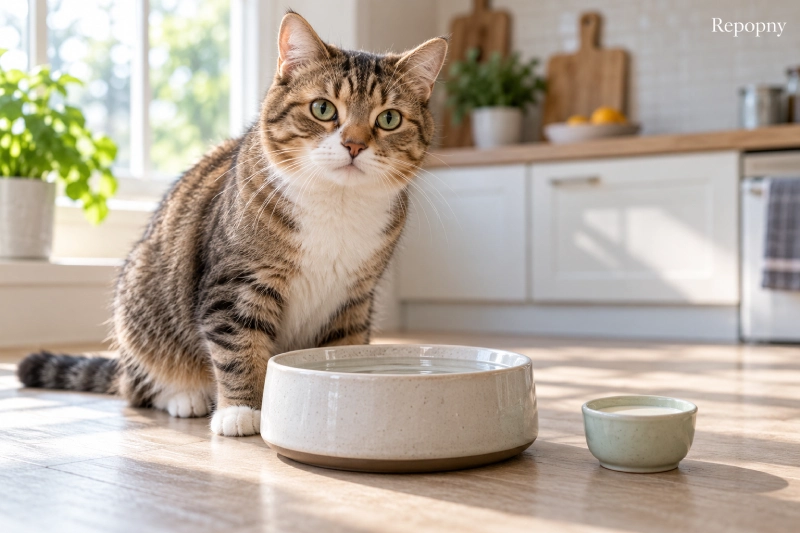
If you want to offer a commercial milk-style product specifically formulated for cats, treat it as an occasional treat, not a replacement for fresh water or complete cat food.
Check calorie information and serving instructions.
A cat does not need a bowl of special milk every day simply because the product is marketed for cats.
Can Cats Drink Goat Milk?
Goat milk is sometimes promoted as easier to digest than cow’s milk.
However, goat milk still contains lactose.
VCA specifically notes that lactose intolerance in cats may cause gastrointestinal symptoms after consuming either cow’s or goat’s milk.
So switching from cow’s milk to goat milk does not automatically solve the problem.
Goat milk is also not a substitute for:
- fresh water,
- complete cat food,
- or properly formulated kitten milk replacer for neonatal kittens.
If an adult cat tolerates a very small amount without symptoms, that still does not make goat milk an essential part of the diet.
Can Cats Drink Raw Milk?
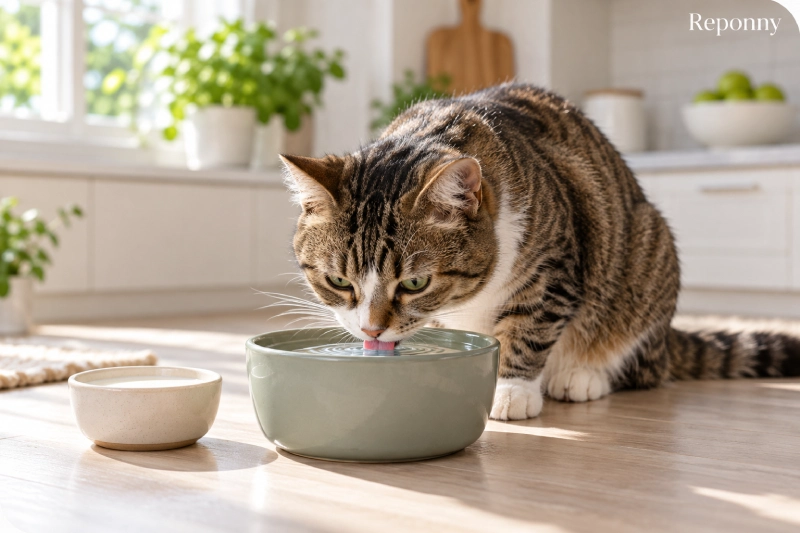
Raw milk is not a safer choice.
Unpasteurized dairy products can carry microorganisms capable of causing illness.
The Merck Veterinary Manual advises against feeding raw dairy products to cats.
Claims that raw milk is more “natural” do not eliminate microbial food-safety risks.
For cats—and for people handling their bowls, food, or waste—foodborne pathogens can create unnecessary exposure.
If you are choosing between raw milk and no milk, no milk is the safer option.
Your cat already has a much simpler and more appropriate drink available:
fresh water.
What About Almond Milk, Oat Milk, Soy Milk or Coconut Milk?
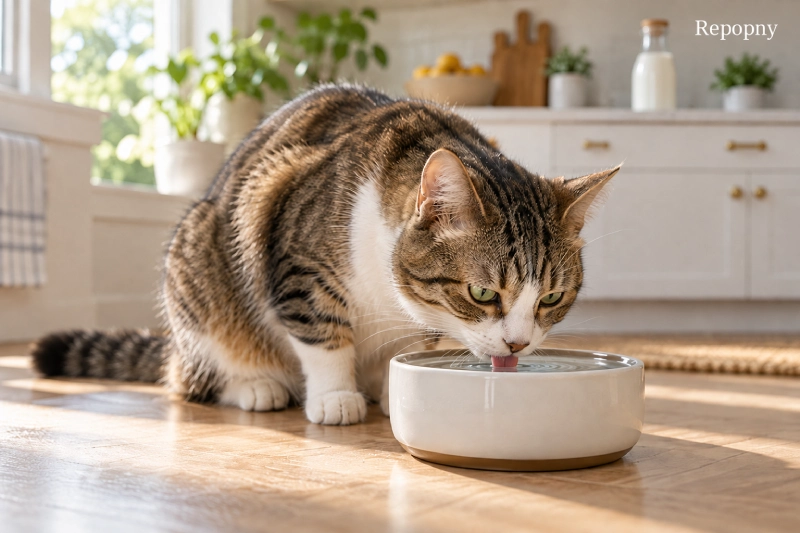
Plant-based milks are not necessary for cats either.
Removing lactose does not automatically turn a beverage into a healthy feline drink.
Commercial plant milks can contain:
- added sugar,
- flavorings,
- oils,
- thickeners,
- salt,
- or other ingredients.
ASPCA advises that dairy substitutes should still be given, if at all, only in moderation and that owners should check ingredient lists carefully.
More importantly, cats gain no essential nutritional advantage from drinking almond, oat, soy, or coconut beverages.
Some products may also contain ingredients inappropriate for pets.
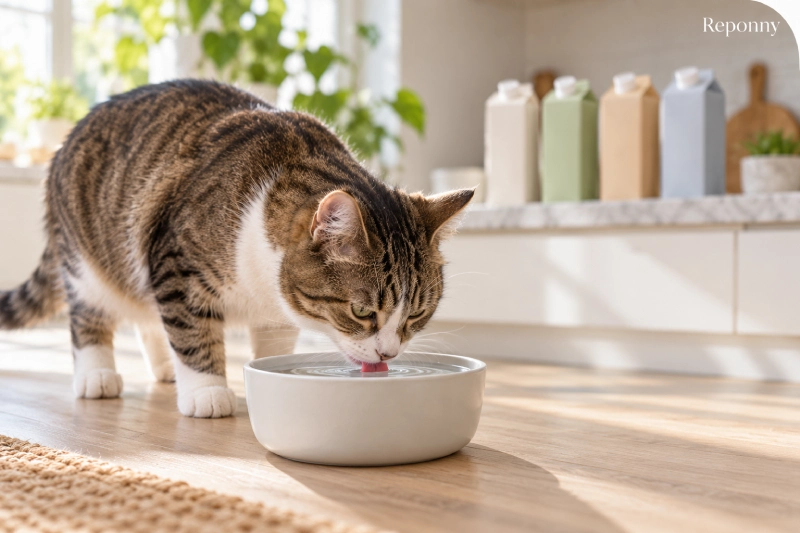
Rather than trying to find a human milk substitute your cat can drink, offer water.
It is cheaper, simpler, and biologically appropriate for hydration.
Can Cats Eat Cheese, Yogurt or Other Dairy?
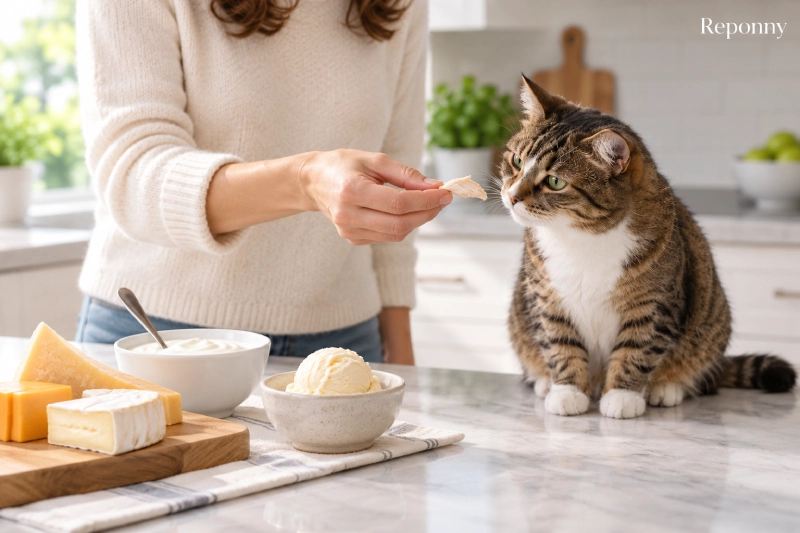
Milk is not the only source of dairy.
Cats may also show interest in:
- cheese,
- yogurt,
- cream,
- ice cream,
- butter,
- or whipped cream.
Tolerance varies depending on the product and the individual cat.
Some dairy products contain less lactose than ordinary milk, but that does not automatically make them good cat treats.
They may still contain substantial:
- calories,
- fat,
- sugar,
- salt,
- or flavoring.
ASPCA notes that dairy products can cause digestive upset because pets may have insufficient lactase to digest lactose.
Ice cream is particularly unnecessary because it combines dairy with sugar and potentially other ingredients.
Flavored products can create additional concerns. Chocolate-containing dairy desserts, for example, should not be shared with cats.
If your cat likes dairy, there are usually safer and nutritionally simpler treats available, such as a tiny amount of plain cooked chicken.
Is Milk a Good Source of Hydration for Cats?
No.
Fresh water should be your cat’s primary drink.
ASPCA explicitly states that milk should not be used as a substitute for water.
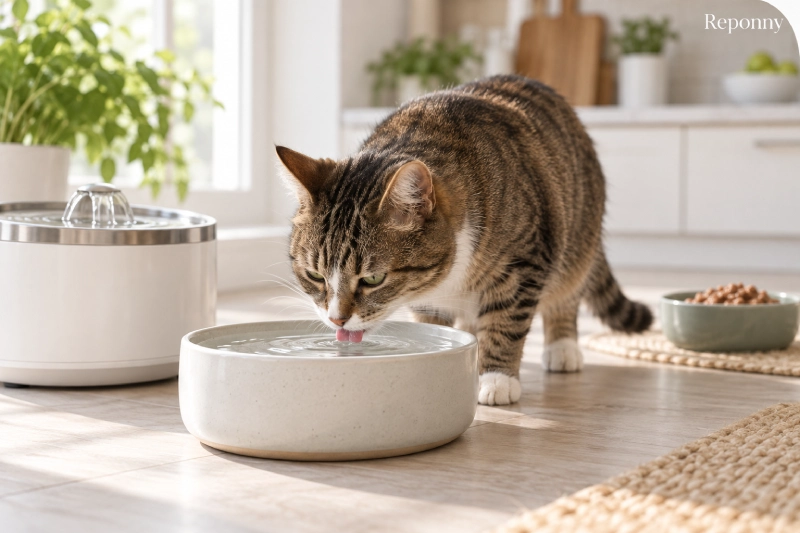
If you are concerned that your cat is not drinking enough, better hydration strategies include:
- providing several fresh water bowls,
- cleaning and refilling bowls daily,
- trying a cat fountain,
- offering wet food,
- adding a little water to food if your cat accepts it,
- experimenting with bowl location and material.
Cats eating wet food may naturally drink less because wet food already contains a high percentage of water.
A bowl of milk is not needed to “convince” a healthy cat to hydrate.
What If My Cat Loves Milk?
Liking something and needing it are different.
If your healthy adult cat has previously consumed a tiny amount of dairy without digestive symptoms, that does not necessarily mean a small accidental exposure is dangerous.
But there is still little reason to make milk a routine habit.
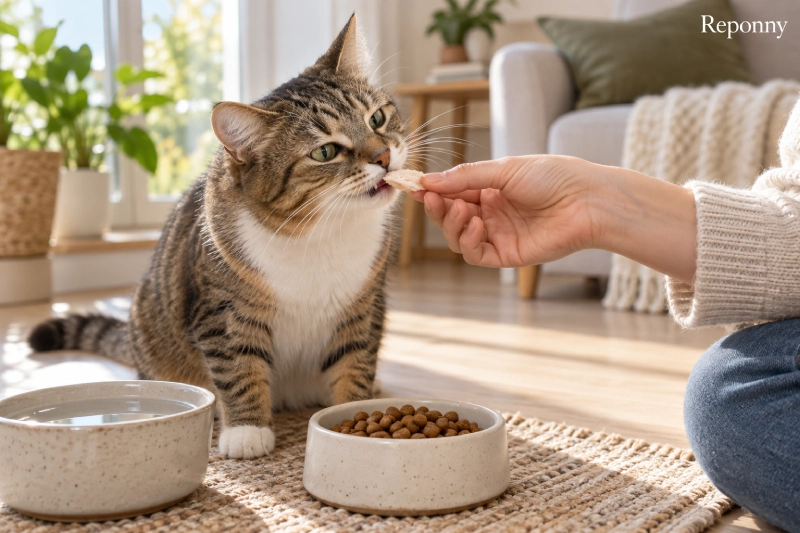
A more practical approach is to choose treats that:
- are easy to portion,
- do not cause gastrointestinal upset,
- fit within the cat’s calorie budget,
- and do not displace complete cat food.
ASPCA recommends that treats make up only a small part of the overall diet, while the majority of nutrition should come from nutritionally complete cat food.
A tiny piece of plain cooked meat can often be a more species-appropriate reward than a bowl of dairy.
What Should You Do If Your Cat Drinks a Lot of Milk?
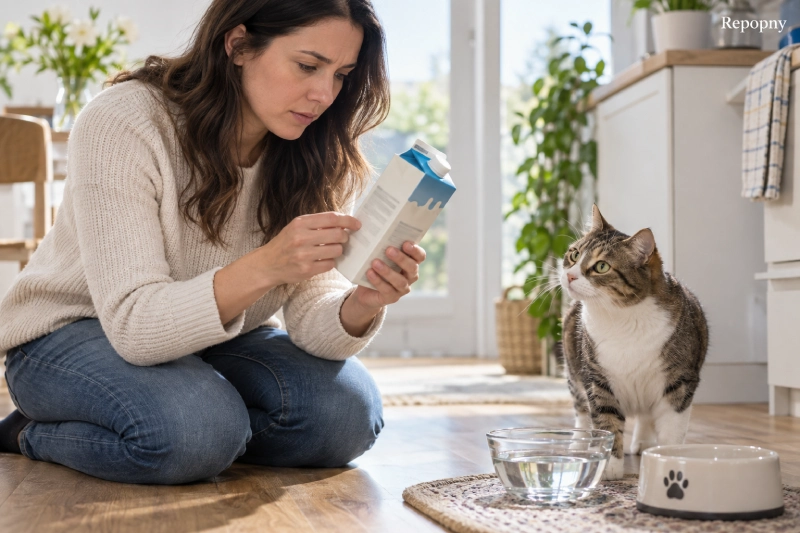
If your cat accidentally consumes milk, first determine approximately:
- how much was consumed,
- what type of milk it was,
- whether other ingredients were present,
- and how your cat is behaving.
With plain cow’s milk, the most likely concern for a lactose-intolerant cat is gastrointestinal upset.
Monitor for:
- diarrhea,
- vomiting,
- abdominal discomfort,
- loss of appetite,
- lethargy,
- or signs of dehydration.
If symptoms are significant, persistent, or your cat has an existing medical condition, contact your veterinarian.
If the milk-containing product also included another potentially harmful ingredient—such as chocolate, alcohol, coffee, or certain sweeteners—the situation is different and veterinary advice may be needed promptly.
Do not assume every “milk product” carries only a lactose concern.
Milk vs. Water for Cats
The comparison is simple.
| Factor | Fresh Water | Cow’s Milk |
|---|---|---|
| Needed for hydration | Yes | No |
| Lactose | None | Yes |
| Extra calories | None | Yes |
| Suitable as everyday drink | Yes | Generally no |
| Risk of digestive upset | Low when clean/fresh | Higher in lactose-intolerant cats |
| Needed by healthy adult cats | Yes | No |
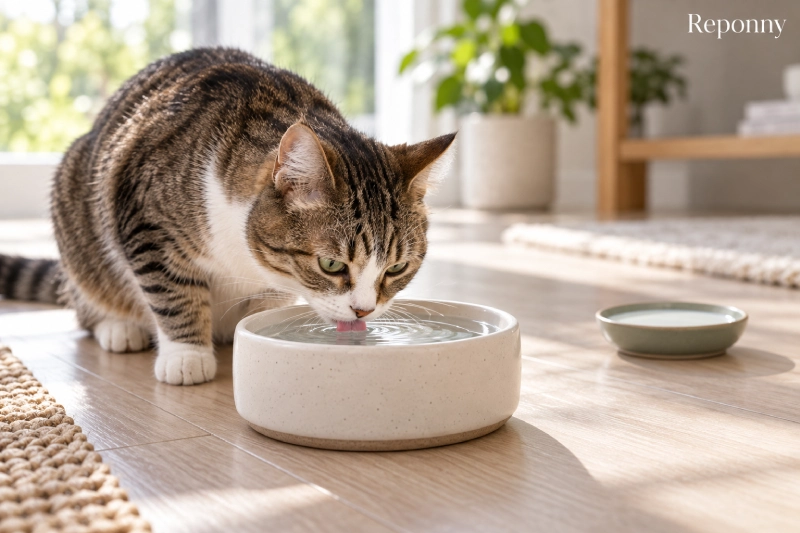
For normal daily hydration, water wins.
Every cat should have access to clean, fresh water regardless of whether the cat eats wet or dry food. ASPCA recommends washing and refilling water bowls daily.
Frequently Asked Questions
Can Cats Drink a Little Bit of Milk?
Some cats may tolerate a very small amount without obvious symptoms.
However, because many adult cats are lactose intolerant and milk is nutritionally unnecessary, it is not a recommended routine treat.
Is Milk Toxic to Cats?
Ordinary cow’s milk is generally more of a digestive intolerance issue than a classic toxin.
For lactose-intolerant cats, it may cause diarrhea, vomiting, bloating, and abdominal discomfort.
Milk products containing other dangerous ingredients can create separate risks.
Can Kittens Drink Cow’s Milk?
Cow’s milk should not be used as the normal substitute for a mother cat’s milk.
Unweaned orphaned kittens need an appropriate kitten milk replacer and age-specific feeding care.
Can Cats Drink Lactose-Free Milk?
It may be easier for some cats to digest than ordinary cow’s milk, but it is still unnecessary as part of a balanced feline diet.
Use any cat-specific milk product only as an occasional treat and count the calories.
Can Cats Drink Goat Milk?
Goat milk still contains lactose and may cause digestive symptoms in lactose-intolerant cats.
Can Cats Drink Almond Milk?
Cats do not need almond milk.
Plant-based beverages vary widely in ingredients and may contain sugar, flavors, oils, or other additives. Fresh water is a more appropriate everyday drink.
Can Cats Eat Yogurt?
Some cats may tolerate a tiny amount of certain dairy products better than ordinary milk, but yogurt is not necessary for feline nutrition.
Flavored or sweetened yogurt can contain additional ingredients that should not be offered routinely.
Why Does My Cat Want Milk If Milk Is Bad for Cats?
Cats may be attracted to the smell, fat, protein, or novelty of dairy.
Preference does not establish nutritional suitability.
Cats can enjoy foods that are unnecessary or poorly tolerated.
Final Thoughts
So, can cats drink milk?
A cat may physically be able to drink it, but for most adult cats there is little reason to offer ordinary cow’s milk routinely.
Many cats lose much of their ability to digest lactose as they mature, and dairy can cause:
diarrhea, vomiting, bloating, gas, and abdominal discomfort.
Kittens are a special case.
Very young kittens naturally require their mother’s milk. Orphaned kittens may need a properly formulated kitten milk replacer, not supermarket cow’s milk.
For adult cats, the best everyday drink remains remarkably simple:
clean, fresh water.
If you want to give your cat an occasional treat, use a small, nutritionally sensible portion that does not interfere with the cat’s complete and balanced diet.
The classic saucer of milk may look charming in a cartoon.
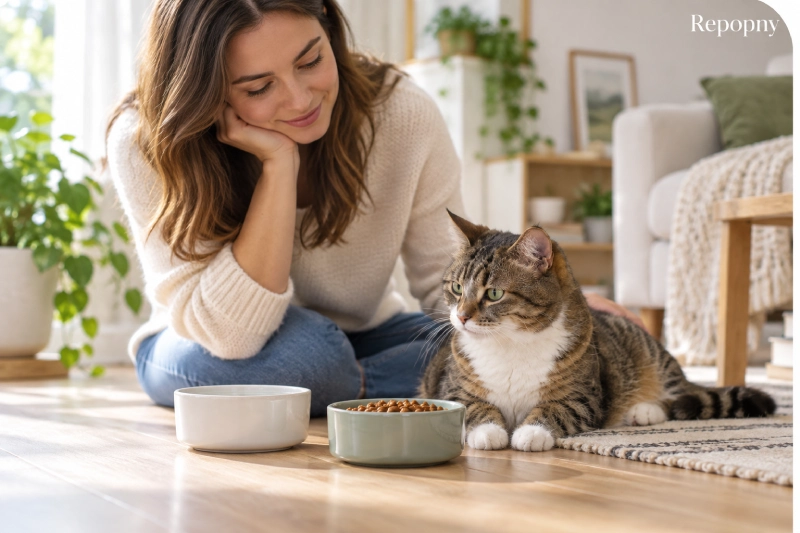
Your real cat is usually better off with a water bowl.