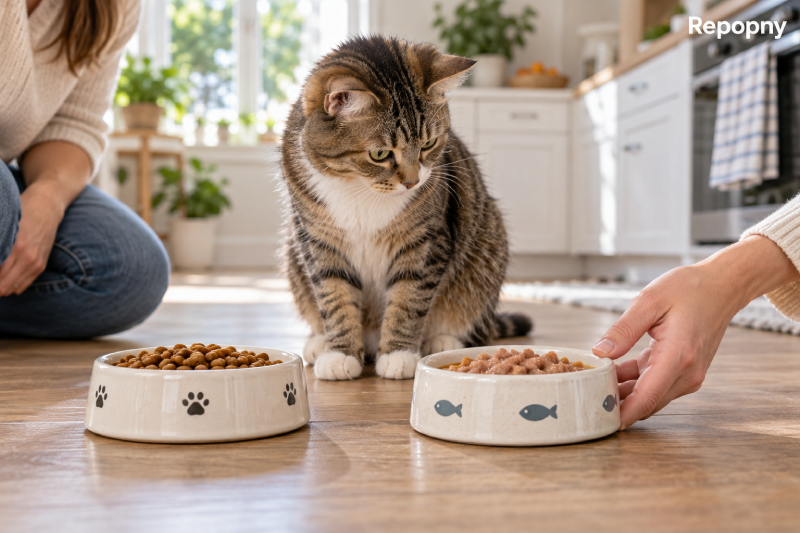
Changing your cat’s food may seem as simple as replacing one bowl with another, but many cats disagree.
A sudden diet change can lead to loose stools, vomiting, reduced appetite, or complete rejection of the new food. Cats can also be surprisingly sensitive to changes in smell, texture, flavor, and routine.
For most healthy cats, the safest approach is a gradual transition over about 7–10 days. Some picky cats or cats with a history of digestive problems may need an even slower change. Veterinary nutrition guidance also notes that cats may accept a new food better when the old and new foods are offered separately rather than being immediately mixed together.
The goal is not simply to get your cat onto the new diet as quickly as possible. It is to make the transition while maintaining adequate food intake, normal digestion, and as little stress as possible.
Quick answer: Start with about 75% old food and 25% new food, gradually increase the new food over 7–10 days, and slow down if your cat develops vomiting, diarrhea, or reduced appetite. Never try to “wait out” a cat that refuses to eat.
Why Should You Change Cat Food Gradually?
Your cat’s digestive system becomes accustomed to the food it eats regularly.
Changing the ingredients, fat content, protein sources, fiber, texture, or calorie density overnight can sometimes lead to gastrointestinal upset.
A gradual transition gives your cat time to adapt to the new diet.
VCA recommends changing cat food over approximately 7–10 days, while other veterinary guidance suggests that some cats may need longer if they are particularly picky or have experienced gastrointestinal problems in the past.
There is also a behavioral reason to go slowly.
Cats often develop strong preferences for familiar:
- smells,
- textures,
- temperatures,
- shapes,
- feeding locations,
- and routines.
A cat that happily eats dry chicken-flavored kibble may not immediately recognize a cold pâté-style wet food as something it wants to eat.
So a successful transition involves both the digestive system and the cat’s preferences.
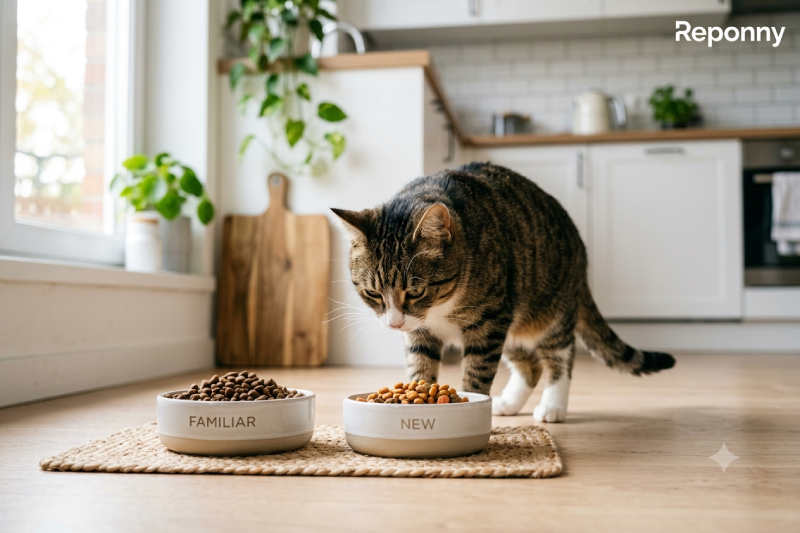
A Simple 7-Day Cat Food Transition Schedule
For a healthy cat without a history of digestive problems, this is a practical starting schedule:
| Days | Old Food | New Food |
|---|---|---|
| Days 1–2 | 75% | 25% |
| Days 3–4 | 50% | 50% |
| Days 5–6 | 25% | 75% |
| Day 7 onward | 0% | 100% |
This general 75/25 → 50/50 → 25/75 → 100% progression is also used in veterinary nutrition guidance.
But this is not a deadline.
If your cat needs 10, 14, or even 21 days, that may be completely reasonable.
VCA notes that particularly picky cats or cats prone to gastrointestinal upset may require a much slower transition, sometimes over several weeks.
The rule is simple:
If your cat is:
- eating normally,
- maintaining normal stool,
- not vomiting,
- and accepting the new food,
you can gradually move forward.
If problems appear, slow down.
Should You Mix the Old and New Cat Food Together?
It depends on the cat.
A traditional transition involves mixing increasingly larger amounts of the new food into the old food.
That works well for many cats.
But some cats are extremely sensitive to changes in smell or texture. Mixing even a small amount of unfamiliar food into their favorite meal may cause them to reject the entire bowl.
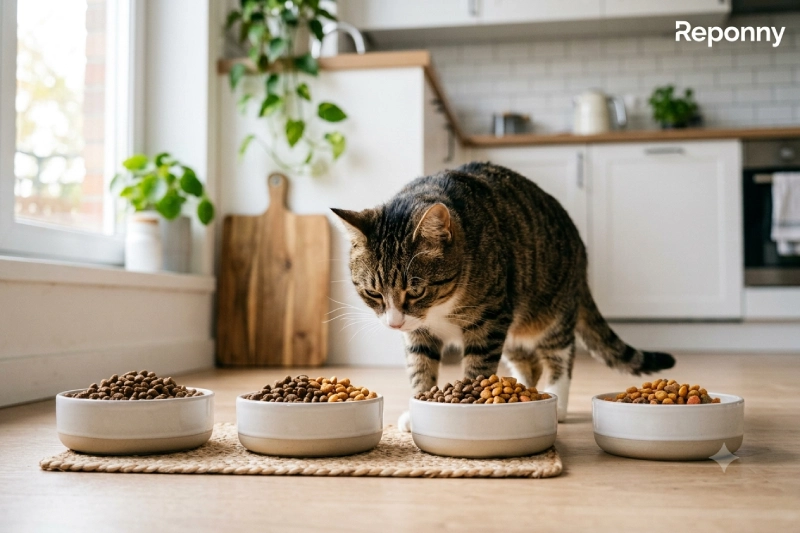
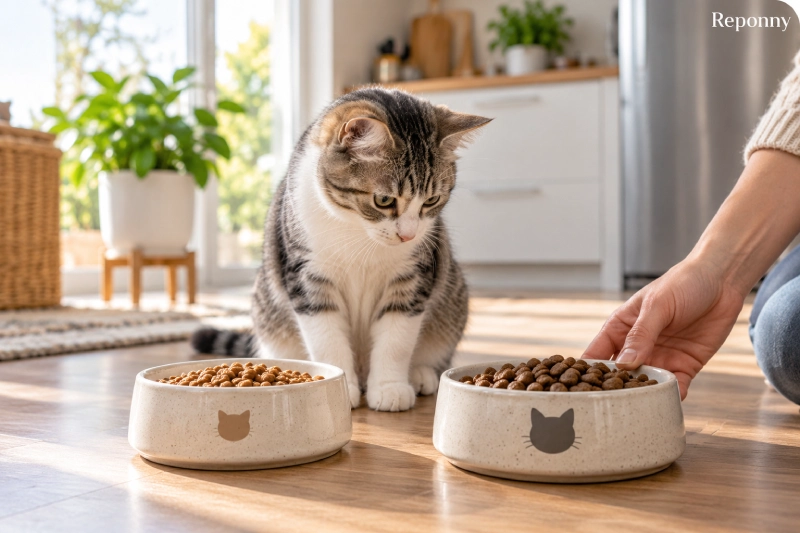
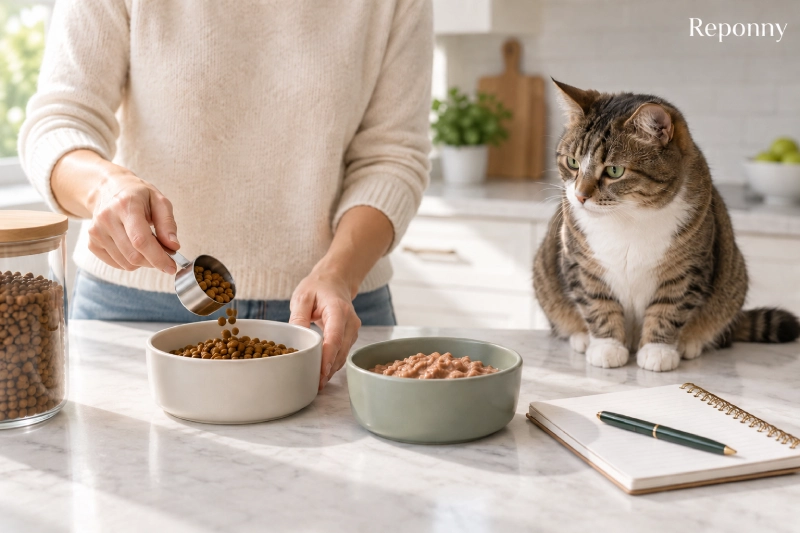
WSAVA notes that when switching cats to a new diet, offering the new food in a separate bowl can be preferable because some cats refuse food when unfamiliar and familiar diets are mixed together.
Purina Institute similarly recommends side-by-side bowls during a gradual transition so cats can investigate and choose the new food without having the familiar meal immediately altered.
Therefore:
If your cat accepts mixed food:
A gradual mixture can work.
If your cat rejects mixed food:
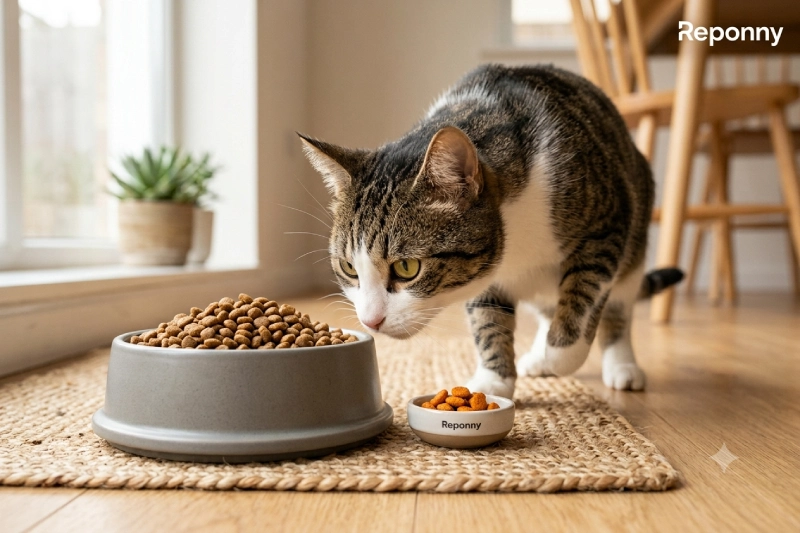
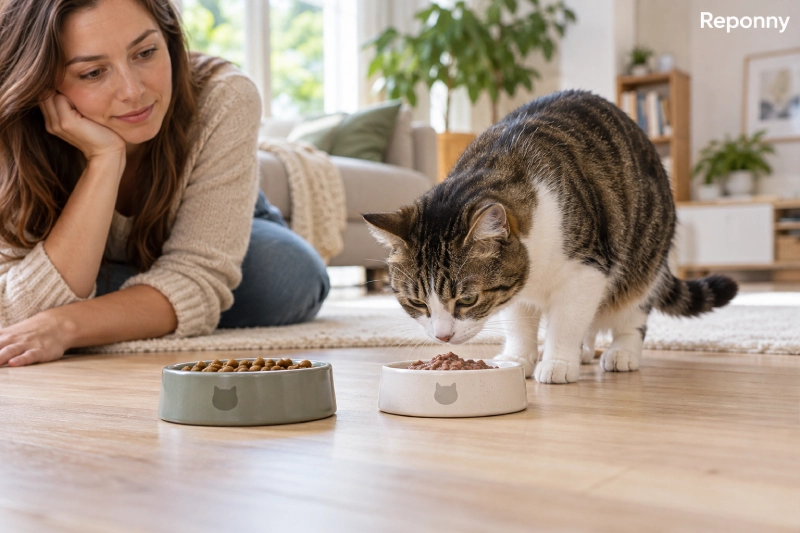
Try placing a small amount of the new food in a separate bowl beside the old food.
You do not need to force one method.
The best method is the one that keeps your cat eating while gradually increasing familiarity with the new diet.
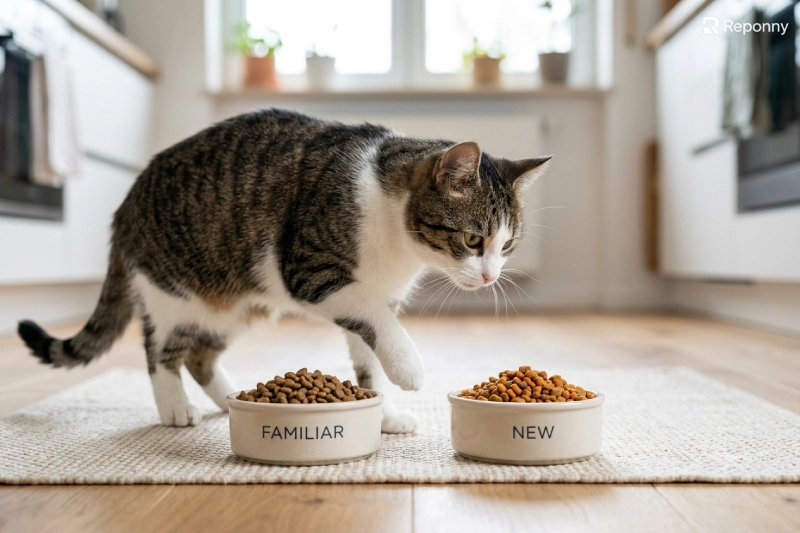
Days 1–2: Introduce a Small Amount of the New Food
Begin with approximately:
75% current food + 25% new food.
Or, for a very cautious cat, offer the normal meal and place a much smaller portion of new food in a separate bowl nearby.
At this stage, your main goal is not to convince your cat to love the new diet immediately.
You want the new:
- smell,
- texture,
- shape,
- and flavor
to become familiar.
Watch your cat closely.
Normal investigation may include sniffing the new food several times and walking away before eventually tasting it.
Avoid repeatedly placing the bowl directly under your cat’s face or forcing food into its mouth.
A calm introduction is generally more successful than turning mealtime into a stressful event.
Days 3–4: Move Toward a 50/50 Balance
If the first stage goes well, increase the new food to approximately half of the daily food.
Now watch for changes in:
- stool consistency,
- vomiting,
- appetite,
- gas,
- abdominal discomfort,
- energy level,
- or litter box habits.
One slightly softer stool does not always mean the transition has failed.
But repeated diarrhea, repeated vomiting, or a noticeable reduction in appetite deserves more attention.
If symptoms appear after increasing the new food, return to the previous ratio that your cat tolerated and progress more slowly.
Do not feel pressured to reach 100% new food by a particular date.
Days 5–6: Make the New Food the Majority
If your cat remains comfortable, move toward approximately:
25% old food + 75% new food.
By this point, many cats are becoming familiar with the new diet.
Continue monitoring the litter box and appetite.
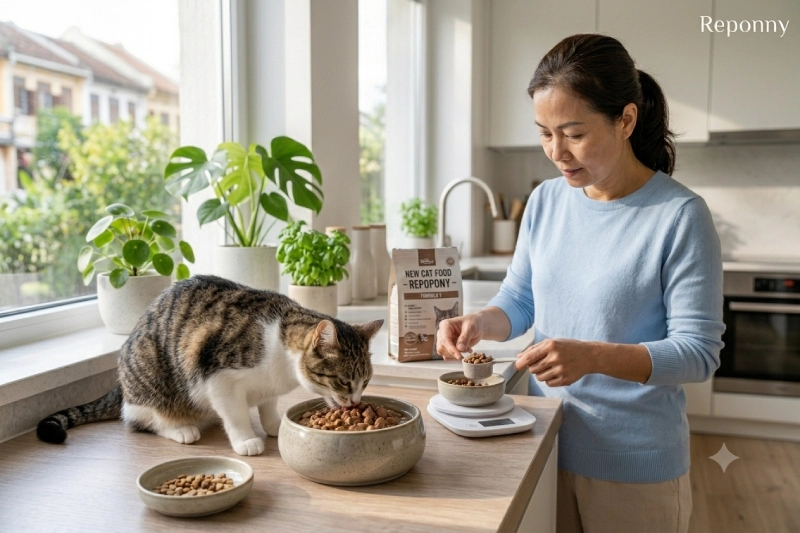
It is also important to check the feeding recommendation on the new food.
Do not assume the same number of cups, cans, or grams should be fed simply because you changed brands.
Calorie density can vary significantly between foods.
If the old food contained 350 calories per cup and the new food contains 450 calories per cup, feeding exactly the same volume could substantially increase daily calorie intake.
When switching foods, recalculate the appropriate portion based on calories and your cat’s needs.
Day 7 and Beyond: Move to the New Food
If your cat is:
- eating well,
- producing normal stool,
- not vomiting,
- and behaving normally,
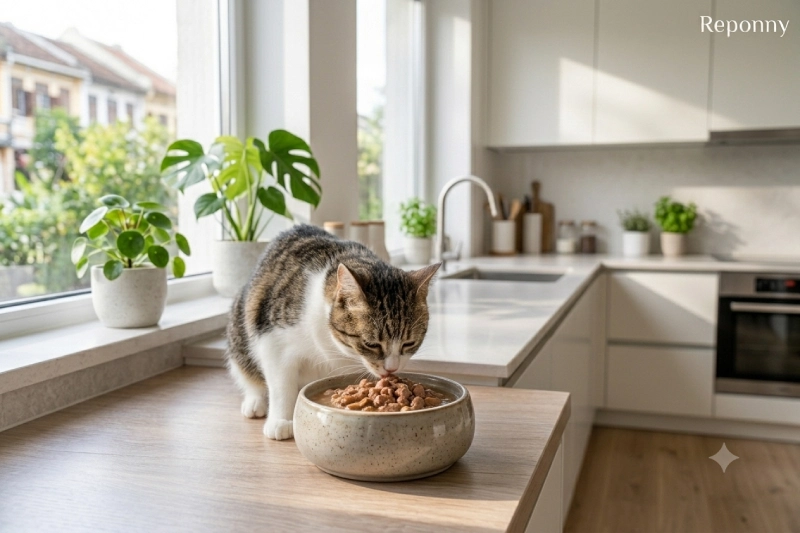
you can move to 100% new food.
Some cats will reach this stage within a week.
Others will not.
A cat with a sensitive stomach may benefit from a 10-day transition, and very selective cats may need considerably longer.
Do not interpret a slower transition as failure.
The priority is maintaining healthy food intake.
What If Your Cat Has a Sensitive Stomach?
Some cats are more prone to:
- loose stools,
- vomiting,
- gas,
- digestive discomfort,
- or appetite changes
during dietary transitions.
For these cats, extend the process.
Instead of increasing the new food every two days, you might keep each stage for three or four days.
A transition could look like:
Days 1–3: 75% old / 25% new
Days 4–6: 50% old / 50% new
Days 7–9: 25% old / 75% new
Day 10+: 100% new
Or move even more slowly if needed.
Veterinary sources emphasize that transition speed can be individualized and should be slower for cats with previous gastrointestinal sensitivity.
If your cat already has diagnosed gastrointestinal disease, pancreatitis, food-responsive enteropathy, or another chronic medical problem, do not assume a standard internet transition schedule is appropriate.
Follow your veterinarian’s dietary instructions.
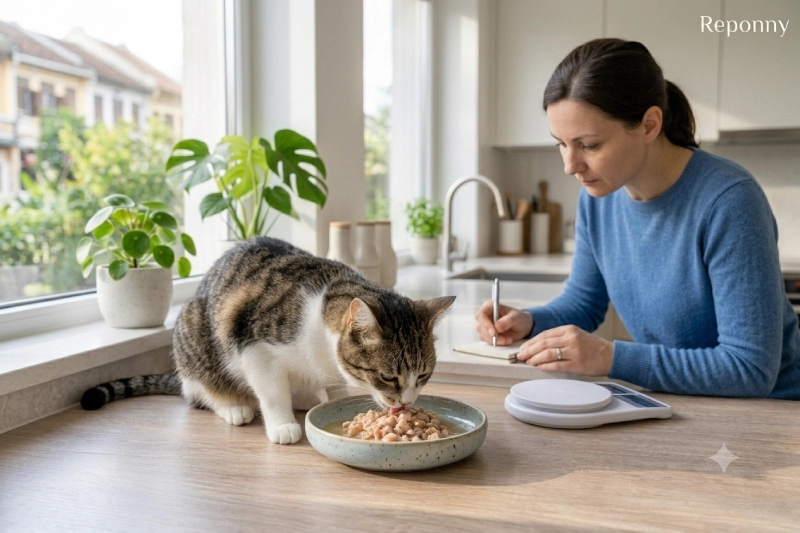
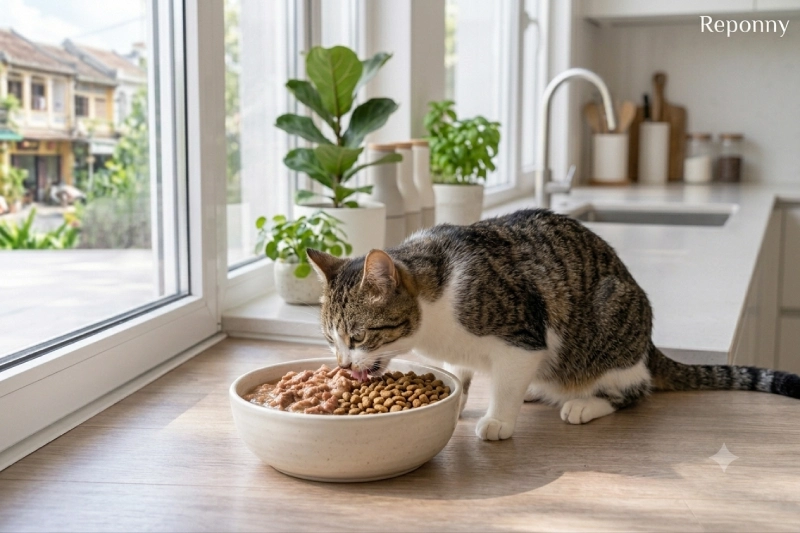
Switching From Dry Food to Wet Food
Changing from kibble to wet food involves more than changing ingredients.
The texture, smell, moisture content, temperature, and eating experience are completely different.
Some cats immediately love wet food.
Others look at it as though you have placed something foreign in their bowl.
Try:
- offering a teaspoon beside the normal meal,
- experimenting with pâté versus shredded or chunks,
- serving the food at room temperature rather than refrigerator-cold,
- warming it slightly to enhance aroma,
- and introducing it repeatedly without forcing your cat.
Do not remove the familiar food and assume hunger will eventually make the cat eat wet food.
Cats should not be forced into prolonged fasting simply to make them accept a new diet.
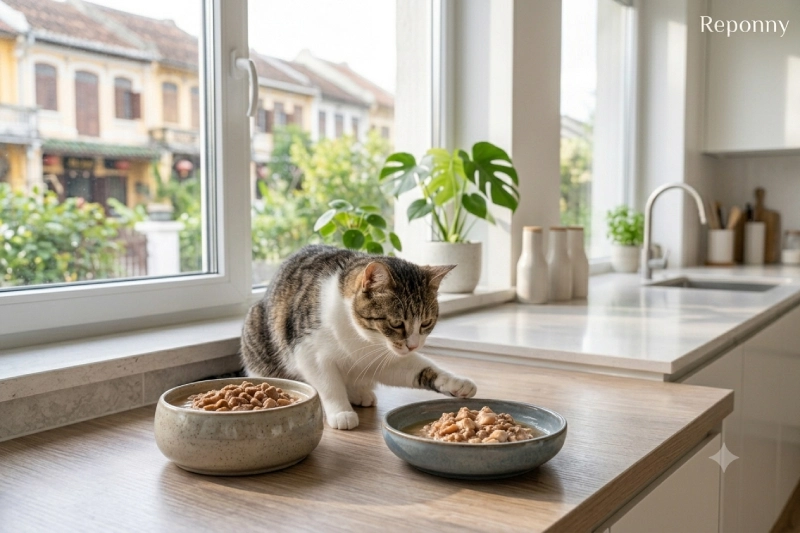
Switching From Wet Food to Dry Food
The reverse transition can also require patience.
A cat used to aromatic, soft wet food may initially find dry kibble less appealing.
Offer a small measured portion of the new dry food and allow the cat to investigate.
If necessary, use several small meals rather than leaving a large bowl available all day.
Also remember that dry food generally contains far less water than wet food.
If your cat transitions from a moisture-rich diet to mostly dry food, make sure fresh water is readily available and observe drinking habits.
Your cat may naturally need to drink more once dietary moisture decreases.
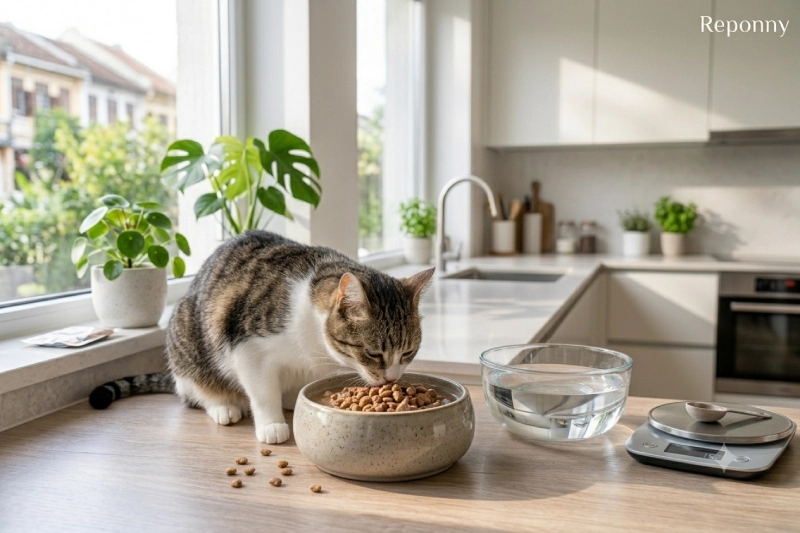
How to Switch a Kitten to Adult Cat Food
Kittens generally remain on food formulated for growth until they approach adulthood.
When the time comes to transition to adult food, the same gradual approach applies.
VCA recommends transitioning from kitten food to adult food gradually over approximately 7–14 days to reduce digestive problems.
The new food should be:
- complete and balanced,
- appropriate for adult maintenance,
- and fed in an amount that matches the cat’s calorie needs.
This matters because kitten foods are often relatively calorie-dense to support growth. Continuing to feed large kitten portions after growth has slowed may contribute to unnecessary weight gain.
Switching to a Prescription or Therapeutic Diet
If your veterinarian has prescribed a therapeutic diet for:
- kidney disease,
- urinary disease,
- diabetes,
- gastrointestinal disease,
- food allergy,
- obesity,
- or another condition,
follow the veterinary transition plan rather than automatically using the schedule above.
Sometimes a gradual transition is recommended.
In other situations, the medical reason for changing food may alter how quickly the new diet should be introduced.
The effectiveness of some therapeutic diets also depends on the cat eating the prescribed diet consistently rather than receiving substantial amounts of other foods.
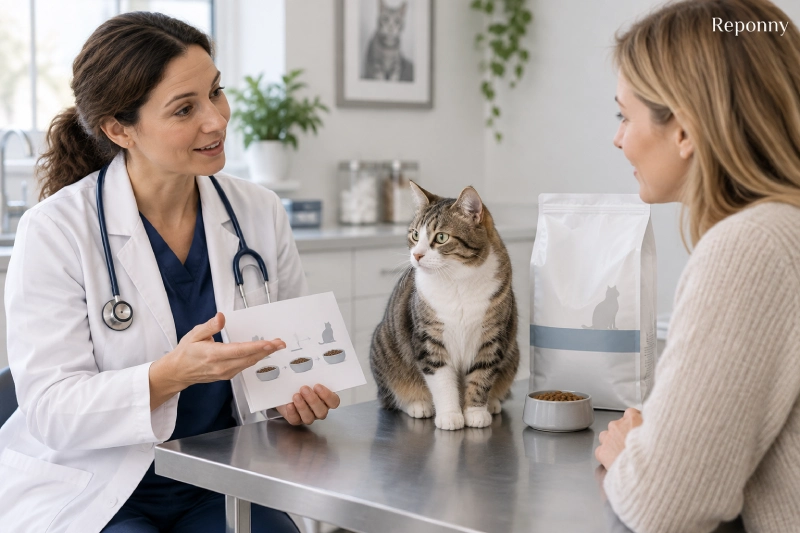
Ask your veterinarian:
- how quickly to transition,
- whether treats are allowed,
- whether the old food can be mixed with the new food,
- and how much of the new diet should be fed each day.
What If Your Cat Refuses the New Food?
Do not assume your cat is simply being stubborn.
Cats can reject food because of:
- unfamiliar smell,
- unfamiliar texture,
- temperature,
- stress,
- a sudden routine change,
- dental pain,
- nausea,
- gastrointestinal disease,
- kidney disease,
- or many other medical problems.
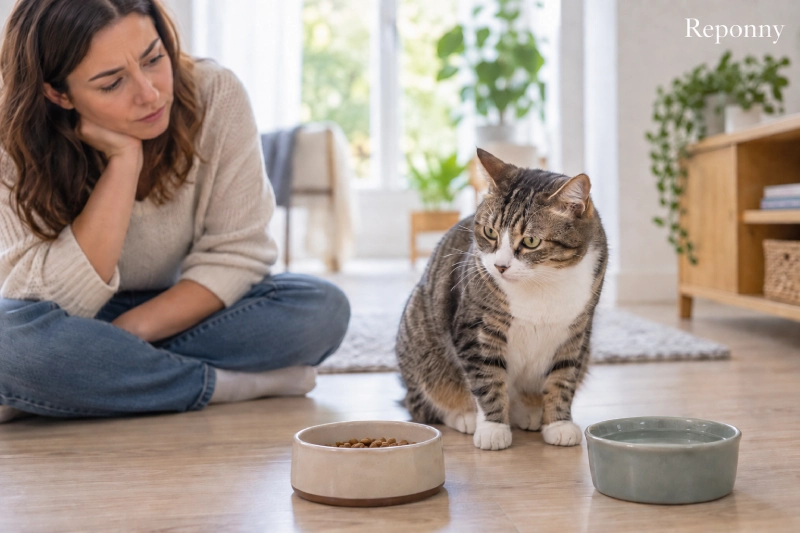
If your cat eats the old food normally but refuses only the new food, slow the transition and try presenting the new food separately.
You can also try:
- a different texture,
- a different flavor,
- slightly warming wet food,
- smaller portions,
- quiet feeding areas,
- clean shallow bowls.
But do not create a battle over food.
Cornell emphasizes that sustained food refusal can have serious consequences for cats. Loss of appetite can affect a mature cat’s health after a relatively short period, and prolonged anorexia can contribute to hepatic lipidosis, or fatty liver disease.
Never Starve a Cat Into Accepting New Food
This point is important enough to deserve its own section.
Do not think:
“If I leave the new food out long enough, my cat will eventually get hungry and eat it.”
Cats are not animals you should intentionally allow to go for prolonged periods without food.
Cornell reports that anorexia is closely associated with hepatic lipidosis, a potentially life-threatening liver condition, particularly in overweight cats.
Cornell also notes that a sustained loss of appetite can have a severe effect on an adult cat after as little as about 24 hours.
Therefore, if your cat will not eat the new diet, provide food the cat will eat while you seek veterinary advice when appropriate.
Do not abruptly remove all familiar food merely to force compliance.
What If Your Cat Gets Diarrhea During the Transition?
Mild stool changes can occasionally occur when food changes.
If stool becomes slightly softer but your cat otherwise appears completely normal, consider returning to the previous transition stage and proceeding more slowly.
However, persistent or significant diarrhea deserves veterinary attention, especially if accompanied by:
- vomiting,
- loss of appetite,
- blood,
- weakness,
- dehydration,
- pain,
- weight loss,
- or behavioral changes.
VCA notes that severe or prolonged diarrhea can cause significant dehydration and recommends veterinary evaluation when symptoms fail to improve.
Do not repeatedly change to different foods every day in response to diarrhea.
Rapidly cycling through diets can make it even harder to determine what your cat tolerates.

What If Your Cat Vomits After Eating the New Food?
One isolated episode of vomiting has many possible explanations and does not prove the new food is responsible.
A cat may:
- eat too quickly,
- have a hairball,
- experience dietary intolerance,
- have gastrointestinal disease,
- or vomit for reasons unrelated to the food transition.
If vomiting begins repeatedly after increasing the proportion of new food, stop increasing it and contact your veterinarian if symptoms persist.
Seek prompt veterinary help when vomiting is repeated or accompanied by:
- refusal to eat,
- lethargy,
- diarrhea,
- blood,
- abdominal pain,
- dehydration,
- or other significant changes.
A dietary transition should not involve repeatedly making a sick cat “push through” symptoms.
Avoid These Common Cat Food Transition Mistakes
Changing Food Overnight
Some cats tolerate it.
Others develop digestive upset or simply refuse the meal.
Unless there is a medical reason for an immediate change, gradual is usually easier.
Changing Several Things at Once
If you change the main food, treats, supplements, and feeding schedule simultaneously, it becomes difficult to identify what caused a problem.
Offering Too Many Alternatives
When a cat hesitates, repeatedly opening five different foods can accidentally encourage increasingly selective eating.
Overfeeding During the Transition
If you offer both foods, remember that the combined calories still count toward the daily total.
Mixing Food for a Cat That Hates Mixed Textures
Try separate bowls instead.
Assuming Every Symptom Is “Just the New Food”
Vomiting, diarrhea, or appetite loss can also indicate illness.
Frequently Asked Questions
How Long Does It Take to Switch Cat Food?
For many healthy cats, approximately 7–10 days is a reasonable starting period. Cats with sensitive stomachs or strong food preferences may need two or even three weeks.
Can I Switch Cat Food Immediately?
Sometimes a veterinarian may recommend an immediate dietary change for medical reasons.
For an ordinary elective food change, however, a gradual transition is generally preferred because it may reduce digestive upset and improve acceptance.
Can Changing Cat Food Cause Diarrhea?
A sudden dietary change can sometimes contribute to loose stool or gastrointestinal upset. Slow the transition if mild digestive changes appear, and contact your veterinarian for persistent or significant diarrhea.
Can Changing Cat Food Cause Vomiting?
It can coincide with vomiting in some cats, but vomiting has many possible causes. Repeated vomiting should not automatically be blamed on the new food.
What If My Cat Only Eats the Old Food?
Continue offering a small amount of the new food separately and increase exposure gradually.
Do not remove all familiar food and attempt to starve the cat into accepting the new diet.
Should I Switch Cat Food Brands Regularly?
There is no requirement to change brands simply for variety if your cat is healthy and doing well on a complete and balanced diet.
However, some veterinary guidance notes that cats accustomed to more than one food or texture may be easier to transition if circumstances later require a diet change.
Can I Change Flavor Without Transitioning?
Even if the brand is the same, a different recipe can contain different protein sources, fat levels, fiber, calories, or other ingredients.
A gradual transition is still the safer option when the formulation changes substantially.
Final Thoughts
Changing cat food successfully is less about speed and more about patience.
For most healthy cats, begin with a small amount of the new food and gradually work toward a full transition over approximately 7–10 days.
A simple schedule is:
Days 1–2: 75% old / 25% new
Days 3–4: 50% old / 50% new
Days 5–6: 25% old / 75% new
Day 7+: 100% new
But your cat gets the final vote on how fast you proceed.
If your cat prefers separate bowls, use separate bowls.
If digestion becomes unsettled, slow down.
If your cat stops eating, do not try to win a battle of wills. Cats can develop serious health problems when food intake becomes inadequate, and persistent appetite loss warrants veterinary attention.
A successful food transition is one in which the new diet eventually becomes normal—without turning mealtime into a source of digestive trouble or stress.